Home Blog Page 22

From Uganda to Colorado- Micheal Azira has made a special journey in Football

0

Azira learned to be resourceful at a very young age. He knew he couldn’t ask his mother for soccer shoes, so he saved the money she would give him for breakfast at school. He hid the money in a tin and didn’t touch it until he had enough to buy a pair of Pumas when he was 14. He was so proud he sometimes wore them to school.

Now Azira is a defensive midfielder for the Colorado Rapids, a position where there is little glory and a lot of dirty work. People who know him remark about the joy he exudes, wherever he goes. And they know why he has it.
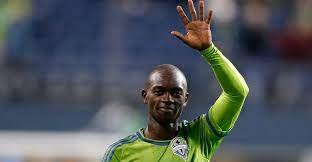
“You see it on his face,” said Brad Kenney, a friend who serves as the team chaplain. “I think that joy is the reason why he can play freely. He has a joy perhaps because of where things began for him in life, the things he’s seen, and the difficulties he’s known and gone through. He has a joy that few others in this game, and in sport in general and in life, have.”

He grew up in a one-bedroom home with five siblings. His mother was a tailor and his father worked for a transportation company. After saving up for that first pair of soccer boots, a friend showed him a way to make more money: Get up at 5 a.m., go to the market, buy some clothes, then hawk them on the street for a profit.

Azira with his son during a Colorado Rapids post-match conference. (Photo via Kawowo Sports)

“My parents always provided food and a pair of shoes,” Azira said. “Some clothes on your back, so you don’t walk naked.”

The journey from Kampala to Commerce City via Kentucky, Alabama, South Carolina, and his MLS debut in Seattle shaped him in ways that ensure he never takes blessings for granted.

“We play soccer, but it can end at any time,” Azira said. “I followed my passion. I’m glad God brought me here. I’m thankful and I’m appreciative of everything and all the people who have been able to help me get here. It always comes down to your effort and your desire and your persistence and faith.”

One of the people who helped him was a man named Ken Davis, an American who worked for a United Nations welfare organization. They met because Azira played on soccer teams with Davis’ son.

Robbie Keane of Los Angeles Galaxy reacts to a foul by Azira in front of the referee Kevin (Photo via ChimpReports)

“He saw I was interested in school and he was like, ‘OK, I’ll help you out,’ so he paid my tuition in high school,” Azira said. “I just had to present results to him. When I finished high school, my mom was like, ‘Where are we going to get the money to go to college?’ I was like, ‘Mom, I’ll go to college, don’t worry about it.’ ”

After high school, Azira played one year of professional soccer in Uganda. He was serious about that vow to his mother, so he asked the club to pay college tuition in lieu of a pay check. After that season he got a chance to play college soccer in the U.S. for tiny Lindsey Wilson College, an NAIA school in Columbia, Ky., population 4,400. The town had two restaurants, one Chinese, the other Mexican.

“When you are coming from Uganda to the United States, you always think you’re going to LA, that everything looks like LA or New York or Chicago,” Azira said. “Columbia, Kentucky, is in the middle of nowhere. I was like, ‘I don’t want to be here,’ but I was like, ‘Maybe I’m here for a reason.’ It’s easy to complain. I’m glad I was able to remember, ‘I’m here for school and I’m getting an education, the rest will take care of itself. I was like, ‘God knows why I’m here. I know it’s not the best place, but I’m getting what I came here for.’ ”

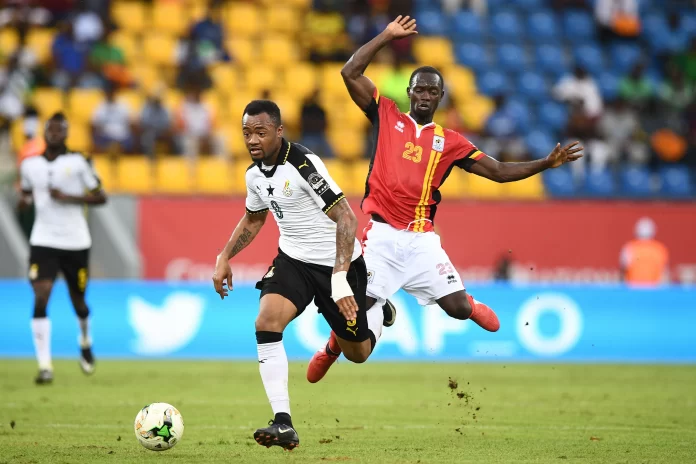
Uganda’s midfielder Mike Azira (R) challenges Ghana’s forward Jordan Ayew during the 2017 Africa Cup of Nations group D football match between Ghana and Uganda in Port-Gentil on January 17, 2017. / AFP PHOTO / Justin TALLISJUSTIN TALLIS/AFP/Getty Images

After three years there he transferred to the University of Mobile. There he met his wife. Friends set them up, even though neither wanted that sort of help at the time.

“I asked for her number,” Azira said. “I saw these beautiful blue eyes. She is what I wanted. She is what I needed. Someone who has faith, someone who is not going to be ‘Yes, yes,’  all the time but somebody who is going to challenge, to push you, to encourage you when you’re down.” Now they have an 18-month-old son named Gabriel.

After graduating with a business degree he played in a minor pro league in Charleston. Seattle brought him into MLS in 2014 but he didn’t play much.

“I didn’t care that I’m not getting a lot of time to play,” Azira said. “This has always been my passion. I was like, ‘If I’m here and I’m not playing, maybe it’s my time to learn.’ What I see in a lot of kids today, they think if they get drafted they’re going to start right away, which is not the case with everyone. I could complain, but at the end of the day, you think about it and you’re living your passion, you’re living your dream … It was a good opportunity to just learn from all these good players.”

He joined the Rapids in 2016 and is a regular now at holding midfielder, a position that epitomizes unselfishness, but the club named him their player of the month for the first month of the season.

“He’s such a humble man and has been through a lot,” said coach Pablo Mastroeni. “He’s got a great perspective on life. When you’ve gone through some hardships, if you’re running around playing soccer for a living, that’s something to be grateful for, something to have a smile on your face when you walk into work every day.”

This story was first published in Denver Post and has been reproduced here with permission. 

Like this story? Or have something to share? Write to us: info@thisisuganda.org, or connect with us on Facebook and Twitter.

Meet the Ugandans on the TEDGlobal 2017 Fellows list

0

A playwright, an Investigative Journalist, and a former refugee living in Uganda are among the new class of the TED Global Fellows class of 2017.

The three are among the 21 fellows, ten of which are from African countries like Somalia, Nigeria, Botswana, Zimbabwe, Kenya, Egypt, and Liberia that will each, deliver a talk at this year’s TED Global gathering this August in Arusha, joining 436 other fellows from 94 countries around the world.

Below, get to know the new group of Fellows who will join us at TEDGlobal 2017, August 27–30, in Arusha, Tanzania.

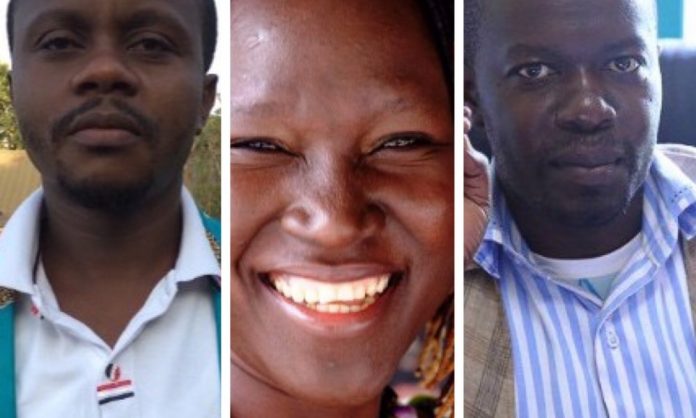
Judith Adong

Adong is a Theater/Film Creative Director, Writer & Producer, who creates captivating plays and films that provoke and promote dialogue on social issues affecting underprivileged groups. Judith’s outspokenness has led her to create work that provokes dialogue and social change on issues ranging from LGBTQ rights to war crimes. She is also the artistic director of Silent Voices Uganda, a not-for-profit performing arts organization.

Yasin Kakande

Kakande is a Ugandan journalist working undercover in the Middle East to uncover the human-rights abuses of migrant workers. His autobiographical novel The Ambitious Struggle, is a fascinating and gripping account of life in the United Arab Emirates, as seen and reported on by a Ugandan journalist resident for over a decade in Dubai. The first such account of its kind, in outlining the duties he was assigned (in print and broadcast media) and the news events that made it (or did not make it) into the print and broadcast media, one gains a keen look at the points of sensitivity in the complex society of the UAE.

Robert Hakiza

Hakiza is of DRC origin. He is the Co-Founder of Young African Refugees for Integral Development (YARID) an NGO based in Kampala that is uniting urban refugees through avenues like sports, English classes, and vocational skills training in order to address social issues like ethnic conflicts, unemployment, public health, and lack of access to education.

Refugees that YARID serves mainly come from the Great Lakes Region: Democratic Republic of Congo, Rwanda, and Burundi. Hakiza and his colleagues are helping these urban refugees learn new skills.

How social design counters misconceptions about Uganda and the Netherlands

0

Two wooden booths, two phones, and two headsets. That’s all it takes to bring Ugandans and Dutchmen a bit closer to one other, according to three design students from the Hogeschool Voor de Kunsten (HKU) in the Netherlands. They organized an unusual, long-distance Q& between Kampala and Amsterdam and baptized it TruthAgency.

The feeling that led to the inception of TruthAgency is Shame. During their design internship in Kampala, the expectations of Lynn Smit (22), Tessa De Boer (22), and Lizzy Steller (25) clashed with the Ugandan reality. They quickly realized how ignorance can lead to blunt stereotyping.
“Our decision to come to Uganda was criticized by our family and friends,” Tessa admits. ¨Everyone was worried about Boko Haram and Al-Shabaab. And upon our arrival, we realized that we also had an incomplete, wrong picture of the country and the people.”

Shameful indeed, but it turned out that Ugandans know close to nothing about the Netherlands either. High time for some myth-busting, the design trio decided. Their graduation project took the shape of an agency that offers participants “a journey to the other side of the story.”
The idea is beautiful in its simplicity: let Ugandans and Dutchmen counter misconceptions about one another by asking each other questions and by offering answers. Before asking a question, both parties get to see a one-minute movie on a phone in a booth, showing impressions of the city on “the other side”.

The booth in Ntinda, a neighborhood in Kampala. (Photo by Realiteitbureau)

An entirely new initiative? “Similar concepts exist, like the app Ask Me Anything,” Tessa explains. “But the innovation with Truth Agency is that Ugandans who don’t have access to the internet can also ask or answer a question in our booth.”

Embarrassing misconceptions

Over a period of five days, Tessa and Lizzy set up their black booth in bustling spaces in Kampala: Kyambogo University, Ntinda, Acacia Mall, old taxi park. People are curious and open.
“I would like to know if anybody in the Netherlands can do the business I am doing,” Juliet asks, looking into the iPhone camera while balancing a basket of mangoes on her head.

Juliet asks her question in the booth in Ntinda. (photo by Realiteitbureau)

Many Ugandans ask how to get to the Netherlands, or stress their competencies and willingness to work with Dutch businesses. “These questions deserve clear answers,” stresses Lizzy. “It would be nice to find a Dutch politician or policymaker to explain this in our booth in Amsterdam.”

Turns out that this is easier said than done. Lynn, who set up a white booth in various places in Amsterdam, has a harder time finding people who would like to ask a question to a Ugandan. People usually say they are in a hurry, or they think she is selling something. “A man just passed by and said he was very interested in culture and arts, but not today,” she tells us over the phone. Moreover, the questions coming from Amsterdam have a more random feel to them: “Do you have cheese in Uganda?”, “Is there higher education in Uganda?

In less than a week time, the designers gather 100 questions from Ugandans and 56 questions from Dutchmen. The questions coming from both booths reveal an embarrassing amount of misconceptions, which explains the general enthusiasm of the booth visitors.

Lynn with an interested passerby in the booth in Amsterdam. (photo by Realiteitbureau )

“Stop f****** around”

Two night before they left the country, Tessa and Lizzy hit Que Pasa, a crowded Mexican bar at Kisementi (a Kampala neighborhood), with their smaller portable answer booth. They showed the questions from Dutch participants to Ugandans. Videos were watched with astonishment, disbelief, or amusement. People picked out questions they want to answer.

At Que Pasa: Lizzy shows Charity the video of the Dutchman asking Ugandans to “stop fucking around.” (photo by Realiteitbureau)

“I’m answering this one,” says Charity Atukunda (27) determined. The cultural coordinator at the Alliance Française just watched the video of a Dutchman telling Ugandans to “stop fucking around and do something.” Her answer is a well-expressed, nuanced explanation of the difficulty for so many Ugandans who, without government support, try to uplift themselves daily from poverty. She smiles in the camera, thanks to the man for his question and invites him to Uganda, and feels relieved afterward.

This is the aim of TruthAgency: creating an experience of semi-live participation in knowledge exchange, and offering this experience to everyone, regardless of socioeconomic background, nationality or educational level. Humanizing information goes a long way in establishing connections with “the other side”. Let’s see in which countries the booths will pop up next.

All of the questions and answers are coming soon on www.realiteitbureau.nl
Follow TruthAgency on https://www.facebook.com/RealiteitBureau/

Meet 1620 footsteps: A design firm pimping your ride the African way

0

African print is the new thing! Jumpers, shirts, shoes, trousers name it, have already transformed the way we view fashion in Uganda or Africa in general today. One design firm is taking this a notch higher by pimping rides in African print. This Is Uganda caught up with Gilbert, the Managing Partner at 1620 Footsteps and we bring you the interview.

What is 1620 footsteps?

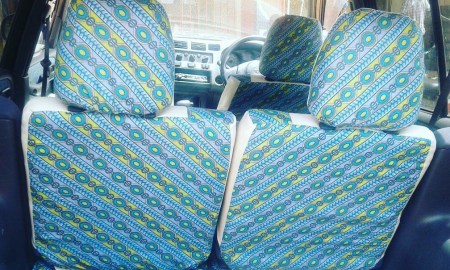
1620 footsteps is an up-and-coming design firm that makes all its products unique through incorporating African material or fabric in all its designs. There’s not so much to write home about originally African products apart from artifacts so we are seeking to “Africanize” more items that are not originally African by giving them an African face. What better way to do that than using African material in such items. At the moment we are doing this with our flagship products, car accessories like car seat cover, headrest covers, and steering wheel covers; for every car accessory we make, we incorporate African fabric in the design.

Any inspiration behind starting 1620?

A lot of beautiful and creative stuff has been made out of African fabric/Kitengi and Ugandans had somehow managed to exploit and make the most of it but as young entrepreneurs we are hungry to look for the untouched and unexplored. When we discovered what hasn’t been done by anyone else, we got to work. And the rest is history.

1620 Footsteps is changing the interior of cars to something never seen before. (Photo by 1620 Footsteps)

How long has 1620 been in existence?

It’s been 6 months now. We started on 10th June 2016 but took a while to get our products onto the market. We started selling in the second week of October 2016. The past months had been consumed by design and redesign. We had lots of samples that we redesigned before coming up with our final products which we felt was complete and suitable for market consumption and also give value to our business In June, this 2017 we make one year.

One of the interior of a car that was re-desgined by 1620 Footsteps (Photo by 1620 Footsteps)

Special mention of the team members at 1620 footsteps?

We are a very small team for now but we give great thanks to Leticia Nambalirwa (la leti Fashions), Hussein our handy man and the managing partners, Gilbert Opondo and Christine Namubiru.

Where do you see 1620 footsteps six years from now?

We hope to have grown our product list, our market share and 1620 footsteps, the brand. We have a plan off which we have only developed one concept. We shall soon be developing other concepts off that plan and launching. If we carry on like this, we do not think the Ugandan market alone will be big enough for us. In six years we hope to be a publicly recognized brand not just locally but globally.

1620 Footsteps is changing the interior of cars to something never seen before. (Photo by 1620 Footsteps)

How often do you get offers by people to dress up their cars by 1620 footsteps?

At the moment the orders are spread across. Some are bulk orders whilst others are for single pieces. Our orders are relatively frequent although we get daily inquiries about our products.

If someone wants to have an African touch by 1620, where do you they find you?

We can be reached on +256 755 510 547/ +256 700 358 517 or via email on 1620footsteps@gmail.com for further inquiries and orders. Alternatively, one may reach us through our Facebook page, 1620 footsteps, Twitter @1620footsteps, and Instagram @1620footsteps.

Like this story? Or have something to share? Write to us: info@thisisuganda.org, or connect with us on Facebook and Twitter.
10 Uganda Travel Bloggers to Follow on Instagram

0

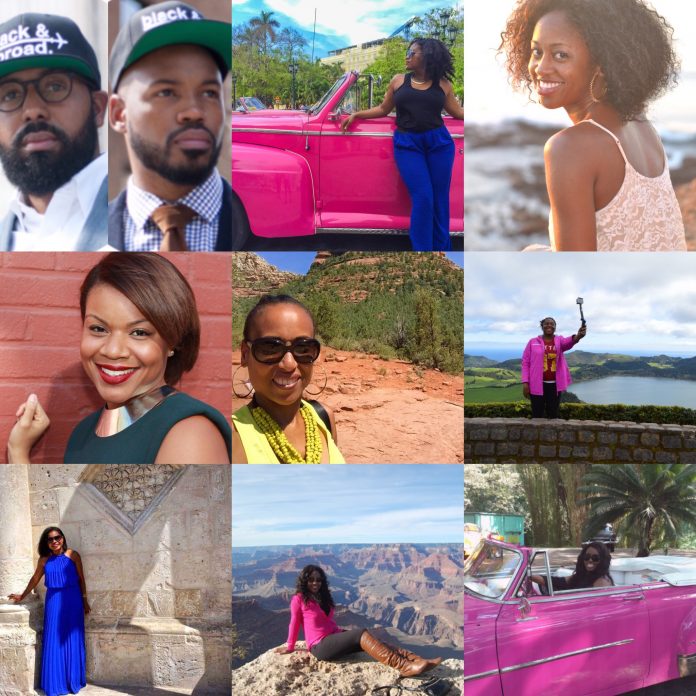
From cuisines to lodges, wildlife, wide landscapes and glimpse into everyday life in the vibrant Kampala and remote villages, these Ugandans on Instagram are showing that Uganda offers much more than the safaris it has become synonymous with. This new draw card driven by citizens is seductively causing people to want for more of the people and places, providing the taster that will tempt further exploration into the areas so honestly showcased.

Here are the accounts by Ugandans that you should be following that will make you fall in love with our motherland and her beauty in no particular order;

1. Timothy Latim (@t_latim). “A mountain goat” as his Instagram bio says, Timothy is a member of the Mountain Slayers, a group of individuals promoting Uganda through showcasing Uganda’s beauty from mountains and hills. His personal account rotates around life in those places.

Want to know Uganda through its mountains? Follow Timothy on Instagram (Photo credit: Timothy Latim)

2. Karen Kana (@Chocolaty_prints). This is one of the most beautiful Ugandan travel accounts you will ever follow on Instagram. The pictures are very high resolution and chances are very high you might encounter a lodge, place or people you have never known in Uganda (and Rwanda).

Karen is one of the most influential travel bloggers we have in the country. (Photo credit: Karen Kana)

3. Theo Vos (@theovos). Theo is the Dutch-Ugandan behind Discover Karamoja and Kara-Tunga Tours and Travels which are positively changing the image of Karamoja. His personal Instagram account is dedicated to capturing lives of everyday people in the Karamoja sub-region as well as it’s beauty.

Theo Vos’s Instagram page gives the most authentic perspective about Karamoja they don’t show you on TV. (Photo credit: Theo Vos)

4. Fay Kai (@Khukyenda), Fay is one Instagrammer who can never miss jotting down any travel experience that she gets. What makes her more tick, is that she runs an online shop that sells travel t shirts and 20% of the sales go to charity.

Want to know to how have the best out of travel on a limited budget? First stop here and visit Fay’s Instagram. (Photo credit: Fay Kai)

5. Arnold Mugasha (@shotbymu). Arguably one of the emerging and best aerial photographer in the country, Arnold’s drone images are reinventing the way Uganda is being looked at. His Instagram accounts is filled with beautiful photos about Uganda from a whole new perspective.

We talked about how Arnold is one of the best aerial photographers in the country. If you haven’t visited his Instagram yet, this is your last chance (Photo credit: Arnold Mugasha)

6. Kreativ Adikt (@kreativ_adikt). Part of the #KoiKoiUG team, Kreativ Adikt is one of the photographers who are just natural with the camera. The simplicity yet professional touch he puts into his work, makes him an excellent visual storyteller in his own league.

Kreativ Adikt’s page is by far one of the most beautiful pages that will make you fall in love with Uganda’s beauty (Photo credit: Kreativ Adikt)

7. @vscouganda. This account merges everyday life and tourism by focusing on people in some of the top tourist destinations in the country. Check it out below on Instagram.

Count on this page to give a shout out to other travel bloggers. (Photo credit: vscouganda)

8. Sophie Musoki (@akitcheninuganda). This account is featured here because it is a ffusion of cooking and lifestyle account by a Ugandan in Uganda. It is dedicated to showcasing the different cuisines in Uganda that you are most likely to encounter in travel experiences across the country.

Sophie Musoki has proved to be the number one blogger who is dedicated to showcasing Uganda’s cuisines with a touch of modernity. This is the only blog you will find that will make you fall in love with Ugandan food everywhere you will travel. (Photo credit: Sophie Musoki)

9. Charlotte “Nagawa” (@Charliebeau_diary_of_a_muzungu). Charlotte is among the pioneers of Ugandan digital tourism promoters. Besides Instagram, her blog; muzungubloguganda.com, is one of the most followed blogs dedicated to Ugandan (and East African) travel.

“Nagawa” is one person who will make you fall in love with Uganda at first sight even if you’re a Ugandan. (Photo credit: Charlotte)

10. Olive Nakiyemba. (@Oleebranch) is a wonderful plotter of adventures going by her Instagram account. Her account is predominantly about her different adventures across the country.

Ready to discover a new place in Uganda that you didn’t know? Olive will make you find. (Photo credit: Olive Nakiyemba)

NOTE: This collection focuses on individual travel bloggers. We are still compiling a list of travel agencies (and authorities), and photographers who focus on portraits and typical everyday life not necessarily travel. These will ran within the course of the next two weeks.

Wabwire Wa’ Waheirire; Connecting Youth through creative arts and dialogue

0

In a world where young people are taking the center stage of the change we all hope to see, we are yet to meet much more youth doing things in a bid to empower other youth. Wabwire Wa’ Waheirire, a student of Bachelor of Laws is one of these youths taking Uganda to a whole new future designed and crafted to better suit the Ugandan Youth.

Wabwire is the Founder of Youth-Connect Uganda a social enterprise aiming at bringing young people together through creative arts, curated monthly dialogues, and whatnot.

We had a small chat with him;

Wabwire, tell us more about yourself, preferably something we don’t already know?

I’d really describe myself as a person with a versatile skill-set, a lot of integrity, and a willingness to go the extra mile to serve young people in my generation especially those that are still finding and figuring out their belonging in this razzmatazz and jigsaw of life. Maybe, to add to that- I’m pragmatic and never cease until I’m proud I have achieved it.

What does the name Wabwire Wa’ Waheirire mean?

My name is Samia means “ his father’s son”.

Your name is quite intriguing, first of all, you have no English name. Why do you think your parents made this choice of rhyming names?

I have English names bestowed unto me by my parents that I deliberately divorced embracing the rhythmical one you observed. I’m in the process of finalizing with my poll-deed (legal requirement to change a name). My parents, unfortunately (I think) are still impressed by English names.  To me, they do not define me notwithstanding the subtle adage-“I define a name, a name does not!” For me, an English name doesn’t give me meaning. The name I chose gives me meaning, attaches me not to my colonial history but to my ancestral history, it gives me a unique identity and hence the reason why I attach much importance to a name.

Tell us more about Youth Connect Uganda.

I started Youth Connect-Uganda a Social Enterprise in 2014 whilst still in High-School. However, active engagement started in 2015. My major aim was to try to create a safe space and environment for aspiring young change-makers, creative artists, and social activists to mutually and civilly discuss, formulate the way forward and how they can help each other to disrupt and make or create the societies, communities, and world they want.

This has been achieved with some of the curated events we have hosted including December-Youth Camp, monthly panel discussions on issues that have been trending or prevailing, informal but formal Youth meet & meet-ups especially with the creative artists like poets, musicians, dancers, photographers, fine artists among others. Our engagement has seen over 400 youth this year benefit from our activity log.

We also recently launched our volunteer Youth-Hub from where we can make a follow-up of our participants and also have them, in exclusive free attendance and engagements to our events and workshops.

A safe space for mutual and civil dialogue??? Why choose this of all topics and avenues like debates?

You will realize that in as much as the spaces are available, most of the spaces do not blend with the reality of the contemporary ideal youth. Ours is a free space where each one of us is our own expert based on their experiences and stories. So we acknowledge that and create that platform opportunity for free expression without censor for as long as it is civil, mutual and necessary.

Where shall we see Youth Connect-Uganda a few years to come?

My dream is to see much youth that have subscribed to it disrupting the status quo and creating the Communities, Societies and world they want with the knowledge acquired while at the Hub. In future, we plan to partner with other youth-related institutions to have a  have a large structure for young people to engage freely and express themselves i ways they can for as long as the expression is positive and can help put a brick to the betterment of this our society.

What new additions are you planning to fix onto the Youth Meat Up?

A dialogue space for photographers, fine-art enthusiasts. Exhibitions of young people’s creative works. And maybe a Start-up pitch hub.

We get that you chose to call it Youth ‘Meat Up’ because it’s a space for creatives but still, enlighten us?

The Youth ‘Meat-Up’ is just the name given to this creative artists project. “Meat” sounds like “meet” so, here young people get to meet up and with roasted meat as a refreshment get to take themselves to a tail of discovery, knowledge and experience sharing and networking.

If I am a young Poet, say just out of high school, can I be given a chance at the Youth Meat Up?

Absolutely, why not? All creatives of any age having talent in Poetry, Music, Dance, Photography, Fine Art, Graphics, Comedy, Drama, are welcome at our Monthly Meat-Ups.

What is your final message to the youth waiting to strike blue collar jobs and whatnot?

Blue collar-job, in as much as our societal construct has limited them to be for those in the inferior class are the way to go and in sync with our demands and systems. Tomorrow’s change-makers and successful individuals will be those who embraced the practical things, those that created something with their hand dexterity. The tragedy is, we have idolized white-collar jobs at the expense of blue-collar jobs.

 To follow more of his work and to attend a Youth Meat Up, like Youth Connect Uganda on Facebook.

French Montana Collaborates With Uganda’s Ghetto Kids on New Video

0

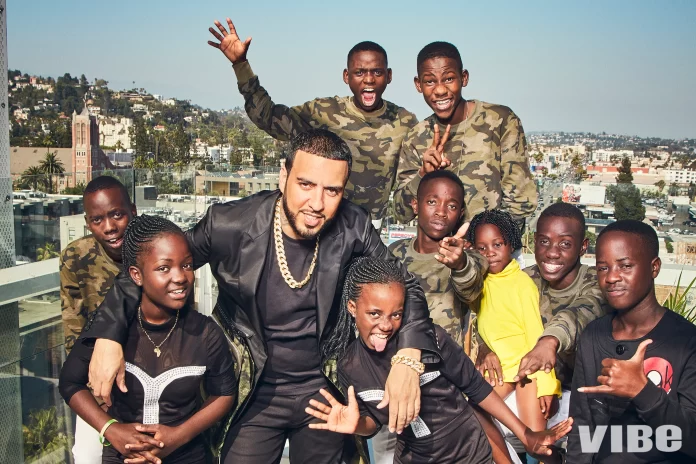
Karim Karbouch, an American recording artist that goes by the alias French Montana came down to Uganda in March to shoot the video for his new hit single “unforgettable”, which has further wowed the world on the raw talent among Ugandan youth. The visuals of this video were released early this month and they featured Rae Sremmurd’s, Swae Lee. You could only be wowed by the priceless smiles on the Ugandan kids as they joyously contorted their bodies to the melodies of the stunning record.

The cover art

Earlier in April, Montana explained the importance of the single’s cover art on his Instagram page.

“The picture of my mother and father at their wedding in Africa is my favorite picture,” he began. “It’s unforgettable for so many reasons, since it was the same year I was born and the same year my father was incarcerated for unfortunate circumstances. He named me from jail. After he was released, we were granted US visas and in 1996 I went on my first plane to go to America.”

Then, Montana dove into his transition to the United States and the hardships he encountered during his teenage years. “I didn’t know any English,” he revealed. “It was tough because I thought we were moving into the high rises of NYC, but we ended up in the back streets of the South Bronx lol. It was still better than back home in Morocco, but my father had a hard time and wanted to move back. My mother knew we couldn’t because there weren’t any opportunities there and she sacrificed a lot for us to survive in the states. We were on welfare and she worked overtime to keep us fed, clothed, and a roof over our heads. I promised my mother that I would hustle and make my accomplishments unforgettable once I found my opportunity. I want other people who might be struggling to know that the sky is not the limit… You can do unforgettable things, so I present to you my single ‘Unforgettable.’ Feat @swaelee.”

The video concept

The whole idea behind French Montana’s awesome Ugandan spirit-filled video rose from his adoration for Uganda’s Triplet Ghetto Kids. Showcasing their dancing skills, the Ugandan kids are found joyously contorting their bodies to the melodies of the record.

Their Ugandan street dancing art hypnotized the American musical talent in him to make his personal wish come true. Originally born in Morocco, Montana felt right at home in Uganda while shooting “Unforgettable”.

Shooting the video in Uganda

Both Montana and Swae Lee flew down to Uganda, Africa in March to capture the visuals, and now we have finally received the final product of the hard work done at the source of the Nile also known as the pearl of Africa. Throughout the video, local dancers bust crazy moves while French and Swae soak in the vibes, strutting their stuff here and there.

Watch Unforgettable here:

How The Humble ‘Rolex’ Celebrates Uganda’s Uniqueness!

0

How do you sum up Uganda, the Pearl of Africa to would-be visitors? And what makes Uganda unique? Some thoughts on Independence Day 9th October, 2017.

I received an interesting email recently: “I have been following your adventures and love what you do. Uganda is a country with incredible soul and you manage to capture it in the most beautiful and charming ways. We are currently working on a campaign that aims to inspire unity amongst Africans and promote Africa as the ultimate travel destination.”

I was therefore asked to “shoot a short video of yourself explaining what makes Uganda such a wonderful country.”

If you’ve read my “50 reasons why I love Uganda” you’ll know that creating a one-minute video to encapsulate all of that would be impossible! I wrote 50 reasons to honour 50 years of Uganda’s independence – that list gets longer day by day.

I was touring Uganda at the time, researching the country’s best lodges for Fodor’s “Complete Guide to the African Safari” guidebook. As the video deadline approached, I was in Buhoma, Bwindi Impenetrable Forest.

New Vision columnist Arthur Katabalwa and Mariana and chef Alex at Bwindi Bar, a Volcanoes Safaris Partnership Trust project

I happened to be traveling with former Urban TV producer Arthur Katabalwa – and what followed was an impromptu piece to camera during a rollex-making demo!r, a Volcanoes Safaris Partnership Trust project

Bwindi Bar chef Alex (trained by the Volcanoes Safaris Partnership Trust charity) prepares for his TV debut! Making a rather posh rolex!

(Fast forward the video to 1 minute 30 seconds to meet bloggers from Uganda!)

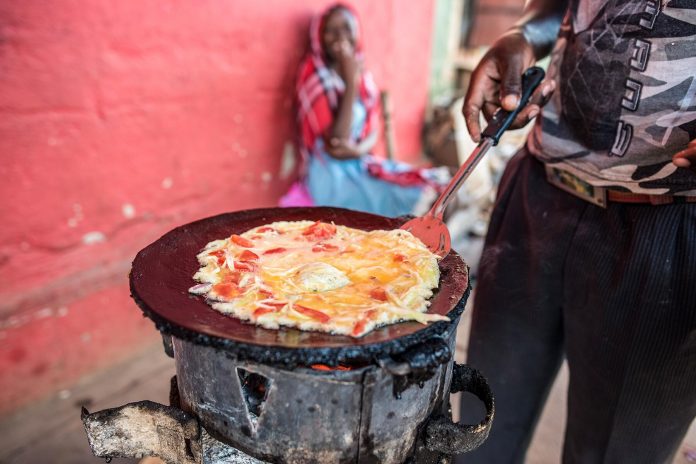
The rolex “rolled eggs” (omelette) wrapped in a chapati is becoming infamous now. This simple street food sums up some quintessential Ugandaness:

  • – Rolex is Uglish (a unique take on the English language which frequently has us all rolling around the floor in stitches!)
  • – Entrepreneurship: setting up a roadside rolex stall is a popular small business in Uganda.
  • – The rolex stall is where we stand around chatting as we wait to be served. It’s where we may start our day.
  • – It’s where many people end a late night – grabbing a cheap bite to eat after a night on the town. If you’re lucky, your boda boda guy will drive right up to the rolex guy’s stall and you won’t even need to get off your boda!

I was honored to appear alongside well-known Ugandan bloggers Rosebell Kagumire, Ernest Bazanye and Sophie from a Kitchen in Uganda in this video. Incidentally, it was Sophie who helped the rolex go global when it featured on CNN in the article “Delicious African foods you should try.”

#TrevorNoahVisitsUganda or did he? Trevor Noah gets his rolex fix (allegedly!) in Wandegeya, Kampala

If African travel floats your boat, check out Travelstart’s fun quiz: “Which African country do you actually secretly want to explore?” Answer a few questions to be presented with your ideal African country. (If it’s not Uganda…) where will it be?

The rolex is so famous, it even has its own festival in Kampala! The muzungu meets the rolex (beauty) queen and festival creator Mirembe Enid

*Charlotte is an award winning travel blogger who is passionate about promoting Uganda’s beauty and uniqueness. Check out her blog www.muzungubloguganda.com!

Like this story or have something to share? Write to us: info@thisisuganda.org, or connect with us on Facebook and Twitter.
This Social Enterprise is on its Way to Providing 1000 Solar Lamps For Refugees in Northern Uganda

0

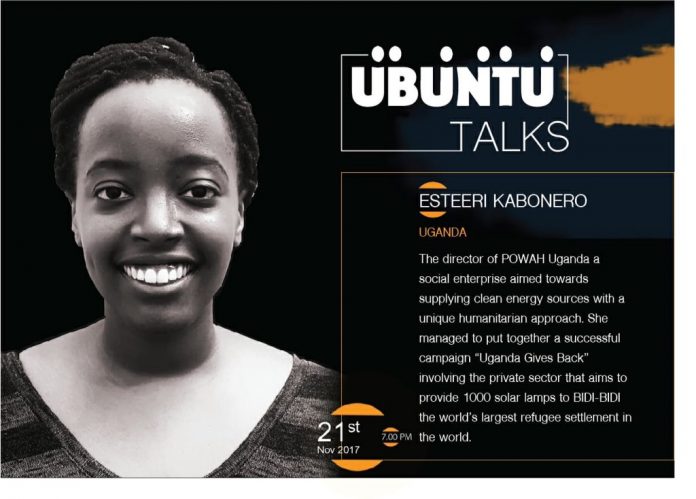
When Esteeri Kabonero got back to Uganda after being raised in the United States and working in Rwanda, her focus was on energy access for under-served communities. She did not realize how badly refugees, especially from South Sudan had been living.

“Headlines throughout the world had been talking about how Bidi Bidi refugee settlement, one of the largest settlement in the world located in northern Uganda, was at a breaking point.” Esteeri says.

Bidi Bidi refugee settlement is home to thousands of refugees with 64% being children under 18 and 86% women and children benefiting from Uganda’s open refugee receiving policy that has seen her become one of the leading countries in the world with high number of refugees.

According to the United Nations High Commissioner for Refugees by the end of May 2017, Uganda was home to 1,233,966 refugees, originating from South Sudan (947,427), the Democratic Republic of the Congo (204,413), Burundi (34,241), Somalia (25,321), Rwanda (13,907), Eritrea (4,310), Sudan (2,549) and Ethiopia (1,798). Still, by the end of 2016, Uganda had the fifth-largest refugee population after Turkey (2.9 million), Pakistan (1.4 million), Lebanon (1million) and Islamic Republic of Iran (979,400).

Esteeri during one of her recent visits to Bidi Bidi Refugee settlement

“Even when Uganda is one of the most hospitable countries for refugees, we do not have enough resources to provide to them. Families in Bidi Bidi for example live in huts or UNCHR tents and many are living in darkness, school children, that found a little bit of home in school, can’t study, hospitals are left in darkness. Thus, this is where I knew we wanted to start.” Esteeri explains.

This led to the founding of Powah, a last mile distribution and community development company with a mission to provide access to products and services that will better energy, education, health, and entrepreneurial activities in refugee settlements in Uganda focusing on Bidi Bidi.

“We went to Bidi Bidi Refugee settlement to understand how refugees live. I had told people I wanted to help the refugee crisis in northern Uganda, but how could I help if I had never been there. I think sometimes we hear about crisis but do not understand it. After visiting and seeing poor energy connection we came up with the PowahAll campaign.” She says.

The social enterprise is providing solar lights to school children in Bidi Bidi Refugee Settlement, one the largest settlement in the world. This is being done through raising funds via crowd funding and a social media campaign (using the hashtag #PowahAll).

“The campaign aims to power 1000 refugees in Bidi Bidi refugee settlement giving them solar lamps. We have just launched our crowd funding campaign whereby anybody around the world can donate using mobile money or Credit cards at akabbo.ug/campaigns/powah/. “ Esteeri explains.

So far, the social enterprise has managed to raise 300 solar lamps out of the 1000 target that it seeks to deliver to the Refugee settlement in Northern Uganda.

But it has not been an easy ride for the team. The biggest challenge Esteeri and team has faced, is finding people that also have that motivation and vision, who are also looking to make an impact in the community.

“You can have the best idea in the world but if you do not have a good team to do it, it will never reach fruition. So, while I might have been the founder I have had a team behind me as well.” She notes.

Financing the project also remains a big challenge- which many entrepreneurs have face. Esteeri notes that many grants and funding opportunities are based in western countries, until Uganda can create funding opportunities and angel investing a lot of entrepreneurs will never see growth.

But despite the challenges, Esteeri has a vision, which is a message she wants every young person to know and believe in.

“What discourages people (especially young people) is a short term focus. If you have a vision or purpose, an end vision you want to achieve, you can create mini goals to get to that vision. If you have a purpose even when things go wrong those failures just teach you to take a different road or strategy.” She says.

Powah believes in an access to renewable energy for all. (Photo credit: Powah)

Esteeri also believes in the need to have many more female entrepreneurs to change the narrative- the few numbers of women in business. According to her, its hard being an entrepreneur in general, but when you are in the minority it’s even harder. Entrepreneurs solve problems in our communities, if we do not have females solving problems we miss out on innovations, new ideas, women centered problems that men may never realize need to be solved.

“Uganda has supported refugees from all over the world, its time the world supports Uganda. How? We must engage and support those that are making an impact and changing the face of the country.” Esteeri concludes.

Like this story or have something to share? Write to us: info@thisisuganda.org, or connect with us on Facebook and Twitter.

Uganda police has rescued four women being trafficked to the Middle East

0

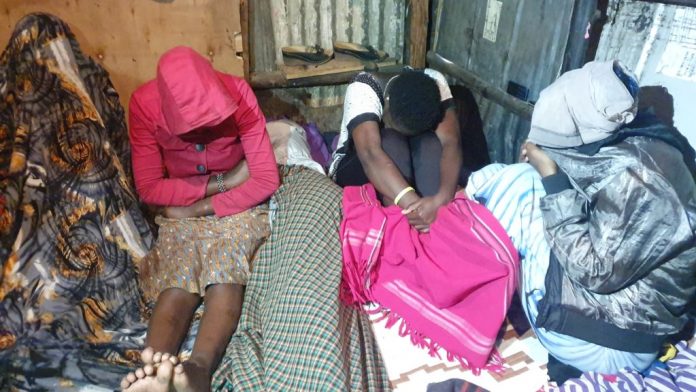
Ugandan police in Tororo District have rescued four women who were about to be trafficked to the Middle East after being offered work in Oman as cleaners.

Ugandan police stated the young women were rescued from a guest house on the Uganda-Kenya border, where the human traffickers had paid for their accommodation, shortly before an attempt to smuggle them out of the country.

Bukedi regional police spokesperson Kamulya Sowali said the women were aged between 22 and 28 and came from Kampala and Wakiso, Uganda’s Daily Monitor reported on Monday.

Sowali added that the police had been tipped off by hotel management who reported that the girls were restless and making frequent phone calls.

One of the traffickers, a 25-year-old from Tororo District was found in possession of the victims’ properties, including travel documents following his arrest.

During his interrogation the suspect confessed to having coordinated the trafficking of the victims on behalf of his trafficking company.

“We are interrogating him further to get more details as well as helping us to track the key people involved in the business,” Sowali said.

In addition to the attempt to lure the women out of the country the traffickers had also tried to extort them into paying hundreds of dollars to facilitate their trip, including securing travel documents and paying for the transport involved.

Neither is this the first case of trafficking on the Uganda-Kenya border with a number of previous cases reported.

Experiences

Top 5 Cultural Attractions in Uganda

0
Cultural tourism is the practice of traveling to experience and appreciate the unique cultural heritage, traditions, and lifestyles of a particular destination. This involves...
Mountain Biking in Uganda

Mountain Biking Around Uganda

0
Mountain biking. The sport has been embraced worldwide hitting the mainstream in the past 20 years when bike manufacturers realised the growing popularity of...
Kampala Tourist Guide

10 Geeky Things to Do in Kampala

0
Kampala is located in central Uganda on the shores of Lake Victoria and is the capital and business center of this countries.  Kampala is...
Mgahinga Volcanoes

Go Gorilla Trekking in Mgahinga National Park

0
Uganda the pearl of Africa is blessed with half of the total mountain gorillas living in the whole world and the mountain gorillas in...
Bwindi Mountain Gorilla

Visiting the Mountain Gorillas in Bwindi Forest

0
Mountain gorillas are subspecies of primate animals called gorillas. Gorillas are the largest great apes left in the world which live in the tropical...
Bwindi Impenetrable Forest

Experience Mountain Gorilla Trekking in Bwindi

0
Mountain gorillas are subspecies of primate animals called gorillas. Gorillas are the largest great apes left in the world which live in the tropical...

5 Amazing Things to Do in Budongo Forest

0
Budongo forest is one of the largest conserved forest areas in Uganda covering an area of 841 square kilometers. Located with Murchison falls national...
canopy in Nyungwe NP

Journey to Explore Rwanda’s National Parks

0
Rwanda is a small and landlocked country boarding east African countries. It is bordered by Tanzania in the east, Uganda in the north, Burundi...
East Africa Safari

Things to Do in East Africa

0
Ballooning Mountain Climbing – Rock Climbing & Mountain Biking. this is done in Mr. Rwenzori national park in Uganda, Mount Kilimanjaro national park...
Lake Bunyonyi

Holiday at Lake Bunyonyi in Uganda

0
Lake Bunyonyi is one of the most scenic places in Uganda famous to travelers who take a circuit to the attractions in the western...