Home Blog Page 21

Uganda set to host the East African festival- JAMAFEST 2017

0

Uganda is set to host the third edition of Jumuiya Ya Afrika Mashariki Uamaduni Festival (JAMAFEST) in a bid to promote social economic ties, tourism, and trade among the East African Community  Member states.

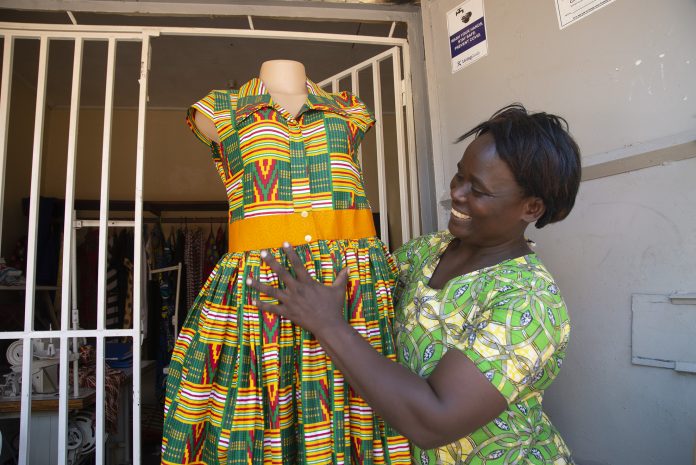
The Festival is slated for a week starting on 7th September and ending on 15th September which will incorporate a cultural fashion show that’s expected to attract over 3,000 people on the 14th. The festival will be hosted at three venues; Kololo Independence grounds (main event grounds), The Pearl Of Africa Hotel (Fashion Show and closing dinner gala), and at the National Theater (film festival, comedy, and drama).

The festival will also have a carnival that will be running through select parts of Kampala city. Other activities to run during the festival include; live musical performances, theatre/comedy, arts and craft exhibitions, literary works, film shows, poetry, storytelling, acrobatics, workshop/symposium, culinary art, fashion show, and children’s theatre. There will also be a cultural marketplace where cultural goods will be sold.

The JAMAFEST 2017, will run under the theme, “ Culture and creative industries: An Engine for unity and Employment Creation”. A theme Song has been composed and will be played throughout the festival period as part of the publicity campaign of creating awareness of the role of arts and culture in regional integration.

The East African Community (EAC) Partner States under Article 119 of the EAC treaty, undertook to promote close co-operation among themselves in culture and sports, with respect to the promotion of cultural activities, including the fine arts, literature, music and performing arts and other artistic creations as one way of creating an East African as one Community.

JAMAFEST was instituted by the 20th Meeting of the East African Community Council of Ministers held on 20th March 2010 and subsequent Council of Ministers’ Meeting held in September 2011, which directed the EAC Secretariat to organize regular EAC Arts and Culture Festival in the EAC Partner States on a rotational basis. The first edition was held in February 2013 in Kigali Rwanda and attracted an audience of over 17,500 people, the second edition was held in Kenya in 2015 and it also attracted a significant number of people.

The Crested Crane, Uganda’s Chosen Crest

0

It walks with grace and serenity, as though the life of the country it symbolizes, depends on its every step. The Crested Crane – chosen as Uganda’s Crest (national symbol) nearly 100 years ago, is one of the most cherished birds in the country.

Commonly called the Crested Crane, it is a bird of national significance to Uganda, occupying a prime position on the country’s national flag and coat of arms.

The Grey Crowned Crane, scientifically known as Balearica regulorum gibbericeps, inhabited Uganda’s swamps and fields long before the coming of tribes in our territory.

The unusual gracefulness of the elegant Crowned Crane, aptly typifying the country and its people, attracted then Governor of Uganda -Sir Frederick Jackson who, in 1893, chose it to embellish the Union Jack with its exquisite form and heraldic dignity.

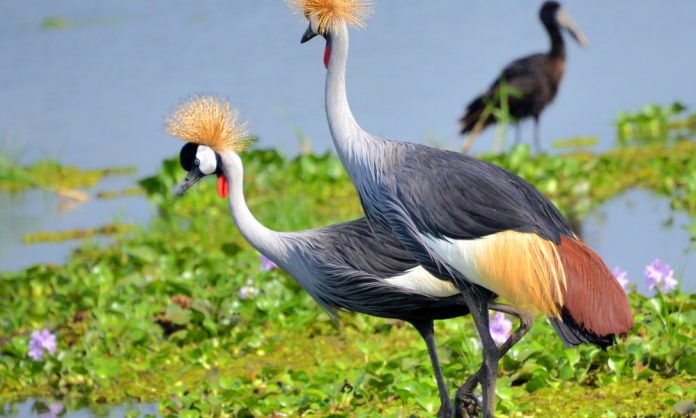
With a crown of stiff gold-colored feathers on its head, a bright red gular sac and body made of gray, brown, gold and white patches, the grey crowned crane stands out for its striking features.

The Crane is definitely an object of great beauty. It is a tall bird standing well over three feet, on long-slender black legs. Its neck is almost as long as its legs and towards the base, pointed pearl-grey feathers are elongated to form an ornamental fringe.

The tail feathers, comparatively short, are the color of dried straw. When at rest, the Crowned Crane seems to be enveloped in a cape of exquisite delicacy with its multi-colored head where the three colors of the Uganda’s Flag (Black, Yellow, Red) seem to be represented. The conspicuous velvety black forehead, yellowish crest and the vivid bright red wattles, make the Crested Crane an elegant creature, befitting its emblematic role.

There are 16 different species of Cranes in the world, four of which are found in Africa, including the ‘great’ Grey Crowned Crane, the Uganda national symbol. All these willowy creatures in the world are in one way or another, facing unfavourable conditions brought about by their ‘greatest friend’, Man, who works for their ‘survival and protection’.

Crowned Cranes generally inhabit dry and wet open areas including marshes, damp fields, and open margins of lakes and rivers, but rarely associated with open waters. In Uganda, the Crowned Cranes prefer freshly-ploughed fields to grasslands and short to tall grass.

Lifestyle: Courtship, feeding and Breeding

The grey crowned crane has a breeding display involving dancing, bowing, and jumping. It has a booming call which involves inflation of the red gular sac. It also makes a honking sound quite different from the trumpeting of other crane species. Both sexes dance, and immature birds join the adults. Dancing is an integral part of courtship, but also may be done at any time of
Their food consists of plant and animal matter including grass and sedge seeds, millet, rice, peas, corn, mollusks, crustaceans, insects (grasshoppers and flies), fish, amphibians and reptiles. They feed by rapidly pecking at food but they sometime uproot plants and rarely dig. They prefer seed heads of grasses and sedges.

Crowned Cranes are monogamous and pair for life. Though they may appear in flocks at a breeding area, they separate in pairs and nest singly controlling territories of about 1-1.5km2 defended by both sexes. They perform a series of courtship displays and excel in dancing, displaying their grace and beauty to the fullest. They twirl and curtsy to one another, with their wings wide open and held high above their backs. In this strange position, with the bill pointed skywards, it gives out a deep, booming love-call delivered from a fully inflated throat.

Man and the Crested Crane

To the many different tribes of Africa, the call of the Crowned Crane suggests many word variations and the sounds are varied and full. Thus to a Muganda the call is Ng’aali; to a Swahili M’waari; to an Acholi, O’welo; to Zulu of South Africa, the sound is Maahem and the same sound is Muraaho to a Munyarwanda.

Different tribes and people have learnt through time how to interact with the Crane, and in most areas, the Crane helps to tell people the time of the day through their calls which are done at specific times of the day. They are regarded as the birds of joy and relaxation in most parts of the country. For instance, when people clap and sing a particular song, the Cranes dance by nodding their heads. This happens in all places where Cranes exist.

It is estimated that number of Grey Crowned Cranes in Uganda has reduced from more than 70,000 in 1970s to less than 10,000 in 2011. The global threat status declined from near-threatened to vulnerable to endangered in less than five years, and indication of global concern on the survival of Cranes in the region.

It is also estimated that the large number of the Cranes we see today are old individuals who may not survive beyond 15-20 years.

Habitats

Most crested cranes live in mixed wetland habitats, on riverbanks, around dams and open grassland. As a result, they often forage on agricultural lands, which are close to wetlands or riverbanks, feeding on grass seeds, small toads, frogs, insects and other invertebrates.

It is this easy co-existence with humans that is putting the cranes’ survival at risk.

Crested cranes breed in wetlands and this is a good reason for us to see that the environment is conserved.

Crowned Cranes are known to breed in swamps but a combination of increasing human population has tasked these beautiful birds to leave with man due to the demand for wetlands. Eastern and south-western Uganda are the major critical areas for the survival of the Crane.

The level of human activity in swamps influences the ability of Cranes to care for the young and successful breeding. The loss of habitat, therefore, combined with the species low reproductive rate and frequent capture of young, raises concern about the Crane’s survival.

Conclusion

There is no bird more truly representative of Uganda with its meadowlands and sparking green grass, than the Grey Crowned Crane. Throughout the country, there is not a natural sound more typical than the trumpeting of the Crested Cranes as they move to their feeding grounds or fly to the roosting sites in the dimming light of evening.

13 Ugandan artists We Met on #DrawingWhileBlack Who Will Inspire You

0

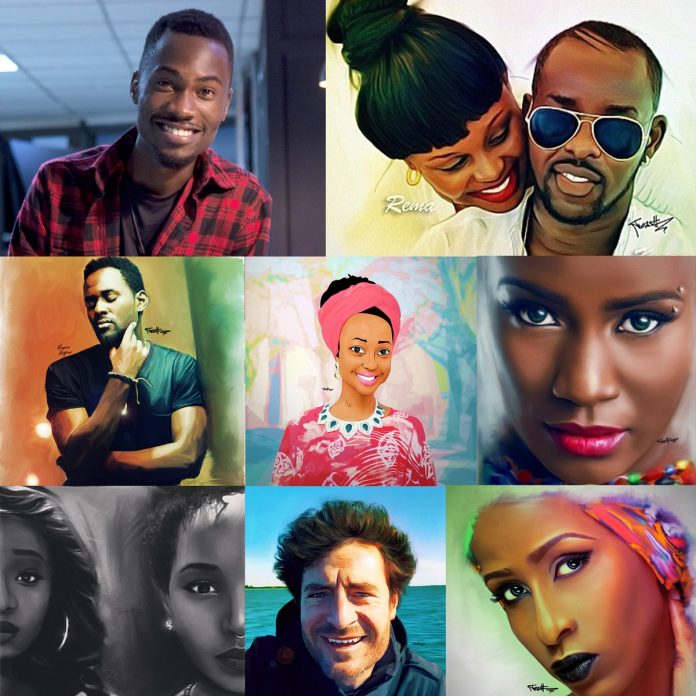
if you’ve spent any time on Twitter over the last few days, you might have noticed a lot of really cool art from around the world taking over your feed.

Black artists, graphic designers, and illustrators from all over the world are introducing themselves and showcasing their art to the timeline and to the world, using the hashtag.

You can thank Annabelle Hayford (@sparklyfawn), a 19-year-old, a gender artist studying animation and illustration at the Maryland Institute College of Art (MICA) for rallying others in their field to share their work.

Some EXTREMELY TALENTED Ugandans across the globe did not sit down. From New York, to London, Kampala and across the globe, Ugandans took to Twitter to also engage in the challenge and boy oh boy, they are proving that Uganda has got talent.

Let’s not talk too much. Here they are. Enjoy!

1. Here’s Solomon W. Jagwe

I am Solomon W. Jagwe a Ugandan Artist, I love modeling, painting, Illustration and animating Children’s stories #Uganda #drawingwhileblack pic.twitter.com/6OJLPEMdb0

— Solomon W. Jagwe (@soreel) September 19, 2017


2. And then JNK

3. Say hello to Franco Mpagi who-wait-for-it uses black ink to create his murals

#drawingwhileblack Hey…I am an artist from Uganda. I use black ink to create my murals. pic.twitter.com/1tdp3U1Fdl

— Franco Mpagi (@FrancoMpagi) September 18, 2017


4. It seems we won’t get enough of Solomon W. Jagwe

I am a concept artist, 3d modeler and animator born in #uganda currently working as an Art Director for a VR game studio #drawingwhileblack pic.twitter.com/lpWb5jQx5K

— Solomon W. Jagwe (@soreel) September 17, 2017


5. Enter the super talented Neema Lyer

Sending love from Uganda/ East Africa ❤️❤️❤️ #drawingwhileblack pic.twitter.com/qit8B8no0g

— Neema Iyer (@NeemaIyer) September 17, 2017


6. Here comes Andrew Mamawi. He’s not at all affiliated to Game of Thrones

https://twitter.com/andrewmamawi/status/909773450138484737

7. Introducing Elise aka Seiishin who does character design and story-boarding in animation

ey! i’m Elise aka Seiishin, a pansexual artist from Uganda hoping to do character design or storyboarding in animation! #drawingwhileblack pic.twitter.com/d9Padqtagx

— Seiishin (@fox_seiishin) September 15, 2017


8. Dorothy had to introduce Xenson because a multi-media artist needs some respect!

Let me introduce to you @XensonXpression a multi media artist from #Uganda #drawingwhileblack pic.twitter.com/Tv4xu5UD74

— Dorothy Nabunjo (@redroseflow) September 19, 2017


9. The only ballpaint artist on the hashtag- so far. Say hi to Michael Dungu

Halo…my name is Michael Ddungu a ballpoint pen artist from Uganda #drawingwhileblack pic.twitter.com/pPXhsjafwj

— MiKaiyiLi (@Dungumichael1) September 19, 2017


10. Everyone stand up for Jonas Rayme. This guy is a gem!

I am Jonas Rayme, a Digital painter,…. from Kampala, Uganda! 😉#drawingwhileblack pic.twitter.com/T8256ddpMO

— Mbaleka Jonás Rayme™ (@jonas_rayme) September 19, 2017


11. Darsan Aine is a super talented chap!

This is my friend Darsan Aine from Uganda 🇺🇬. I believe he is one of the most talented artists in Uganda. RT to give him some market! pic.twitter.com/LDEKOaurO0

— Musonera Joshua Ntale (@NtaleJoshua) September 18, 2017


12. EZI (not Mr. Eazi) the vector artist also came through!

https://twitter.com/eziwear/status/909640051470061569

13. Daniel the low key chef made a plot twist!

Hello, I’m Daniel from Uganda 🇺🇬. I’m an artist and low key chef. These are some of my works. Hope you like them. #drawingwhileblack pic.twitter.com/3OCOMd3f8M

— Busingye the Artisté (@nsdannie) September 18, 2017


Absolutely amazing art!

If you’re an artist and want to talk to us about your art, we’re eager to say hello! Send us an email on info@thisisuganda.org and let’s talk!


Meet the youth connecting Ugandans worldwide through SnapChat.

0

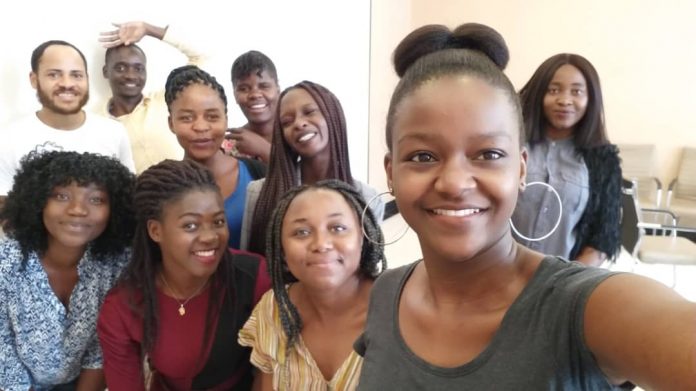
Before, they started showcasing different Ugandans in the diaspora and back at home, we only met most of these folks on Instagram and Facebook- we didn’t really know what their day was like, the things that made them happy. We judged them thinking they didn’t love Uganda (home) but after Code256 and their baby, “Ugandans on SnapChat,” we now know better.

This Is Uganda caught up with Levie Davis one of the awesome youths behind “Ugandans on SnapChat”;

What inspired the start of Ugandans on Snapchat?

What inspired us was the fact that we (in the Diaspora) were actually missing home and that made us want to connect with friends and family back in Uganda… And snap chat is the best platform to do so.

Is this a case of patriotism?

Yes it is a big case of patriotism because we feel being away from Uganda doesn’t detach us from our country but should rather bring us all together regardless of where we are.

How do you vet who hosts the show on Code256?

We don’t really vet anyone according to anything because we want to give everyone a chance to take us through their daily lives and day-to-day activities.

What is the goal behind Code256 “Ugandans on Snapchat”?

Our goal is to connect many people; mainly Ugandans from all over the world so that it doesn’t feel like someone has to wait till summer or December to see them. Now, it’s easier for anyone to ask any host anything they would like to  know. I believe it also builds connections to some people who would want to know more about different places and different people.

Where do you envision Code256 in 3 years?

In the next three years, we think Code256 will be quite more informative and bigger a platform not only on snapchat since we will probably be done with the campus. We hope to portray that Ugandans should not feel inferior or shy about themselves and they should know that they represent something substantial!! #Ugsnapper ✊🏿

The ‘Ugandans on SnapChat’ team;

  1. Levie Davis am studying in South Africa
  2. Ainomigisha Alex is studying in China
  3. Theo Esther in flying school in South Africa
  4. Joseph Maloba  in Uganda
  5. Linah Nanziri in Uganda

You too can join the trend and follow the awesome stories told by Ugandans all around the world by adding @code256-ug on Snapchat or Twitter.

Entebbe Emerges as a Dazzling Snare for Tourists

0
Entebbe City

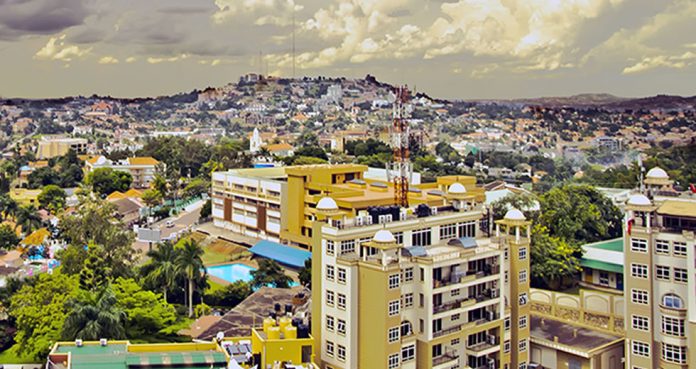
Entebbe. It’s a town of civility and bright reflections. A town of dazzling history and paradoxes. A town of both old and new. A town that evokes genuine, small-town charm.

Well, this incredibly scenic town, which is set on a peninsula stretching into the mighty Lake Victoria, some 37 kilometres southwest of the Ugandan capital Kampala, doesn’t really need a comprehensive introduction – but perhaps its emerging tourism scene does.

See, just a few years ago, Entebbe was on a few international tourists’ bucket lists. Even though a big number of travellers to Uganda enter the country through Entebbe International Airport, in the past years just a tiny fraction would stick around to see this town in all its awesome glory.

Nexus of change

But now Entebbe presents a nexus of change. Over the past few years, Entebbe-ans have slowly but surely learnt how to promote what this perennially chic town has to offer.

Uganda’s former capital city and the scene of the 1976 Operation Thunderbolt – one of the most daring military operations in world history – Entebbe comes across as an improbable contender for the honour of the most beautiful town in Uganda. And yet that’s exactly what it is, thanks principally to its strategic location.

To draw in tourists, Entebbe has been newly invigorated with high-end hotels and cool restaurants and bars, as well as one hell of a modern shopping mall, the Victoria Mall. Ah, and the new four-lane Entebbe-Kampala Expressway!

Hotspots                                

A bit of a showpiece, the Victoria Mall is the perfect modern hangout that is of late luring hordes of local and foreign tourists alike with its sleek cafes, bars, supermarkets and restaurants.

From the Victoria Mall, you can stroll just a few minutes up the street, where you’ll find several restaurants and bars serving up a variety of foods and drinks. A typical lunch at Faze 3, which has a sweeping view of the lake, might include the pot pie, great Ugandan coffee and fruit shakes. Fans of Chinese food can try the China Garden while those interested in good pizza by the lakeside are catered for by the nearby Goretties Pizza.

For accommodation, there are several options in Entebbe, catering to both the high-end and budget traveller. Options for the latter include, among many others, Boma Guesthouse, which is located on Julia Sebutinde Road; the Banana Village Eco Resort, located off Garuga Road (12 Kilometers from Entebbe town); and Entebbe Travellers Inn, located on Portal Road right in the town centre.

Entebbe Backpackers, located on Church Road, is the perfect anchor point for international travellers to Entebbe, grounding them with the gift of new connections. This one offers hostel-style accommodation facilities and camping options for budget travellers.

For the high-end traveller, we recommend the 4-star Imperial Botanical Beach Hotel on Lugard Avenue, which is known for attracting a jet-set and star-studded crowd. The hotel offers the option of spending a night in the same room in which former US President Bill Clinton slept when he visited Uganda about two decades ago. The price for this room is $1,750, while others go for as low as $100 per night.

The Laico Lake Victoria Hotel, located strategically on the Kampala-Entebbe Airport Road, is another high-end facility set near the golf course. Describing itself as the “true oasis of tranquility”, this 4-star hotel overlooks Lake Victoria and is only a five-minute drive from the airport. However, as luxurious as the hotel might be, many might find its rates a tad exorbitant for an urban Ugandan hotel with the entry-level rooms staring at $143 per night.

For those who are not interested in the restaurants, hotels and bars, there are several fun, exciting and inviting things to do in Entebbe, no matter what kind of experience you prefer…

Uganda Wildlife Education Centre

For many years, the main tourist focus in Entebbe was the Uganda Wildlife Education Centre (UWEC). Originally known as Entebbe Zoo, this is a sanctuary for a wide range of wildlife. Ideal for a family day out, a visit to UWEC rewards visitors with up-close encounters with wild animals such as giraffes, rhinos, lions, elephants, leopards, buffalos, zebras, antelopes, etc… In fact, you’ll get to see Africa’s Big Five – all in this 72-hectare sanctuary. And in-house guides are always on hand to help you unlock UWEC’s hidden secrets.

Golfing

If you are an avid golfer, Entebbe has you covered. Located just opposite State House and on the shores of Lake Victoria, Entebbe Golf Club also offers classes for those who want to make a foray into this elegant game. It also has two tennis courts, one basketball court and a cricket oval. And for history buffs, this is said to be the oldest golf course in East Africa!

Botanical Gardens

Another highlight in Entebbe is the National Botanical Gardens of Uganda, established way back in 1898. The gardens are ideal for strolling in the afternoons and are of special interest for wildlife, including the black and white colobus and tree squirrels. For birdwatchers, the gardens are said to be home to more than 100 bird species and if you are lucky you might spot the verreaux’s eagle owl, Africa’s largest owl. Plants species here are said to be over 2,500, mostly tropical and sub-tropical.

Ssese Islands, Reptile Village & the Chimpanzee Sanctuary

The Ssese Islands is an archipelago floating on Lake Victoria. Just three hours by ferry from the mainland, the islands offer several leisure activities, including nature walks, fishing, kayaking and quad biking.

Those interested in reptiles can visit the Uganda Reptile Village, which is located about one kilometer from the town centre on the Entebbe-Kampala highway. This facility was established to teach locals how to co-exist with reptiles safely. You’ll find here all types of chameleons, snakes, crocodiles, etc.

And then there is the Chimpanzee Sanctuary on Ngamba Island, just a few kilometres offshore from Entebbe, where you’ll be rewarded with up-close encounters with our closest cousins.

In Entebbe, life is a beach

Even though the aforementioned activities are rated high among what most tourists enjoy in Entebbe, natural beauty remains the main motivator for travel to this town. Because it’s on a peninsular, Entebbe provides visitors with numerous unspoiled beaches catering to people from all walks of life. For those seeking rest and relaxation, few places in Uganda can match Entebbe’s beach life. However, Lido Beach and Aero Beach can sometimes get chaotic, especially during public holidays when Kampalans export their disorderliness to Entebbe.

Here is how you can make Sautéed Fresh Maize the Ugandan way!

0

I have found out that there are a million and one ways to make maize (corn). We have maize growing in the backyard and boiled maize has been on the menu a lot these days (A LOT!) that I realized I haven’t shared a recipe here. This is my father’s signature recipe (among many others). It is a special one really because it only happens whenever there is an abundance of fresh maize! The fresh kernels have a slight sweetness to them and when they are sautéed in oil and other spices, the flavor intensifies while at the same time leaving the maize soft. It even has a natural meaty taste. Seriously! The next time you find yourself with more than enough fresh maize, try this.

What you will need

10 Fresh ears of maize/ 3 C. Maize kernels

2 Tomatoes, finely chopped

2 Green pepper, finely diced

2 Carrots, finely diced

1 Large onion, finely diced

A handful of green onions, finely chopped

2 cloves of garlic, crushed and chopped

Ginger, crushed and chopped

Cooking oil

Salt to taste

Black pepper (optional)

Observations:

  1. The size of maize and kernels vary.
  2. On some ingredients, I did not put any specific measurements because everyone has personal preferences.

Method
Using a sharp knife, cut the kernels off the cob and set them aside. On medium fire, add oil and wait for it to get hot. Add the garlic, ginger, and onions. Let them brown a little. Add salt and tomatoes. Let the tomatoes soften. Add the maize kernels and stir. Add the green peppers and carrots and stir well.  Keep stirring. Add the black pepper and keep stirring. Once all the kernels are translucent, and a savory flavor is wafting in the air, remove from fire. This might take 20-30 minutes. Add the chopped green onions and serve hot.

Contributed by Sophie. Follow her blog akitcheninuganda.com for more local cuisines.

How this woman is empowering youth in slums to turn their passions into sustainable careers

0

Unemployment remains one of the most highlighted challenges for young people in Uganda today. The 2014 Uganda Census Report indicates that Uganda’s population between the productive age of 14 and 64 is slightly over 18 million. with 58% of this population group unemployed, it means that Uganda’s total non-utilized labour potential is 10.4m as of 2014.

One woman is trying to change this status quo.

Meet Noeline Kirabo, a change agent and the founder and C.E.O of Kyusa Uganda, a non-profit organization that is empowering out of school youth to become employable by starting their own business or get available jobs.

“Our organization focuses on youth between 15 to 25 years of age to help them discover and harness their passions and make them employable in the fast growing entrepreneurial environment of Uganda.” Says Noeline.

It all started as a dream when Noeline herself was working a full time, well-paying job. She desired to do something that would leave a legacy. Having a background of not being in tertiary education herself, she wanted to offer the same hope to youth who withdraw themselves from endless possibilities because they consider themselves unemployable due to dropping out of school.

The organization has been in existence since 2014 and has grown from its pioneer lot of 10 students to a total of 250 graduates

‘My passion derives from my experience as a former school dropout. I educated myself using online courses. When I got my first job, there was no turning back. At the height of my career, I was challenged to think about the legacy I wanted to build. The more I thought about it, the more I realized that my passion was in people developing more so empowering youth to live purposeful and fruitful lives.’ She says.

Kyusa seeks to eradicate the issue of youth unemployment by accelerating youth employability. The organization has been in existence since 2014 and has grown from its pioneer lot of 10 students to a total of 250 graduates with great testimonies about the impact Kyusa had on their lives.

The initiative offers programs that include business startup trainings for potential entrepreneurs, business acceleration for small and micro entrepreneurs, employability class for youth seeking to enter formal employment.

“Support programs are also offered to participants including mentor matching with business icons, exposure filled visits to gather hands on skill, support to attend vocational training, apprenticeship training, apprenticeship placements, business branding and incubation. “ Noeline says.

Kyusa helps youth discover and harness their passions to make them employable in the fast growing entrepreneurial
environment of Uganda

This rich syllabus has seen majority of the Kyusa alumni successfully running small and medium enterprises.

Julius, one of the alumni from Kyusa started a catering business that has grown into a full restaurant operating in Kisenyi. He employs four people and is working with Kyusa to start an apprenticeship program. He also runs an Events Management Company where he offers ushers, public address system and outside catering services and employs 20 youth on part time basis.

Another beneficiary Henry, runs a commercial farm on eight acres of land. He grows fruits and vegetables. Henry employs 15 youth on his farm and he is also working with Kyusa to launch an agribusiness training center for youth on Nakaseke.

Deborah another alumni,  has started a pineapple jam business and is in the process of standardizing the brand so as to sell across the East African market.

Noeline is a 2013 Kanthari fellow, 2014 Hive San Francisco fellow, 2015 Cherry Blaire Foundation Mentee, 2016 Community Solutions Program fellow, 2017 YALI Regional Leadership Center Fellow.

This rich syllabus has seen majority of the Kyusa alumni successfully running small and medium enterprises.

The journey has not been all rose and no thorn for Kyusa. Noeline started out with very little funding from friends and family. She had to learn to get the job done with the few available resources which is a valuable lesson up to date. But like they say, ‘Where there is a will, there is a way!’ Overtime many people have bought into the vision and partnered with Kyusa to get to this point.

Noeline looks up to her mother who made her believe she could be anything she set her heart to. She is inspired by Pastor Moses Mukisa of Worship Harvest ministries who has taught her a lot about vision, people development, leadership and resourcing for the vision.

Kyusa ultimate vision is to build a replicable model that will empower 10,000 youth annually across the African continent through the collaborative efforts of partners across Africa.

How Amina Osman is Living her Childhood Dream At 24 Through Helping Refugees

0

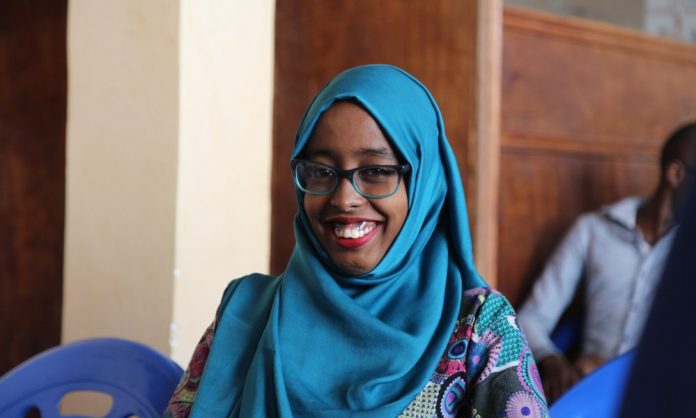
Amina Osman is a young Ugandan of Somali origin volunteering with the refugees and Inter Aid Uganda, an NGO ensuring that refugees in Uganda live in safety and dignity. Her family moved to Uganda from Somalia in 1990, after a civil war-ravaged the horn of Africa when she was an infant.

“As a young girl, I always wanted to help the refugees. I grew up hearing about their constant hardships from relatives and this gave me the urge to use my privileges as an educated young girl to make a difference in their lives,” Amina says.

She opens up during a session at a consultative meeting with young people that took place on June 8th at Young African Refugees for Integral Development (YARID) in preparation for the Uganda Solidarity Summit on Refugees. The meeting, supported by the United Nations Population Fund, (UNFPA) brought together young people from both refugees and the host communities to discuss how they can use the opportunity of the Summit to show the world that young people are an asset for inclusive sustainable development of both refugees and host communities.

Amina’s story illustrates that this is possible. “On arrival in Uganda, we were granted refugee status and found the first settlement in Nakulabye in “Kiyindi”( named after the big number of Indians staying there). I am now pursuing my degree in Business Computing from Makerere University Business School,” She narrates.

Amina Osman (holding a microphone) moderating dialogue with young refugees and Ugandans in Kampala in preparation for the Solidarity Summit. (Photo by Reach A Hand, Uganda)

For her having grown up with a refugee background, being able to assist refugees especially young people is something she has always wanted to do from her dreamy days as a young girl.

Last year, Amina signed up for Reach A Hand Uganda (RAHU), Peer Educators Academy, a program that empowers young people with skills and information on livelihoods and skills development, Sexual Reproductive Health and Rights, as well as HIV/AIDS awareness and prevention. Those who go through this program for a period of one year because trainers, sharing the skills with their peers.

“The skills and information I have gained from this program will facilitate my work with refugees, especially those of my age bracket,” Amina says. “The fact that I am peer educator gives me insight and knowledge, it fuels my passion even more.”

Amina says that working and interacting with young refugee men and women, she has discovered that most of them are willing to integrate and be part of the host community.

“Even when most of them have lost almost everything important to them, their willingness to give life a fresh start is humbling and my drive towards making them feel comfortable while at it,” she said, with a pensive look on her face. “I admire their ambition and optimism, seeing how eagerly these young refugees are willing to learn something new and blend in their new homes and communities.”

A section of the refugees in Uganda during the consultative meeting. (Photo by Reach A Hand, Uganda)

For Amina, in the one year she has spent working with refugees she has seen that they have the creativity to come up with a whole new blend of jobs, which she argues can be employment avenues to other young people – both refugees and host communities. This is one way of improving the livelihood of the entire community, thus catalyzing development.

According to UNHCR Uganda is experiencing the fastest-growing refugee crisis in the World, with over 1.2 million refugees and far-reaching economic and social impact. A big population of them are young people. From Amina’s account, there lies a lot of potential for social-economic development.

Like this story? Or have something to share? Write to us: info@thisisuganda.org, or connect with us on Facebook and Twitter.

Changing Uganda’s Public Health Landscape One Flash Mob at a Time

0

In 2011, a group of Ugandan public health students at Kampala’s International Health Sciences University began learning to salsa dance in their free time. When they mastered salsa, they learned other dances, over time becoming some of the best dancers in Kampala. In a small room on campus, across the courtyard from the hospital where their classes were

I met PHAU founder Segawa Patrick in Bali, Indonesia, when I interviewed him for the Family Planning Voices initiative at the International Conference on Family Planning in early 2016. Several months later at the Women Deliver conference in Copenhagen, Denmark, I watched as Patrick organized and led an international flash mob — a focal point of the conference and one of PHAU’s signature approaches to public health messaging. As dozens of young people from around the world danced through the convention center in Copenhagen, my colleagues at the Knowledge for Health (K4Health) Project and I knew that PHAU was an organization we wanted to get to know. In late 2016, we flew to Kampala to share storytelling and knowledge management techniques and learn more about PHAU’s unique approach to entertainment education, or “edutainment,” for public health.


I was warmly welcomed to Kampala by Public Health Ambassadors Uganda staff. Clockwise, from top left: Elizabeth Futrell (me), Amase Diana, Kasaija Joseph, Segawa Patrick, Guntesse Catherine, , Gimugu Daphne. Photo credit: David Alexander, CCP/Family Planning Voices

Public Health Ambassadors Uganda has focused their boundless energy on addressing several pressing sexual and reproductive health issues in Uganda: menstrual hygiene management, the lack access to which keeps contributes to millions of school absences in Uganda each month; HIV and AIDS, which afflicts 7% of Uganda’s adult population; and access to contraceptive information and services, a pressing need in a country whose fertility rate is nearly six children per women and whose maternal mortality rate is 24 times that of the U.S.
Whatever the health issue, common threads in PHAU’s work include passion, creativity, and an uncanny ability to connect with their young audiences. After all, the oldest person on PHAU’s staff is in his early 30’s, and the majority of the PHAU staff are in their mid-20’s. During our visit, I watched their youthful energy, magnetic personalities, and knowledgeable professionalism attract community members of all ages to the health information and services they were offering. In the short amount of time they’ve been operating, they’ve made a difference in thousands of lives, and they’re just getting started. Here, six Public Health Ambassadors Uganda staff members tell their story.

Segawa Patrick, Founder and Program Coordinator, Public Health Ambassadors Uganda (PHAU). Photo credit: David Alexander, CCP/Family Planning Voices

Patrick: I have three sisters, and I was raised by a single mom. It’s a big source of motivation that I have to make sure I work hard and support them, especially those young sisters of mine — make sure that they finish school and they have better opportunities as well so that they can take care of themselves…. We have a strong focus on young women and girls, in terms of reaching them with the right information on sexual and reproductive health and HIV…. If you find a 15-year old engaging in risky sexual behaviors, then it rings a bell that even your sister who is just 15 could be going through the same.

Amase Dianahritah, Project Officer and Administrator, PHAU. Photo credit: David Alexander, CCP/Family Planning Voices

Diana: My brother died of HIV, but we did not know until we grew up, and then they told us, “Ok, yeah, he died of HIV.” There was a time when we were in school, and he was bedridden — that was in 2002, actually. We were still very young, and they brought us from school, because they wanted us to see how HIV kills. It was such a painful thing. We did not know the disease, but afterward, they told us, “If you mess up, that’s how you will end up.”

Mubuuke Felix, Monitoring and Evaluation Consultant, PHAU. Photo credit: David Alexander, CCP/Family Planning Voices

Felix: I come from a humble background. Most of what I am doing is shaped by what my home setting is or was. My father is a judge. My mother is a midwife, so there was a mixture of careers at home. My simple story was that our home had two mothers and so many children in that home. We were forced to be able to survive for the fittest, meaning whatever resource was available had to be shared by so many of us, and we had to ensure that we struggle to become persons of importance in the future…. Today I don’t have so many children from my home or from my body, because I don’t have so much to share. That’s why I advocate for family planning, and I also advocate for healthy families…. If you don’t have so much in your home, you can use the little that you have in your home to make you better and make you also be able to better your future family. Simple as that.

Joseph: I was a peer educator while I was still in college. People still call me from my college for information about sexual and reproductive health. They always tell me, “When are you bringing us condoms?”… At college, people have a lot of sex. Many of them have unprotected sex. For example, when they’re coming from clubs, having fun, sometimes they are too drunk or too tired. They just pick up a girl and go back home, and in the morning, they are like, “Oh my God, what happened?” … They’ll call me like, “Hey, where are you?” They meet me, and we talk.

Patrick: I studied at International Health Sciences University in Kampala, and I was very passionate about music, dance, drama. With a couple of guys who were my colleagues, we started a dance club. We were teaching people how to do salsa and Latino, those kinds of things. Usually we’d have classes on Wednesday, Thursday, and Friday. Guys would come after classes, you know, after those boring lectures, or on weekends when they have nothing to do, they come and they dance, you know, we sweat….

One time, we had a production at university. It was called The Twist. The Twist was a play that was focusing on sexual and reproductive health — in particular, issues of male involvement. Have you ever imagined what it would feel like if a man became pregnant? That was the “twist”! The other side: What if a man became pregnant? Because usually, in African settings, men love giving birth to boys. So he’s always on your case: “I need a boy. I need a boy.” Now, just imagine it’s your turn, asking him to give birth to a boy. We managed to incorporate that kind of acting, so we got the skills. We started mixing the dancing and the acting.With time, we started conducting community outreaches, using that component of music and dance.

Daphne: We started with nothing. We were just students in school. But if we were able to come this far, I can only talk to the people out there who have this beautiful idea, and they have the knowledge of how they think it can be done, and they’re just afraid to bring it out because of resources. I can just tell them, “Go out there, work hard, and things will fall in place somehow. You just have to work hard and climb well and bring your idea to the table, and things will fall into place, and you’ll be able to impact a life.”

Diana: [When] I started, they just wanted to pay me not even a single cent. But I said okay, because I love it…. We cover just a little percentage — it’s just like a drop in the ocean, the people we reach out to. Uganda has over 100-something districts, but we work in only two districts. With the other one we just got, three districts. And in those three districts, there are very few people…. But every person matters, so we try as much as possible so that the world will be a better place.

Patrick: If you compare the time of inception, where we had only one grant worth $1,000 to a point where we have been about to attract funding from different international donors…at this moment I should say that the annual income for Public Health Ambassadors Uganda is up to around US$50,000, which is quite an impressive achievement since 2014. It’s just a span of two years, but there is a lot of growth that has taken place.

Felix: I’m the oldest staff of Public Health Ambassadors Uganda…. Our staff have exposure to projects, but they might not have experience reporting to different donors, so I love it most when I’m giving feedback after the day’s activity, after quarterly reporting, or after we have won proposals, when they are attentive and they are noting down a few issues that worked well for the project, for the activity, and, of course, the challenges.

Joseph: Being in the field is part of getting the chance to do what I love most. For example, I love being with young people. When I’m at the office, I’ll be doing the paperwork, but when I’m in the field, I get a chance to meet the people I love so much…. You can’t do behavior change when you’re just in the office. When I get a chance of going to the field, I get a chance to interact with people and try to find a way of enhancing them or influencing them to have positive behavior change for their health.

Ruth: We’ve conducted some outreaches, we’ve taught people how to use condoms, and we’ve distributed condoms to prevent STIs and unwanted pregnancies. I was shy at first because it is something that society looks at differently. They look at it as a private thing. So coming out to demonstrate causes questions. But they have to get the proper information so that they can use them properly. Doing it over and over again gave me the courage to continue doing it.

Felix: I used to accompany my mother to do her family planning visits. Back then, she had a job title of Village Health Team Member. She was given a bicycle, and she would carry me to accompany her to the villages, and we would find the women in the shade and the men, and she would talk about family planning, sex, and HIV…. I loved the way she talked to clients. Her talk didn’t stigmatize those who were positive. It would have those who haven’t yet gone for testing rush to go and test to be able to know what their status is. That has made an impact on me. When we were in Luwero for our outreach, several clients came out for a test but were scared of what the result would be. My info to them was, “It doesn’t matter if you’re positive today as long as you can live for tomorrow and be able to raise your children and be able to fulfill your plan.”

Daphne: There is a project called Ensonga, for menstrual hygiene management. And I cannot speak enough about Ensonga. I see these girls who go through what I go through, and I used to think it was just normal, but it is not.

Diana: I heard a story of a girl in some district in Uganda that was in Mukuno who said she in order not to buy those pads, she preferred to get pregnant for nine months to save that time. That hit me badly, and I was like, “Yeah, this is something to talk about.” … When you’re pregnant during the nine months, you’re not menstruating, so it’s like someone is saving [money] for the nine months instead of buying pads every month, every month.

Daphne: I listened to this one girl — she’s called Patricia…. Patricia lives with her grandma, and she has siblings who also live with her grandma…. Patricia told me, “You know, grandma struggles to put us in school, to make sure we have something to eat.” It was very hard to ask her for pads every single month. She was getting frustrated, because she wouldn’t ask her grandma, because her grandma did not have enough.

When her grandma couldn’t provide, she had to use cloth — pieces of cloth. And she has few clothes. What she has is precious to her, so cutting it to fend for this monthly thing that she knows is going to come back another month was frustrating to her. She didn’t know what to do. And, you know, the pieces of cloth she would get were not absorbent enough, so she would use them, but she wouldn’t be confident going out, so she would have to stay indoors or around home…. She said she flows for at least six days and at most seven. So she would miss a lot in school, because she said she would not go to school because she always stained — she always soiled her dress, her school uniform…. And it happens every month, so imagine you’re missing school seven days a month.

section section–body”>

You should have seen the smile on her face when she got [the AfriPads]. She was very happy. She kneeled down. In Uganda, we kneel down to show a sign of respect or appreciation. She kneeled, down, and we were like, “No, no, don’t kneel down,” because in school you don’t really have to kneel. But she kneeled down, and she was like, “Thank you very much,” and she was telling me how she was going to keep them, and how she was going to get somewhere to keep them safe, how this is a life-changer. And we only gave her a pack. It was a small token from us, but the smile we brought on her face — she had a lot of hope…. She knew she would continue in school without missing, and she knew her grades were going to get better instantly…. I saw the smile on her face, and I saw hope.

Patrick: One thing that I want people to know about Public Health Ambassadors Uganda is basically that whatever they see us do — we do it because we love it. We are passionate about it, and as public health practitioners, we always want to make a difference in the communities where we live. And we always want to leave an impact in a fun way. Not these conventional lectures or the normal status quo. We want to always do things in a unique but youth-friendly manner. We love what we do, and it’s what we have been doing that has given us various opportunities to reach where we are. It gives us reason to move. It has provided a sense of purpose…. I’ve never figured out what would I be doing if I wasn’t doing this.

This blog first appeared on The Exchange and has been reproduced here with permission.
*Elizabeth Futrell is a Global Health Writer. You can follow her on Medium.

The Exchange is a K4Health publication. The Knowledge for Health (K4Health) Project is supported by the United States Agency for International Development (USAID) Office of Population and Reproductive Health, Bureau for Global Health, under Cooperative Agreement #AID-OAA-A-13–00068 with the Johns Hopkins University.

The contents are the responsibility of the authors and do not necessarily reflect the views of USAID or the U.S. Government.

These Children with Disabilities May Have Dark Pasts But One Organization Is Ensuring They Have a Bright Future

0

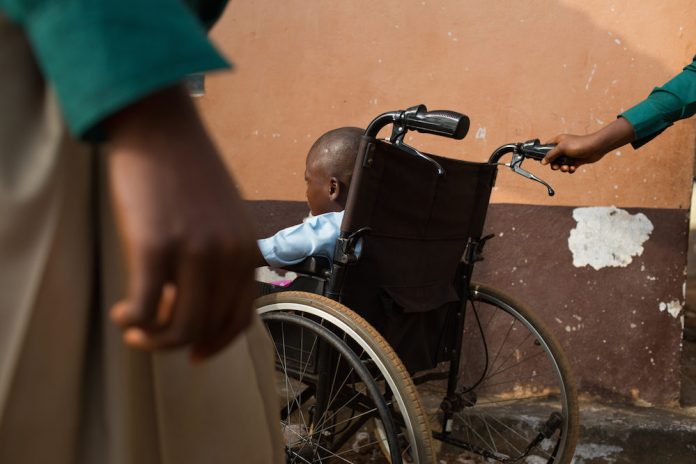
When Kristina Riffle- Semukete moved to Uganda in 2015 to start her teaching job, she discovered that there are over 5 million children enrolled in public elementary schools in Uganda, but children with disabilities are not included.

“Three short months into living in Uganda, I was heartbroken by the lack of special education programs for children with disabilities and decided to look for local partners to do something,” Kristina explains.

She then partnered with Moses Semukete to found Obwaagazi Children’s Foundation, an organization for children with disabilities in the local communities based in Jinja, Eastern Uganda.

“Children with disabilities are often seen as a curse to families and communities.  These children typically lack parental love, are seen as having no future, and grow up as outcasts in the community and they do not have the same opportunities as typically developing children.” Kristina explains.

Kristina passionately says and believes that children and people with disabilities deserve to have the same opportunities as typically developing people. They should have access to education, food, and medical care.

Obwaagazi Children’s Foundation, therefore, provides special education, behavioral therapy, physical therapy, occupational therapy, and speech therapy to children with disabilities in Uganda.

“We partner with students, families, and community to create programs for individual educational strengths and needs to facilitate growth for our students.  Education programming may include academic growth, social and emotional growth, and/or communication development.” She says.

DAY 4!!! They say a picture is worth a thousand words, but we believe our BEFORE Obwaagazi academy photos and NOW are worth a million words!!!! Look at that progress!!!❤️

A post shared by @astonei on

The foundation gives emotional support and counseling to families of children with disabilities by providing respite care, parent education, community education, and encouragement so that the families can remain in their communities successfully.

As a sustainability plan, Obwagaazi works with families to discover their hidden skills, such as farming, jewelry making, basket weaving, paper beads, weaving mats, and art to which products are sold On Etsy

“We support the families by selling their crafts and providing them with 100% profit for their work, so they can care for their child with a disability.” Kristina says.

Todate, the foundation is home to 35 children with disabilities together with their families. They are being supported through provision of respite care, parent education, community education, and encouragement to be stronger in their respective communities where they come from.

“Our students resilience, perseverance, and passion inspires us to be better people and to take a moment to appreciate the beauty of the world around us.” She concludes.

Experiences

Top 5 Cultural Attractions in Uganda

0
Cultural tourism is the practice of traveling to experience and appreciate the unique cultural heritage, traditions, and lifestyles of a particular destination. This involves...
Mountain Biking in Uganda

Mountain Biking Around Uganda

0
Mountain biking. The sport has been embraced worldwide hitting the mainstream in the past 20 years when bike manufacturers realised the growing popularity of...
Kampala Tourist Guide

10 Geeky Things to Do in Kampala

0
Kampala is located in central Uganda on the shores of Lake Victoria and is the capital and business center of this countries.  Kampala is...
Mgahinga Volcanoes

Go Gorilla Trekking in Mgahinga National Park

0
Uganda the pearl of Africa is blessed with half of the total mountain gorillas living in the whole world and the mountain gorillas in...
Bwindi Mountain Gorilla

Visiting the Mountain Gorillas in Bwindi Forest

0
Mountain gorillas are subspecies of primate animals called gorillas. Gorillas are the largest great apes left in the world which live in the tropical...
Bwindi Impenetrable Forest

Experience Mountain Gorilla Trekking in Bwindi

0
Mountain gorillas are subspecies of primate animals called gorillas. Gorillas are the largest great apes left in the world which live in the tropical...

5 Amazing Things to Do in Budongo Forest

0
Budongo forest is one of the largest conserved forest areas in Uganda covering an area of 841 square kilometers. Located with Murchison falls national...
canopy in Nyungwe NP

Journey to Explore Rwanda’s National Parks

0
Rwanda is a small and landlocked country boarding east African countries. It is bordered by Tanzania in the east, Uganda in the north, Burundi...
East Africa Safari

Things to Do in East Africa

0
Ballooning Mountain Climbing – Rock Climbing & Mountain Biking. this is done in Mr. Rwenzori national park in Uganda, Mount Kilimanjaro national park...
Lake Bunyonyi

Holiday at Lake Bunyonyi in Uganda

0
Lake Bunyonyi is one of the most scenic places in Uganda famous to travelers who take a circuit to the attractions in the western...