Home Blog Page 23

5 Amazing Stopovers & Attractions for Tourists in Uganda

0
Road Trip in Uganda

Many tourists to Uganda book safaris with a few main areas of interest and some can be only experienced with safari stop overs depending on the location and convenience. However, Uganda is one of the beautiful countries in Africa with meaning full safari stops especially for travellers on gorilla safaris and wildlife safaris in national parks. The most famous trip stops include the Uganda Equator, Igongo cultural Museum, Mbarara town and much more that are normally made on day one of your trip on on the last day on the drive back to the start point or agreed point for a drop off.

You may be wondering, how about mother nature calls, are they not made, yes and its another reason for multiple stop especially long drives and transfers. Always feel free to inform your driver in case mother nature calls. All Uganda tour guides are knowledgeable normally get out of their way to fulfill all the requests of the tourists. Once you take a safari in Uganda, your driver guide should be one of first true friends in the country and by so doing you trip will be just awesome

1.The Uganda Equator

This incredible place is found in Kayabwe, Mpigi District. This attraction is located along Masaka Road, in a distance of about 73 kilometers from Kampala the capital city of Uganda. This an interesting area not missed while travelling to the western region a home to most of Uganda’s national parks and attractions. At the Uganda Equator you will see  a line drawn in the middle of the street. And with a monument on both sides that state “Uganda Equator“. Imagine seeing to halves of the world and its feels great to stand and put one feet in the northern hemisphere with the other in the southern hemisphere. You will not find this feeling unless if you make a stop at the Uganda Equator and see it happen.Make it a point to be at the Equator any time soon on your visit to the beautiful country Uganda also known as the Pearl of Africa.

2. Igongo Cultural Museum

Far from allowing the effort of modernization to encroach on culture and tradition, Igongo cultural Museum is located in a 4 hour drive distance from Kampala city and only 12 kilometers from Mbarara town. This Ankole Museum displays the best museum features of the western culture something you have not to miss out during your safari in Uganda. This Museum is set on the ground of former palace of Ankole king and a visit to this place takes close to traditions and life style of the Ankole people.This Museum has gained international fame in the Uganda tourism and its also a great place to have a lunch break and taste the locally cooked delicious meals in Uganda a great experience to give a try  during your stay in Uganda.This is also a good place to relax and chill before proceeding to any destination of interest in western Uganda.

3. Mbarara Town

This is one of the fast growing towns in western Uganda and is another tourism point surounded by multiple tourist attractions including Lake Mburo National Park just close to Mbarara town turns out to be one of most famous attractions as wells ,Igongo Cultural center until now which has dominant regional museum where the past meet the future,Ankole Long Horned Cattle, Kinyankole Culture and much more worth checking out.The town is well developed with lots of hotels, restaurantes , tarmac roads andmany other travel facilities that keep you comfortable in the new place.The people of Mabara are known for their rich culture and lifestyle that their traditional wear known as kinyankole is very elegant to try on any occasion or traditional function.

4. Kampala City

If you are travelling to Uganda  for a safari make sure you spend anight in Kampala and explore the wonderful capital city and if possible would suggest two nights one before the safari and another after.Its amazing to discover the best attractions in Kampala city on a breif city tour within the city center and experience the life of business people in Kampala, night life and much more.

5. The Great Lakes Museum

This is located at Kabale in Western Uganda. This is a great place to take a coffee and learn about the culture of Ugandans. The art pieces display the lifestyle of Uganda highlighting the traditions and culture!

Self Drive Safety Tips for Uganda Visitors

0
Self Drive Uganda

Self-driving in Uganda can be an exhilarating and rewarding experience, allowing you to explore the country’s stunning landscapes and rich wildlife at your own pace. However, it’s important to prioritize safety to ensure a smooth and enjoyable journey. This article presents essential safety tips to consider when embarking on a self-drive adventure in Uganda.

Familiarize Yourself with Local Driving Laws and Regulations:

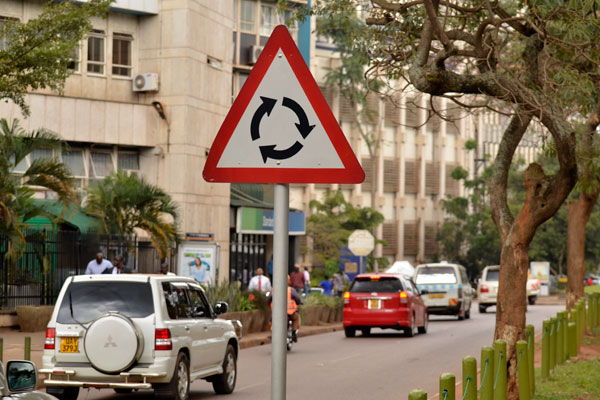
Before hitting the road, take the time to understand Uganda’s driving laws and regulations. Familiarize yourself with speed limits, road signs, and other traffic rules. Driving is on the left side of the road in Uganda, so be mindful of this while driving and crossing intersections.

Plan Your Routes and Travel Itinerary:

Plan your routes and travel itinerary in advance to have a clear idea of the roads you’ll be taking. Research the condition of the roads, particularly in remote areas, to anticipate any challenges or potential hazards. Consider carrying a physical map or using reliable navigation apps for guidance.

Drive During Daylight Hours

Whenever possible, try to drive during daylight hours. Ugandan roads can be unpredictable, and poor lighting conditions at night can increase the risk of accidents. If you must drive at night, ensure your headlights are in excellent working condition and drive at reduced speeds with heightened caution.

Choose a Reliable Rental Vehicle

Selecting a reliable Uganda car rental is crucial for a safe self-drive experience. Opt for a reputable car rental company that offers well-maintained vehicles with comprehensive insurance coverage. Check the vehicle’s condition thoroughly before accepting it, ensuring that all safety features are in place.

Be Alert and Defensive:

Maintain a high level of attentiveness and stay vigilant while driving. Be aware of other vehicles, pedestrians, and wildlife on the roads. Use your mirrors frequently, signal lane changes in advance, and always keep a safe distance from the vehicle in front of you. Adopt a defensive driving approach to anticipate and avoid potential hazards.

Obtain a Valid International Driving Permit (IDP):

To legally drive in Uganda, you must possess an International Driving Permit (IDP) alongside your national driver’s license. This permit, available in your home country, translates your license information into different languages, making it easier for local authorities to understand.

Be Mindful of Wildlife:

Uganda is renowned for its diverse wildlife, and encounters with animals on the road are common, especially in national parks and rural areas. Pay attention to road signs indicating animal crossings and adhere to speed limits. Slow down when approaching wildlife and give them plenty of space, as they can be unpredictable.

Maintain Regular Communication:

Before embarking on your self-drive journey, inform someone reliable about your travel plans, including the routes and estimated arrival times. Stay in regular communication with your emergency contact, providing updates on your progress. In case of any unforeseen circumstances, they can assist or alert the authorities if needed.

Prepare an Emergency Kit:

Create an emergency kit that includes essential items such as a spare tire, jack, wrench, first aid supplies, flashlight, and a reflective warning triangle. Additionally, carry extra food, water, and warm clothing, especially if you’re venturing into remote areas where assistance may be limited.

Stay Updated on Security Conditions:

Keep yourself informed about the current security conditions in Uganda, particularly in regions you plan to visit. Stay updated on travel advisories issued by your home country and local authorities. Avoid areas with political unrest or high crime rates and follow the guidance provided by reliable sources.

Self-driving in Uganda can be a remarkable adventure, allowing you to explore the country’s natural beauty and cultural treasures. By following these essential safety tips, you can ensure a secure and enjoyable experience on the roads. Remember to prioritize caution, be respectful of local driving laws, and always stay prepared for any situation that may arise. Safe travels!

So when you plan a self drive trip in Uganda mind following the above safety tips so that you can have a perfect holiday through the Pearl of Africa.

4 Unexpected Uganda Safari Expenses to Avoid

0
Exploring Uganda

When planning for a Uganda safari or any vacation, expect to incur some holiday expenses. Not to be taken unaware, you must plan for them earlier than the actual date of visiting Uganda for a holiday. Often travelers make up their mind to visit the destination on a budget and whatever they do should be within their wallet size, but there are also unexpected expenses that come your way.

The common unexpected expenses that you can avoid on a Uganda safari 2023

Tipping expenses

There are many reasons why travelers choose to tip someone while on a safari, and most importantly, because of the excellent service rendered. It is not a must-do thing to tip but one does it from his or her heart. When planning for a gorilla safari or wildlife tour to Uganda, you should have a budget that caters for all tipping expenses.

You can tip an individual or if they are many, there is tipping box where all visitors can put their tips and later, the service providers can divide it amongst themselves. On a gorilla tour or wildlife safari for instance, you can be accompanied by an experienced guide and back in the accommodation, there are waiters and waitresses to offer you service till the day you leave.

The impact your tip creates may not be visible, but leaves a smile in most of the workers’ faces and their families. Most of the staff or porters earn little and considering the high expenses on basic needs, what you tip is used to meet a number of costs. When tipping, it is always wise to be mindful of your budget and stick to it, it should guide you.

Lost luggage expenses

Luggage getting lost is unavoidable, especially on connecting flights. This comes at a cost of purchasing new items if you packed them in one suitcase and it gets lost. You can carry at least a pair of clothes or more that can last you at least two days or more.

Expenses on alcohol

On a safari in a destination like Uganda, you won’t allow to watch others buy some drinks. You will have a variety to purchase, but before you commit yourself, first, get to know how much the drink you plan to buy costs. The prices differ for drinks or items depending on the location you will be buying them from. The price of a bottle of beer or wine in Kampala/Entebbe is not the same as the rate if you bought the same item from up country or if you purchased it from the supermarket. Before you purchase anything, make sure that what you are buying is within your budget size.

Forex Exchange rates

When search online the current Forex Exchange rate, often it shows you a bit higher rate than the actual one on the market. Exchanging your foreign currency to Ugandan shilling is vital because it makes it easier for you to do shopping or to clear some expenses in the destination. Before visiting any forex bureau, first, know that small-dollar denominations attract the lowest rate compared to bigger bills.

Also, banks often have the lowest exchange rate compared to if you exchanged with forex bureau out.  There are forex exchange points in Entebbe or Kampala, and don’t be on a hurry, take time and cross check with 2-3 points to see if you can get the one that offers the higher rate. Check the dollar edition before visiting the bank or forex bureau –the 2009 dollar editions for instance can attract the lowest bills or the company can refuse them.

Wedding Cakes in Uganda: All You Need to Know

0
Wedding Cakes in Uganda

Cakes are big business in Kampala and the definitive article at ceremonies. Not just for those who make them, but also for those who consume them. There are those who believe regardless of the ceremony, be it a graduation or birthday party, the cake must be glamorous or else there will be whispers in the corridors about how one is a cheapskate.

Kampala weekends offer the observer an opportunity to see how the denizens want their cakes to appear. It is about groups making countless trips to confectioners or window-shopping for the next big mukolo (party). There are inquiries about size of party, how many guests do you expect at your wedding, when shall it be held, do you want to keep for only two weeks or do you want to store it in the freezer for many months?

For Susan Gumisiriza, proprietor of Delicacies Limited in Lweza, cake making is a full-time business. “I am involved in other pursuits like interior design, but the cakes take most of my time,” she says. Gumisiriza says she is always making one cake or more on any given day.

Kampala’s brides also tend to want their cakes in an assortment of shapes. This trend is seen more with introduction cakes. The introduction is known as Kwanjula in Central Uganda and Kuhingira in the West. This is largely considered the most important part of the marriage ceremony because that is when the two families formally make a pact for the bride and groom. Introductions are where bride price and parents’ signatures are exchanged. All this requires that the cake be as symbolic as possible.

“I have been asked to make cakes in the shape of the local traditional earthenware pots (common in rural Uganda), but most of those orders have come in for the pre-wedding introduction ceremony,” Gumisirza says. “At the introduction, I have been asked to make cakes in the shape of a saucepan on three stones, symbolizing the traditional role of the woman in the home. It means the bride is ready to take on her role as the homemaker. Since the attention is on the cake for its central position at parties, it is considered the most important statement be represented in it.”

Winnie Bagonza, another confectioner of considerable experience, expresses the same sentiment. Bagonza, though not very active today, says she made cakes for many Ugandans who wanted different aspects of their lives expressed in the cakes they would serve at their weddings. “It is not surprising for a bride to come around asking for a cake in the shape of a car or a house; if that’s what they want, regardless of the cost, we made them,” she recalls.

Word about cakes gets around fast. For Gumisirza, it has been word-of-mouth that has got her the business. Since her practice is only starting out, she says all she does is give out her number to interested people who then recommend her. “When I make a cake, I do it knowing my next job will depend on how well I satisfy my clients,” she notes.

Cake makers are busiest at the end of the year in Kampala. From October to December, there are many weddings and graduation parties, according to those in the business. “Even birthday parties seem to increase around this period,” Peruth Mulindwa of Devine Cakes says.

Gumisiriza says she makes deliveries on order, though she will do it as part of the package depending on the size of the job. “For big cakes, I will drive out to the function and handle the preparation,” says. This is in part to prevent spoilage by people who might not know how to handle a large expensive work of art.

Even when prices of raw materials go up, Gumisiriza says she has to keep within the range of prices that her customers are used to. Any erratic price hikes and she knows she might lose her clientele. “I charge 50,000 UGX or 80,000 UGX for the very small cakes but I can also make cakes for prices ranging from 120,000 UGX to 160,000 UGX,” she says. In any case, there are many people in the business seeing as the demand in Kampala is as constant as it’s love for parties.

An Insight Into Ugandan Traditional Weddings

0
Buganda Wedding

Every tribe has a unique culture and this applies especially to the traditional Ugandan weddings of each. Here’s an insider’s look at the unique traditional wedding ceremonies of the Acholi and the Baganda.

Acholi Culture

In the Acholi culture, the traditional wedding takes two days. The first day is occupied with cooking as the bride-to-be and her family spend hours cooking and decorating the compound. The action begins in the night with the arrival of the groom and his entourage. He finds the compound dark and he and his entourage are required to bring along a couple of lamps to ‘light the way’. When he gets to the house of his intended bride, he is not allowed to enter it standing up right. He and his company must enter the house on their knees. They have come to ask for a young lady’s hand in marriage after all!

During this entrance and negotiations, the bride is seated with her entourage in a corner of the house in view of her suitor. She does have contact with him while the negotiations are going on with her elders.

After the negotiations have been successful the lights will be put on and the real celebrations begin. All the preparations of the day will pay off as everyone- the hosts and the guests – enjoy the meal that has been prepared. These parties can go on until the next morning even after the groom and his party has left. The bride remains behind as the ceremony continues the next day.

At around midday the following day, the groom and his party will come back to publicly and officially claim his bride. The bride is no longer in hiding as she and her entourage will be paraded before her suitor so he can confirm this is who he paid for the night before. Only then will she be handed over to him as his wife.

Baganda Wedding

The Baganda traditional weddings, on the other hand, start with the parading of the bride-to-be. After the groom has identified his bride then negotiations may begin. In this culture however, the groom does not participate in negotiating the bride price. His elders will finalise the negotiations and he will be informed that he has been accepted only after it is done.


One similarity in both tribes is the bride’s wardrobe changes. She can wear as many different outfits as she wants but mostly changes each time she comes out to meet with her guests. While changing outfit is not mandatory it is preferred in both tribes and gives the bride-to-be and her family a sense of pride and chance to show off her beauty. Some brides may change outfits up to five times, while others may choose not to change at all. Some brides also require their entourage to change but other do not.

The end result in both cultures is a grand feast after successful negotiation. At times, the negotiations are unsuccessful and the groom and his entourage have to leave without his sobbing bride. This is rare and only happens as a result of miscommunication at the outset. Usually, there is negotiation between the families related to the bride price prior to the actual ceremony in order to make sure that both parties are well prepared. Failure to reach an understanding during the traditional ceremony is like a modern wedding being stopped half way through right before the couple can be pronounced husband and wife!

Uganda Reptile Village: See Uganda’s Snakes Up Close

0
Uganda Reptile Village

One of the most intriguing signs along Entebbe road is the one directing you to the Snake Park at Kitende.  In a country where snakes are widely feared, who would seriously consider devoting an entire park to them?

The park is located not far beyond Kajjansi, if you’re coming from Kampala, and you’ll see the sign on your left directing you down a dirt road.  While the signs indicate the park being just a few km off the main road it seems longer as the marram road is rough and you would be justified in wondering whether you are going look for snakes in the bush. However, when you reach the end of the road you will be rewarded by arriving at the purpose-built, conservation enclosure for snakes.

The park is open Monday – Sunday from 8am to 6:30pm but the two staff who greeted us seemed surprised by the arrival of visitors on a Saturday morning. Entrance fee is 3,000 for Ugandans and 15,000 for foreign tourists – there is no foreign resident’s rate.

The first impression is that the park is well organised. It is small, but pleasantly arranged with neat stone pathways which wind around banda-style structures with large viewing windows. Each of these contains a different species of snake. The buildings could do with some refurbishing  this doesn’t detract from coming face to face with some impressive snakes. Not all of the snake houses were full at the time of our visit, suggesting that they are still in the process of building up their conservation stock. The reptiles themselves are picked up from all over Uganda, and caringly looked after. The guides are extremely knowledgeable, enthusiastic, and will happily talk for hours about the snakes entertaining your children with stories about these man-eating reptiles.

For those of you expecting excitement and danger as you interact with lethally venomous animals, you may be disappointed – the brick snake houses are extremely secure. This will, of course, come as a relief if you are interested in using a visit to overcome a fear of snakes.  The snakes themselves are not natural entertainers, often content to lie, infuriatingly camouflaged on branches and in corners. The most action you’re likely to see is at feeding time when they munch on day-old chicks.

While there is children’s play area it is aging and there are no places to eat and drink nearby. So, while it might be a nice, informative diversion between Entebbe and Kampala the Snake Park more of a place to visit briefly than to linger. If you do intend to make a day out of it, it could be combined with the Wildlife Education Centre, or a picnic in the Botanical Gardens.

You should give the Snake Park a try if you have exhausted the limited range of kids’ activities in Kampala/Entebbe or want to learn about an array of Uganda’s snakes from a safe distance.

Katara Lodge: A View From The Savannah’s Edge

0
Katara Lodge

If the Uganda Tourist Board had only one picture of one vista with which to convince people to come to the country – it should be the view from the front door of Katara Lodge.

Stepping through that door you are instantly rewarded with the majestic savannah of Queen Elizabeth Game Park spread out before you. Located on the Kichwamba escarpment the view goes on for miles all the way to the imposing Rwenzori Mountains on the horizon. vantage point of the Kichwamba escarpment, the view goes on for miles, with the imposing Rwenzoris as a border.

The lodge itself is situated half an hour’s drive from Fort Portal, heading south from the main park entrance. This means that there’s no need to pay the park entry fees just to stay in the lodge. And, thanks to recent rehabilitation of the roads leading to the lodge, it is now easily passable in both the wet and dry seasons.

With such an unparalled view, the lodge itself would not need anything special for you to want to stay forever admiring the view from the lounge area. However, the accommodation is almost as impressive as the view.

Arranged as seven self-contained bandas, the accommodation has unique touches such as the Katara “star bed” which is a bed on wheels which can be wheeled out onto the banda’s deck for a romantic night under the stars – complete with mosquito net. (Although perhaps the experience should be reserved for the dry season!)

The claw-footed, free-standing baths might be Uganda’s most decadent bathing experience as from your vantage point you can watch herds of elephants meander the plains below. An exciting recent addition is an equally luxurious infinity pool atop the escarpment which definitely competes with the view from the lodge itself and rivals the view from any other pool in the country.

The staff contribute to making the stay a special one and nothing is too much trouble for them – including bringing coffee to your room at 5am to help you get up for that dawn game drive. In spite of the difficulty in getting ingredients to what feels like the top of the world, the food is extremely good, and although it is a set menu each day, there is enough choice not to feel like you are eating the same meal each day. One typical meal included a seasonal vegetable soup to start, followed by a chicken main course and local honey and fruit for dessert. A full breakfast is served after a morning game drive, and lunch can be packed to take advantage of the afternoon boat trip.

Give it a try if you want a night under the stars overlooking the savannah, weather permitted!

Give it a miss if you want no-frills budget accommodation within Queen Elizabeth National Park.

Food: All About The Almighty Ugandan Rolex

0
All About the Ugandan Rolex

When you mention the word ‘rolex’ anywhere in Uganda the last thing that will come to mind will be the Rolex watch. Rolex, in Kampala especially, refers to a chapati that has been rolled with eggs and vegetables inside of it.

While every chapatti seller in Uganda would love to take credit for inventing the Ugandan Rolex, it actually originated in Wandegeya, just below the Makerere University campus. The students wanted a meal that was affordable, yet filling, so chapatti sellers experimented with filling a chapatti with eggs. The name rolex came from ‘rolling’ (pronounced ‘lolling’ by many of the chapatti makers as a result of the heavy Luganda accent). They also pronounce it as ‘lolex’ but everyone understands what you want no matter how you pronounce, ‘rolex’.

A rolex always consists of egg and chapatti as the major ingredients but from there every rolex seller will get as creative as you allow them to be. Some make a plain egg rolex, while others will add onions, tomatoes, sliced cabbage and if you really want a king-size rolex…some pieces of meat before it’s all rolled up. Rolexes aren’t limited to Wandegeya – you can find them pretty much anywhere chapatti is sold at all times of day but especially around meal time hours.

Speaking to Mukasa, a chapatti seller in Namuwongo, he says he uses two packs of baking flour and two trays of eggs daily to satisfy his customers. “If I use one egg in the rolex then it is 2000/= but if I use two, then it becomes 2500/=,” he says. He sells plain chapattis at 1000 UGX, so a rolex does increase the price.

How much money does he make from his rolex and chapatti business? “I make up to 15,000/= daily and I have managed to start building a small house at home in my village. Mukasa is married with a small son and he manages to look after his family with his small rolex business. It was not easy for him though when he started, “Getting new customers and a good place to sell is not easy but when then taste my rolex they keep coming back for more.”

Mukasa has built a rapport with his customers so much that they book rolex’s in advance and can even pay later. His best customers are the boda boda men at the stage where he sells his food and school children as they come and go to school. He also sells to house wives and housemaids who stay at home and are not in the mood to cook the lunch hour meal. These he says are the best customers because they buy more than one at a time.

If you are not in the mood to buy a rolex by the road side, you can make one at you own in the comfort of your own home.

Ingredients you would need per rolex;

  • 1-2 eggs
  • A pinch of salt
  • 1 chapati
  • small handful shredded cabbage
  • 3-4 thin slices of tomato
  • cooking oil

You can also add the following depending on your taste buds;

  • A slice of cheese
  • A few pieces of meat or chicken
  • Thinly sliced green pepper
  • Add a pinch of black pepper to taste

Directions; Fry the eggs with all the ingredients in a frying pan and place on a pre-cooked chapatti. Then roll and serve hot. Eggs and other ingredients vary depending on how big or small you would like the meal to be. Enjoy!

Go Gorilla Trekking in Mgahinga National Park

0
Mgahinga Volcanoes

Uganda the pearl of Africa is blessed with half of the total mountain gorillas living in the whole world and the mountain gorillas in Uganda can be watched or viewed in the two national parks of Bwindi and Mgahinga national park. Despite the various tourism activities in Mgahinga gorilla national park, gorilla tracking is the most popular adventure taken in the park. Most visitors who visit the park enjoy mountain gorilla trekking in the bamboo forest lands of the park within the habituated gorilla group.

Mgahinga national park has only one gorilla group which can be trekked by visitors who take safaris in Uganda. The name of the gorilla group habituated in the park is the Nyakagezi gorilla family. This gorilla family is identified as “roaming” and “adventurous” because this group keeps on rotating between Uganda, Rwanda, and Congo. However, for the past two years, the gorilla family is currently said to have settled in the Uganda side of Mgahinga national park and hence tourists can easily visit the park to have an encounter with this gorilla family.

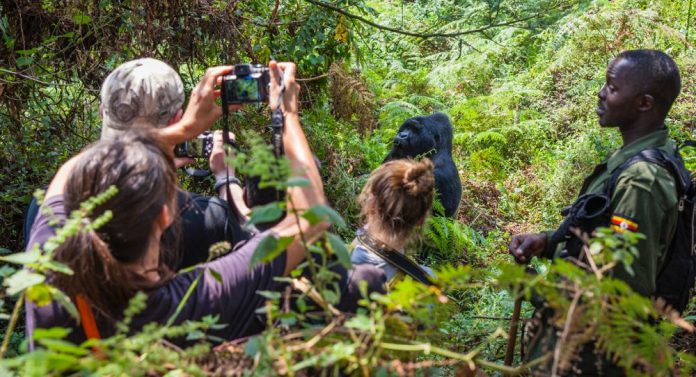
Gorilla trekking activities in Mgahinga Gorilla Park begin from Ntebeko Entrance early in the morning (8:00 am). Like other habituated gorilla groups, only a total of 8 tourists are accepted and authorized to visit the Nyakagezi family. Gorilla trekking roughly takes two to four hours of walking and hiking the hills while looking for interesting gorillas. When visitors meet the gorillas, they are allowed to spend only one hour with the gorillas. The interaction between the tourists and the gorillas is minimal given that there is a need to protect the gorillas from human interference. but at distance and the experience one gets from the encounter is unexplainable.

For tourists planning to undertake gorilla trekking safaris in Uganda especially to Mgahinga should be in consideration that the recommendable time for gorilla trekking is mainly during the two dry seasons because during this time the routes are passable and even trekking trails are not slippery and hence visitors can easily move in the forest while searching for the primates. The dry month are Mid-December to the month of February as well as June to October. The only advantage of trekking gorillas in Uganda is that one can do it any time throughout the year.

Participating in gorilla treks in Uganda offers one the chance of understanding the characters of the mountain gorilla. Interesting to know is that each and every day of gorilla starts at 6 am and usually ends in the evening especially 6:00 pm and then they rest waiting for the next day. Gorillas move in social groups and their diet is mainly made up of leaves, shrubs of bamboo forests, roots, flowers among others. Trekking gorillas is more impressive and exciting and hence each visit should plan to visit any gorilla families in Uganda.

From Home of Impalas to Towering Kampala city

0
Kampala City

Legend traces its story to just before the colonialists set foot here. A little town in central Uganda would flourish into the pivot of the country. Kampala, a city of many tales; thriving and buzzing to the core.

It is believed that it started when the administrators from the United Kingdom (UK) declared this little place a town! Many sought it out as a business center; nearly every public transport on a long root found it’s way to this little town.

But this town was no ordinary town, it had its feet spread out atop seven hills, initially known to be home of an animal called Impala. We will get to the story of the seven hills but first, how it became Kampala. So, a thriving trade, soon various dialects would soon feature and the place that was initially called Ka Impala, to mean, where the Impala are, quickly evolved into Kampala.

Yes, this little known Kampala City attracted just about the right human settlement and thus infrastructural development. In 1949, this rather busy town grew some more; so again, the administration noticed and it was granted a municipality status. But that was not all, in 1962, Uganda attained its autonomy from the UK, and with that victory came something else; a capital city!

The hills

You might have heard the phrase the ‘City of seven hills’, mattered in reference to Kampala, it started out that way. See, in its initial growth stages, Uganda’s Capital city sat on seven hills, you know, now called the historical hills. And no, they bore no fancy names, typically Ugandan; Mulago, Kololo, Kibuli, Rubaga, Namirembe, Makerere and of course Kampala hill itself, now called Old Kampala hill.

Today however, the seven hills have had at least 18 hills curved out them. Interesting, ha? These hills are; Old Kampala, Mengo,  Namirembe, Rubaga, Nakasero,  Kololo, Kibuli,  Nsambya,  Naguru, Mbuya,  Mbuya, Makerere, Mulago, Buziga, Mutundwe,  Mutungo, Kireka,  Makindye, and Banda. Well, if you read closely, you will notice that some of the original hill names still surface that was because the locals chose to keep the names.

And for or a country with about 40 million people, nearly 2 million reside in Kampala alone. Oh, and that is not even inclusive of those that come in for a night or two of party, or purely business. That aside, how about we start with the mode of transportation which has since become an experience to reckon?

Not to forget about the fancy cabs, the motorcycle better known as the boda-boda, is an experience to write home about. These guys will maneuver through anything, to beat the city traffic jam and get you anywhere in a heartbeat. And worry not, these guys will perch together some English, however broken, and chances are, you might be called; manager. Worry not what you are, just go with it, you are in Kampala, a city where you will be called Old man aka muzeyi, by the boda-boda guy.

Interestingly though, that is not even the exciting part; see, the adrenalin rash, you experience as you cling onto a fella that leaves his life on the age, that is the thing! now that is the staff. These fellas leave their lives on the edge, bumping through a couple of potholes, breaking all kind of rules; now that is something else.

But then again, how can we talk Kampala and not talk the Kasubi tombs? See, Kampala city is hosted by a tribe called the Baganda. This tribe has a kingdom called Buganda and whose Kings are laid to rest at the Kasubi tombs. The tombs, a oozing with culture take traditionalism to the next level, complete with thatch and bamboo. If still looking for a bit more history, Kampala City hosts the Uganda Museum, art galleries and even better, the National Theatre, where you will find nothing short of Ugandan entertainment. But before you leave town, you could check-out the Independence monument, a tale of the freedom Uganda gained from then colonial master- Britain.

If architecture is what you are into, then the traditional religious spots like the cathedrals sitting still in some of the original hills will do. Grab a boda-boda, will you? Make your way up old Kampala, to the Namirembe or Rubaga Cathedrals. Or you could might want to check out the luxuriously spaced Gadaffi mosque. There’s so much to see, so much to savor and so many tales to behold.

Experiences

Top 5 Cultural Attractions in Uganda

0
Cultural tourism is the practice of traveling to experience and appreciate the unique cultural heritage, traditions, and lifestyles of a particular destination. This involves...
Mountain Biking in Uganda

Mountain Biking Around Uganda

0
Mountain biking. The sport has been embraced worldwide hitting the mainstream in the past 20 years when bike manufacturers realised the growing popularity of...
Kampala Tourist Guide

10 Geeky Things to Do in Kampala

0
Kampala is located in central Uganda on the shores of Lake Victoria and is the capital and business center of this countries.  Kampala is...
Mgahinga Volcanoes

Go Gorilla Trekking in Mgahinga National Park

0
Uganda the pearl of Africa is blessed with half of the total mountain gorillas living in the whole world and the mountain gorillas in...
Bwindi Mountain Gorilla

Visiting the Mountain Gorillas in Bwindi Forest

0
Mountain gorillas are subspecies of primate animals called gorillas. Gorillas are the largest great apes left in the world which live in the tropical...
Bwindi Impenetrable Forest

Experience Mountain Gorilla Trekking in Bwindi

0
Mountain gorillas are subspecies of primate animals called gorillas. Gorillas are the largest great apes left in the world which live in the tropical...

5 Amazing Things to Do in Budongo Forest

0
Budongo forest is one of the largest conserved forest areas in Uganda covering an area of 841 square kilometers. Located with Murchison falls national...
canopy in Nyungwe NP

Journey to Explore Rwanda’s National Parks

0
Rwanda is a small and landlocked country boarding east African countries. It is bordered by Tanzania in the east, Uganda in the north, Burundi...
East Africa Safari

Things to Do in East Africa

0
Ballooning Mountain Climbing – Rock Climbing & Mountain Biking. this is done in Mr. Rwenzori national park in Uganda, Mount Kilimanjaro national park...
Lake Bunyonyi

Holiday at Lake Bunyonyi in Uganda

0
Lake Bunyonyi is one of the most scenic places in Uganda famous to travelers who take a circuit to the attractions in the western...