Home Blog Page 24

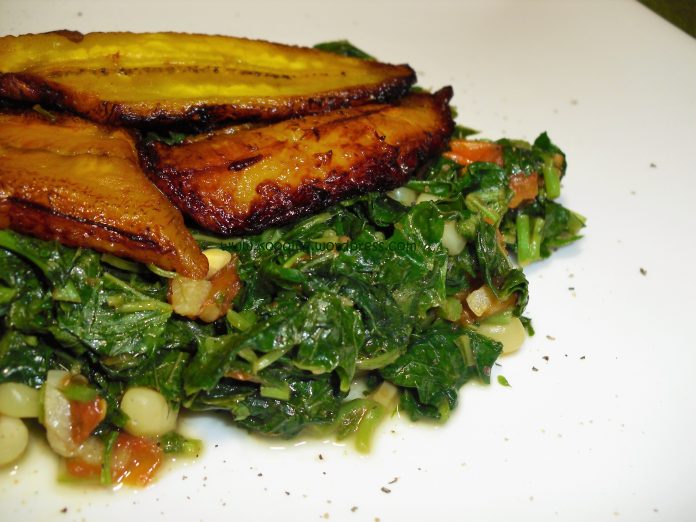
Sautéed Dodo (Amaranth)

0

As much as time is flying by, the rain is still sticking around. There is freshness overload. From fresh green grass (which now needs to be trimmed every week) to fresh rain-washed air. From fresh rain-soaked earth to fresh vegetables all over. Among those vegetables is the dodo/ amaranth. It is so glorious you can’t deny it. I have experimented with dodo a lot and have found that it tastes really great raw (think salad) but I am yet to polish the art of making raw dodo salad. In the meantime, I will be sharing this sautéed dodo recipe. It is a healthy dish, I believe, that is sautéed in little oil and is not overcooked and thus it has a slight bite to it. I find dodo a great breakfast vegetable because it is an energizer.

What you will need:

Three handfuls of the fresh dodo

1 Tomato, chopped

1/2 C. Spring Onions, chopped

1 Small purple onion, chopped

Cooking oil

Salt

Method

Wash the dodo thoroughly and dry then set aside. Pour a tablespoon of cooking oil in a hot pan. Add the onions and stir for a minute. Add salt. Next, add the tomatoes and keep stirring till they are soft.

Add the dodo and stir well making sure it is well mixed with the tomatoes and onions. Wait for a few minutes or until the dodo turns a bright green color and then remove it from fire.  Serve as a side dish and enjoy.

Contributed by Sophie. Follow her blog akitcheninuganda.com for more local cuisines.

#QueenOfKatwe: Actress Nalwanga scoops Critics’ Choice Awards nomination

0

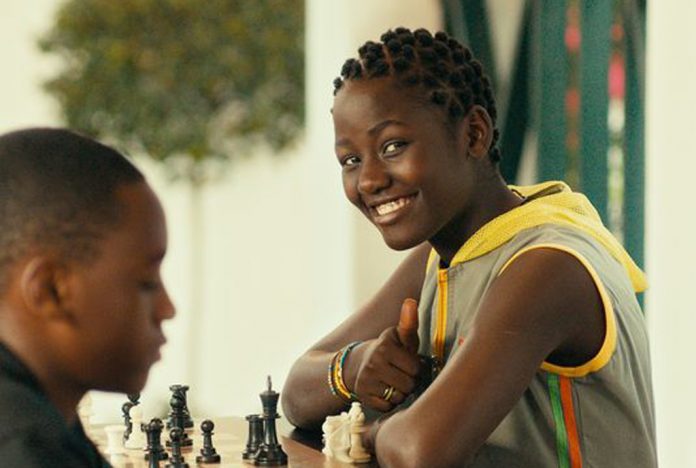
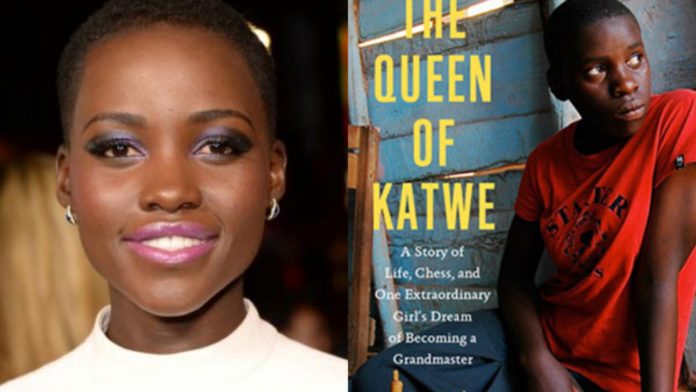
2016 is Madina Nalwanga’s year! From the not-so-popular member of the Sosolya Undugu Dance Academy to the now rising global icon for her protagonist role in Queen of Katwe, she is close to winning her first international accolade as an actress.

Madina has been nominated for the Critic’s Choice Awards in the category of the Best Young Actor/Actress where she will face off with Lewis MacDougall (A Monster Calls), Hailee Steinfeld (The Edge of Seventeen), Lucas Hedges (Manchester by the Sea), Sunny Pawar (Lion) and Alex R. Hibbert (Moonlight).

Madina with Mira during an interview. (photo credit: Disney)

This is the first time a Ugandan is being nominated for the Critic’s Choice Awards. This of course, is a major boost in our acting industry. Ugandans are getting a breakthrough in Hollywood.  Very soon, we will see other Ugandan movie stars in Hollywood like Daniel Kaluuya, Florence Kasumba (both of whom are on the 2017 cast of Marvel’s Black Panther. We covered that story here) as well as Ugandan rapper GNL Zamba whose debut in Hollywood is around the corner, being nominated.

The 21st Annual Critics’ Choice Awards will be held on December 11th, 2016 starting at 8 p.m ET. Good luck Madina. Continue queening!

Uganda isn’t Kony, Idi Amin or Ebola

0

You have any non-African friends, right? Ask them what they think of Uganda. The answers you may receive will be related to poverty, AIDS, Ebola, hunger, tribalism or animals. Their faces will turn sorrowful and sympathy might linger in their eyes. They may give an example of how they helped to “Save Gulu” by donating to the “Kony 2012” campaign or dreamed of adopting a “Ugandan orphan”.

Most likely the view of the continent is that it is not a continent at all, but one large country, where everyone speaks the same language, eats the same food, wears the same type of clothing, and creates the same type of art. Yes, in their eyes, “Africa” is a homogeneous place of simple people with simple activities.

Mainstream media and educational system constantly feed our minds with this type of negative information on Africa. As a consequence, the average white person has a very narrow-minded image of the continent, filled with lions, malnourished children, corrupt officials and rebels. We rarely see or hear anything different and therefore see such images as the truth. But, for someone who has never been to the continent, can they be blamed for this ignorance?

There are mainly two sorts of Africa that appear on the media, the human Africa riven with poverty and violence, and the Africa of wildlife documentaries where humans hardly appear. There are the occasional travel documentaries but even here there seems a lot of emphasis on poverty and the primitive nature of just about everything.

The effect of the above perceptions, is that it leaves the world thinking that Africa is a dark continent already lost in the jungles of primitivism and barbarism. It makes Africa at the center of stereo-typing and it also makes us to be branded as an inferior race in the world thereby even affecting our self-esteem.

Because of such, we wonder whether  we should be annoyed with non-African journalists who broadcast embarrassing images of poverty in Africa, or at the African governments who tolerate and often create such misery in the first place? Much criticism has been leveled at western media for negative coverage of Africa. They have been accused by some of ignorance and racism. In many cases, this criticism is justified.

But why do many Africans, feel so strongly about how Africa is portrayed in western media? After all, the average Brit or German doesn’t give two hoots how their country is covered in say, Nigerian or Kenyan media. Europeans are not emigrating to Africa in large numbers so they simply don’t need to care how Africans view them.

Perhaps we should ask you, Does the whole of Africa have this demographic problem? Why do you focus on the slums and not on the positive stories? Why search out the most miserable environments to film in and continue propagating negative stereotypes of Africa as a nest of poverty and problems?
But as proud Ugandans,  we also know news media in general (African included), tends to focus on the negative and not the positive. Bad news sells well. People feel better about their lives when they hear others have bigger problems than them. A European who’s unhappy he can’t get a mortgage, will, however unwittingly, likely see his life in brighter lights after watching footage of people with no electricity, no running water and little food to eat.

It’s important to challenge the negative images and the perceptions circulated by the media particularly; whether in films, books, news, and academic reports. It is vital to report, complain, blog about it. Challenge and object to it with whatever means you have. A pen or a keyboard is the most powerful tools. We are not just rebels or victims awaiting international aid or assistance for our children to be adopted by a wealthy celebrity who will parade them. We are – just like every human being – complex characters journeying on this planet who deserve dignity and respect.

Of course, there are many different and often positive stories to be told from Africa’s 54 diverse countries. But the continent currently has no microphone of its own on the global stage, no loudspeaker with which to tell its stories the way it wants them told. It has to wait in line hoping others lend it theirs from time to time. That won’t do.
Al Jazeera has succeeded in giving Arabs a voice on the global stage the same way BBC and CNN have succeeded in giving a voice to the British and Americans respectively. Where is Africa’s answer to Al Jazeera, BBC, and CNN?

More programs about Africa, made by Africans, is the voice that is missing in this world. We need programs which will not portray only wildlife, but the beautiful cultures of my country Uganda told by a Ugandan. We need new programs which will not call Africa a country but will appreciate that Africa has states like Uganda which are not at war but a pearl of hard-working people.
This is Uganda they never show you. This is Uganda of people with dignity and stories changing our society. This is Uganda the land gifted by nature and not conflict, poverty and diseases. This is Uganda of lovers, beautiful people, and not people dying of hunger. This is Uganda they never show you that we want to tell the world about and be the voice of the voiceless.

If we Ugandans do not stand up to tell our own stories and positive stories about Africa as a whole, then we will forever remain misunderstood, misinterpreted and not respected. We will not only be untrue to ourselves but putting the future of our country at risk as the late Bob Marley once said… “ Emancipate yourselves from mental slavery because none but ourselves can free our minds!”

Innovations in reproductive health are happening across the world – and Uganda is not being left behind

0

When he is not out on a community outreach calling out to young people through a megaphone or placard on how to take charge of their reproductive health, Emmanuel Kateregga 22, spends time in the UNFPA Innovations Cafe (i-Cafe) which has become a resourceful setting for young people to brainstorm on how to find innovative approaches to address their sexual and reproductive health needs.

“Almost every day, we meet young people, in and out of universities, coming up with innovations in areas like lifestyle, travel, e-learning and games. But rarely do they think of innovations in the area of reproductive health. It’s time we advocates start thinking the same way,” Kateregga explains.

An initiative of the UNFPA Uganda Country Office, the i-Cafe is dedicated to giving young people like Kateregga space to think and generate ideas on how to find solutions to their reproductive health needs. Through this approach, young people are more involved in the design, planning and implementation of programmes that target them.

One of the hacking teams during the HackForYouth Hackathon. Credit: Reach A Hand, Uganda

Today, young people in Uganda today face a wide range of reproductive health challenges. This include lack of access to reproductive health and services which could inform them on how to make the right choices for their health. As a result,  teenage pregnancy stands at 24% with one in every four girls being pregnant or having had a first child by the age of 19 as reported by the Uganda Demographic and Health Survey (UDHS, 2011). Still, less than 40% young people in Uganda have access to the right information on HIV/AIDS.

But young innovative minds are not sitting back. They have opted to use the accessible and available technology options to take charge of their health.

“Today, young people are the most virtually connected and computer-literate generation in history.   Leveraging on new technologies has the potential to significantly change young people’s lives by making SRHR communications easier than ever before,” Kateregga says.

To drive innovation in reproductive health for young people further, UNFPA has undertaken several interventions.  In partnership with Reach a Hand, Uganda (RAHU) and Massachusetts Institute of Technology (MIT), UNFPA Uganda organized the Hack4Youth hackathon that brought together tech-savvy young people from different spheres of the globe who were tasked to develop mobile tech solutions to help specific target groups of young people solve key reproductive health issues that put young people at risk.

Innovations can help women and girls get access to reproductive health information. Credit: Reach A Hand, Uganda

In August 2016, the CAMTech Uganda Global Surgery Hack-a-thon brought together Medtech innovators from Uganda and around the world to co-create surgical innovations for resource-limited settings in collaboration with UNFPA Uganda and  Mbarara University of Science and Technology (MUST). These targeted innovations enabled better care of women’s reproductive health.

These two events have been instrumental in producing promising technological innovations in the area of reproductive health from young innovators. So far, GetIN brilliant team of 6 young people which was one of the winners of the UNFPA’s Hack4Youth Global challenge, developed the GetIN App which will be used by Village Health Workers (VHTs) and midwives to record pertinent data of pregnant teenage girls in remote areas and provide a follow-up mechanism through reminders in form of mobile text messages (SMS) to go for ANC (Antenatal Care) services. This mobile app is now being tested in Kanungu District.

Safe and Dry also emerged as one of the brilliant reproductive health innovations at the CAMTech Global Surgery Hack-a-thon. Safe and Dry idea is designed as wearable and reusable sanitary attire that eliminates smell and wetting among women with urinary incontinence such as obstetric fistula.

The CIF (Contraceptive Implant Finder) which was among the winners at the Global Surgery Hack-a-thon, is a medical device solution that is intended to ease the work of health care providers during the process of hormonal implant removal. It is designed to be portable, affordable and easy to use by the clinicians.

FISTApp developed at the Global Surgery Hack-a-thon, is a phone application that helps  predict the risk of pregnancy and obstructed labour. This depends on an unique in silico model equation developed based on risk factors.

SafePal is a mobile app that helps young people to confidentially report cases of sexual violence  and get referred to the nearest service providers for assistance.
These interventions demonstrate the innovative potential that young people in Uganda have in using appropriate technology to address challenges in reproductive health. With committed partners like UNFPA, and the scale up of these interventions, more young people will have the opportunity to access reproductive health cares services and information so as they are able to make informed decisions and choices in life.

The team behind GetIN APP (left to right) Hope Kirabo, Busingye Joshua, Gift Mbabazi and Donald Rukanga during one of the piloting visits to Kanungu district. Credit: UNFPA Uganda

Poetry as an instrument in Ugandan society

0

Poetry must not be used for social change but CAN be used for social change.

Poetry is the best word arranged in the order to clearly define the poet’s heart based on inspiration, whether hidden or open. Poetry to some has been known as a means to preserve daily life experiences in society. It’s like a day-to-day diary of a writer though not so many people have the talent and passion to scribble down beautiful words in poetic ink.

Writers should have the liberty to express themselves in the best words possible to define their heart, but should welcome criticism of their work.

Lantern Meet cast during a recent poetry recital dubbed “moving on”Poetry is everywhere in every  tradition and culture, and is not considered for elites alone. Ugandans just need to work hard like Shakespeare in spreading it and making it something phenomenal by each person regardless of who they are or where they come from.

The lessons for the poets

Poets need to learn the tools of the trade before they go out to claim that they are poets.

Ugandan poets need to know that they are vital people in our society and help us reflect who we are as Ugandans besides helping us to creatively preserve unique societal experiences in living words frozen in ink that speaks.

As Ugandan poets, we need to market poetry to our neighboring countries to kill the monotony of having the same faces at every poetry event, and having  a few foreign faces every now and then.

The societies and platforms

There are local poets who have graced Uganda like Paul Kafero, Henry Barlow, Okot P’Bitek, and we who have come after feel that we are on the right track on carrying this torch.

We just need to support the poetry societies that groom writers such as the Lantern Meet of Poets, Femrite, Luminous Sorrels, Bonfire Uganda.

And the poetry performance platforms that give poets a monthly opportunity to showcase their spoken word like Open Mic Uganda, Poetry in Session, Kwivuga and Poetry Shrine.

Let’s support the Ugandan poetry platforms in whatever way possible now that its one of the avenues left to preserve our culture and make Ugandan history to be read by the future generations.

Meet Dr. Robert Mwanga whose potatoes won the World Food Prize

0

Mwanga Robert was born in 1954 in a village called Budhabangula in Uganda. Robert and his ten siblings were raised on a 20-acre farm near Busota in Kamuli District where the family livelihood was derived from growing coffee and cotton as cash crops along with a variety of food crops, including sweet potato, maize, groundnuts, beans, sesame, ginger and various fruits and vegetables.

He attended Makerere University studying Botany, Zoology, and Geography on a government scholarship after which he graduated with honors in 1978. He was then hired as a root crop breeder at Kawanda Research Station.

download

Mwanga was able to obtain his Plant Breeding and Genetics Ph.D. at North Carolina State University (1996- 2001), with a grant from the McKnight Foundation. One of the main objectives of his graduate research was to breed for increased beta-carotene in sweet potato plants. In 2008, he became the International Potato Center’s lead OFSP breeder for East Africa, and by 2014, more than 30 percent of the farmers in Uganda were growing the OFSP varieties that he developed.

download (1)

From 1986 to 1990, he established and implemented the Roots and Tuber Crops Program at the Namulonge research facility in Uganda, receiving support from USAID. Eventually, sweet potato breeders and technicians from 10 Sub-Sarahan African countries came to his program for training to improve their breeding skills. His efforts in expanding and strengthening the work at the Namulonge facility made it the sweet potato breeding model for other countries in the region.

Robert Mwanga made sweet potato research a priority in Uganda starting in the mid-1980s, which resulted in the white sweet potato (with low or no Vitamin A content) largely being replaced by Vitamin A-rich OFSP in the diets of the rural poor. His breeding research, mentoring of scientists, and capacity-building resulted in the dissemination of new high-yielding, pest- and disease-resistant OFSP varieties in Uganda and throughout East and Central Africa and his fight against food insecurity and malnutrition in Uganda has finally paid off.

Together with Dr. Maria Andrade, Dr. Jan Low, the the orange-fleshed sweet potato was created. Through this and more biofortified crops, a potential of improving and enhancing the nutrition and health of several hundred million for many years is possible.

download (2)

The team will share the $250,000 prize equally and it will be awarded at a ceremony during World Food Prize week in Des Moines, Iowa, in October, when the prize will celebrate its 30th anniversary.

A breakthrough achievement in developing and implementing biofortification.– Kenneth M. Quinn, President of the World Food Prize Foundation.

Congratulations Dr. Robert Mwanga, congratulations to the team.

Ps. Article written with refference to The World Food Prize.

The rise of a film story teller; the script supervisor assistant on the set of Queen of Katwe

0

For Ednah Nakakembo, film-making has always been a passion that keeps growing and blooming. Nakakembo has always wanted to create beautiful things and experiences for people and when she got the green light to pursue her dreams, she never looked back. She is currently working with Maisha film lab as the program coordinator and previously as Script supervisor assistant on the set of Queen of Katwe.

I always had a passion for the visual… always wanted to be able to tell a story,” Nakakembo says when asked about her motivation to launch a career in filmmaking. “I Just didn’t know it was called film and that you can have a profession with it. I just wanted to be a part of it,” she adds. With her passion and desire to learn, she set out to become a filmmaker.

Humility

It all started in her senior six vacation when she identified her desire to create and be a part of the process that brought to us film. She went ahead to pursue a diploma in Communication and a BA in Media Arts and Production from the University of Canberra in Australia. She then moved to Melbourne which had more opportunities for visual arts where she got her first experience on set, “I was amazed!” she says of her first experience on set.

She embraced all the opportunities being on a film set provided and took on acting and other jobs as she learned more about production and cinematography. “It didn’t matter that the job was unpaid, I was eager to learn,” Nakakembo shares. This is the attitude that offset a series of recommendations to other production units before she eventually came back home in 2015.

Working on various sets in Melbourne before coming back home in 2015, she learned the values of humility and hard work which have created a boost for her in her career as a script supervisor.

Despite the challenges the film industry in Uganda is facing, Ednah believes there is a lot of potential and talent to be discovered, harnessed, and developed. Despite issues like lack of governmental support and the negative stereotypes that surround the arts, she implores young artists to discover their passions and seek relentlessly until fruition.

On film: Shooting Queen of Katwe

Working on the movie was a humbling experience and a huge step for me, more so because I was working in close contact with the director as a script supervisor assistant for the first time… It was a learning experience and a huge once in a life opportunity for me working on a Disney production, in my country.” She says.

Disruptive Innovation – Energy Access to off-grid rural farming communities in Uganda

0

Innovation is a manifestation of creative strategic and tactical thought. That said, the novelty of a product, service, or business, alone, is fleeting, and isn’t a hallmark of ‘disruptive innovation’.

So, what is Disruptive Innovation?

In entrepreneurship, the term disruptive innovation tends to be almost automatically attributed to software startups, and/or the impact that their innovation has in the lives of people or in the ways that businesses operate.

Typically, the “appy clappy startups” as I call them, the Ubers of this world, are instantaneously considered to be disruptive innovators. However, the Harvard Professor, Clayton Christensen, who authored “The Innovator’s Dilemma” and invented the term “disruptive innovation”, recently weighed in with the view that Uber, despite its immense successes, is not technically a “disruptor” in the classical sense of the term, because it did not “create an entirely new market”, nor did it gain its “initial foothold in a low-end market ignored in favor of more profitable customers”. Commenting on the role of innovation in the prolific international expansion of Uber, at an FT Innovate conference in London, Michael Mandel, the chief economic strategist at the Progressive Policy Institute in Washington DC, suggested that “Uber’s real innovation has been in working with governments around the world”.

Steve Jobs and Henry Ford on the other hand, are names that are undeniably synonymous with disruptive innovation. With the introduction of affordable cars for the masses, Ford permanently transformed the automobile industry. Meanwhile Jobs created new markets with innovations that significantly disrupted the music, telecoms and technology industries at large, and he is said to have won a further 141 patents since his death in 2011.

Software Doesn’t Always Enable Innovation

In an article published in the Harvard Business Review, ‘IT doesn’t matter’ Nicholas Carr suggested that “What makes a resource truly strategic –what gives it the capacity to be the basis for a sustained competitive advantage –is not ubiquity but scarcity. You only gain an edge over rivals by having or doing something that they can’t have or do”. Along this vein of thinking, one could argue that by providing all businesses across industry, a single standardized way of doing things (i.e. testing candidates, training employees, revenue generation, or indeed any critical operational process etc.), the vendors of software that introduce ubiquity, to make ‘life easier in the short-term, also have the ultimate effect of stifling innovation and consequently diminishing differentiation within their customers’ businesses…

But Software is a Powerful Tool

More broadly, the technology industry is undoubtedly firmly at the forefront of innovation. However, its value creation strategy has notably shifted over time, from an initial focus on hardware in 1980s, to software in the 2000s, and the past decade has ushered an age, in which software is increasingly, no longer considered significant innovation in itself, but a tool to create value and impact. As we progress into an increasingly digitized world, with even more software developers, the current abundance of software that’s largely free to use, can only increase, as aptly demonstrated by the dominance of the likes of Facebook/Twitter (no pun intended), which are evidently disruptive innovators.

Disruptive Innovation in Uganda’s Energy Access Market

The Plant in Nwoya district

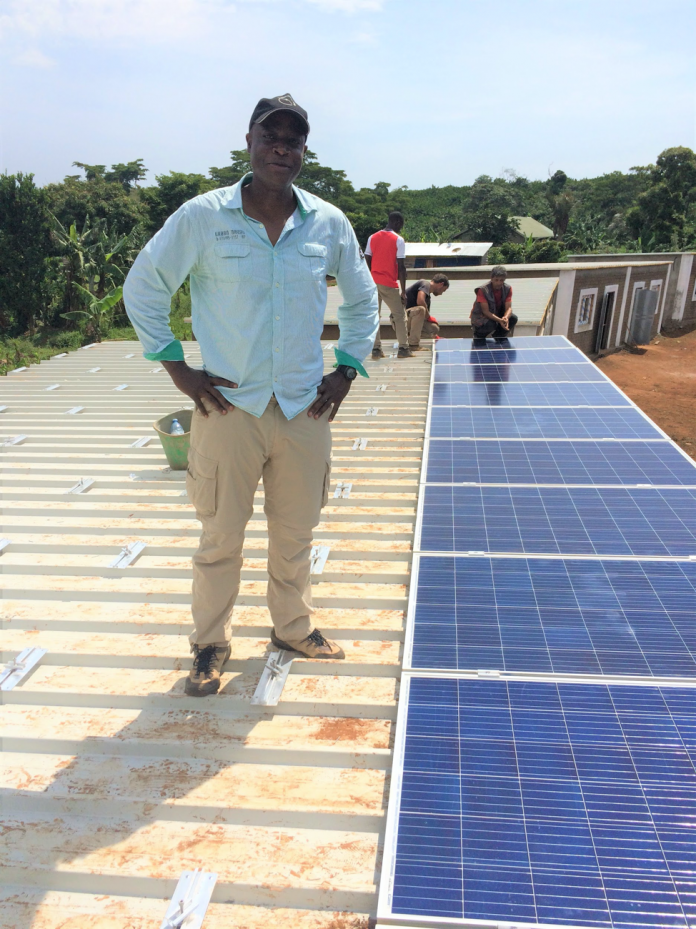
Based on Christensen’s definition, one example of a truly disruptive innovator in the energy access market, is Mandulis Energy, an enterprise developing software-enabled renewable energy microgrids. The company is working in partnership with the French NGO, ACTED, to deliver affordable, reliable, and productive rural electrification to off-grid rural farming communities in Uganda.

1.3 billion people in the world lack access to electricity, including 80% of Uganda’s population of 39 million. “We use biomass power to deliver an integrated solution to the perennial global challenges: energy security, food security, climate resilience, and poverty alleviation,” said Elizabeth Nyeko, Co-Founder of Mandulis Energy. The company couples its proprietary software with an innovative business model that delivers a ‘triple bottom line’ –of economic, social and environmental returns, and has the potential to transform the world’s approach to rural economic development. At COP21, Emilie Poisson, the ACTED Director for Africa, referred to the venture, as an exemplar model of “how governments, private sector, and NGOs, can join forces and work effectively to deliver climate resilience and poverty alleviation”.

Launched in Northern Uganda, where a pilot project is operational, the social enterprise is currently developing an 8MW (500kW x 16 sites) prototype for the Practitioners Dialogue Climate Initiative program supported by the German government’s international development entity, GIZ GmBH, which consumes biomass supplied by 15,000 farmers. The startup has ambitions to scale across Uganda and internationally, in countries with similar fundamentals. “We go wherever rural communities lack access to electricity. As long as there are farmers to provide a sustainable and renewable source of biomass, which in our case is simply agricultural waste”, said Peter Nyeko, Co-Founder of Mandulis Energy. A study by Uganda’s Ministry of Energy, found that agricultural waste aggregated at agro-processing centers across Uganda can power 1650MW –nearly double the country’s current power generation capacity.

“My vision is to end a generation of suffering children in my community.” – 26-year-old Syrill Kizza

0

He is not going to wait for the government of Uganda to help his community. Syrill knows what poverty means. This is all he knew when he was growing up. He is determined to give the children in his community a better life that what he had. KIZZA SYRILL is a 26-year-old social worker who has created a shelter for children in the slums and is taking them into schools with the aim of giving them a better life. He says that his vision is to stop a generation of suffering children.

Having lost his mother at an early age, and with his father working as a long-distance truck driver, he faced many challenges growing up in a slum in Bwaise. To earn a livelihood, he found odd jobs like fetching water for the neighbourhood, which he sold at UGX 200 for a 20-litre jerry can. “We did not have running water so I would have to go to the well and people would pay me to fetch water.” he says.

Bwaise being a wetland, rubbish would pile up whenever it rained and he used this as an opportunity to collect scrap which he sold at UGX 500 per kilogram and used this money to buy scholastic materials.

His impoverished background was fuel for him to make a difference in his community. He does this through his organisation Vision for Vulnerable Communities Foundation (VIVCOM). Syrill founded VIVCOM with the core values of raising orphans and vulnerable children. It started in 2012 when he encountered four homeless children in his neighbourhood. ”

“They were very young, helpless and had nowhere to go because most of these women in slums are prostitutes so they can have children without knowing who their fathers. So they abandon children because they cannot afford to look look after them.” Syrill says.

Syrill took matters in his own hands and rented a 30,000 Uganda shillings one roomed house for the children and used his own income to support and feed them. before he knew it, the number had grown to 54 children . This created a need for more room and caretakers. He rented two more rooms. He managed to get more children off the street, but this wasn’t enough. The children were always idle and were bound to fall into dangerous habits. He was compelled to create a source of education for them. To keep them occupied, impart knowledge and give them a sense of belonging. With help from some friends, he build a temporary structure where the children could go to school. This is currently an active school that that runs from P1 to P5 in Nabweeru.

His vision for VIVCOM is to stop the generation of suffering children. He seeks to create a platform for these children to rise up and make something of themselves despite their backgrounds. he wants to see them become responsible and respectable leaders of Uganda. He acknowlegdes that maintaining discipline among the children can be a challenge, but they are kept busy with school work and community work. He talks to them and teaches them the values of discipline and hard work.

His advice to vulnerable parents in his community is to use family planning. With most women in these slums, family planning is ignored and women give birth to more children than they can provide for.

He cites the most common challenges with running this organisation as lack of regular income. This makes feeding, dressing, healthcare, accommodation very difficult. He hasn’t had regular funding and he gets all this support from personal donations and his own irregular income.

His vision for VIVCOM is to acquire land on which he could build an orphanage and take in more children and to create an education system where they can go through nursery to university. For it to be a worldwide organisation that seeks to take in vulnerable children all over the world and to promote talent development among these children.

Syrill thanks all those who have gone on to offer support to VIVCOM, and all those who have encouraged him along the way to never give up on these kids. He also seeks more help from everybody out there. Any kind of support is welcome. For all those who would like to make a donation to VIVCOM

Nelly Matte: We are in the business of elevating, exposing and empowering anyone that is elevating Africa’s stature

0

Guided by her love for Africa, this young woman has set out to empower, elevate, encourage people that are working hard to make Africa a better place. This is Uganda met Nelly Matte to share with us the  Africa Elevation story

Who is Nelly Matte?

To be frank, I am not quite sure who Nelly Matte is yet, I’m still figuring her out. I suppose that’s the essence of life, using your various encounters and experiences as a learning tool to finally attain self-mastery. What I do know for sure is that my life will always be guided by love and compassion because I really believe that’s what makes our existence worthwhile.

What Inspired you to start Africa Elevation?

Africa has innumerable success stories that need to be told and even though quite a lot has been done to shed more light on our growth as a continent there is still so much more we can do to expose African achievement, this I believe will harness a hope and a stern belief that anything really is possible in Africa by Africans. Secondly, I was inspired by the tenacity of the African people, we are such a colourful people right from the way we dress to the way we speak in our dialects, i don’t know what it is exactly I cannot pinpoint it, but there is something very magical and beautiful about us.

So then what is Africa Elevation all about?

Africa elevation is all about being part of a movement that is charging towards African prosperity. We are in the business of elevating, exposing and empowering anyone regardless of ethnicity whose main aim is to elevate Africa’s stature. Africa elevation will always be an upward journey. one that hopes to one day enhance the value of the African dream and making these dreams regardless of how grand they are; valid in Africa.

Why empowerment of women?

There isn’t an economy in the world that can boast of the irrelevance of the woman. In fact, almost all developed economies will emphasize on their undeniable relevance yet this demographic in many parts of Africa most especially in rural areas are still being marginalized and for the most part disregarded. empowerment of women definitely takes eminence in our list of objectives because we believe firmly in gender equality and that the rights and privileges rendered to a man must also be rendered to a woman without discretion. I could point out the obvious reasons as to why a woman is crucial in various settings from a home to a board room but all that will not take away from the fact that we are first human then woman or man, why then should there be any restriction on what a human being deserves on the bais of their gender?

Africa Elevation is based in Uganda, do you have any plans to go regional or continental

Haha I have plans to go global. I’m not one for placing caps on dreams, for Africa elevation the sky isn’t the limit its our starting point.

Where do you see Africa Elevation six years from now?

why six? ha-ha. well six years from now I see Africa Elevation expanding into other countries and relentlessly tackling issues around poverty as that in essence sums up our focus and that is to gradually design and establish platforms and projects that will provide and make room for African affluence.

You have an event My Crown My Pride happening a few days from now, what is it about and why shouldn’t anyone miss out?

my crown my pride is about celebrating the African woman. as a women-led and youth-led organisation, we are very excited about this event. essentially we shall be conducting a one-hour dialogue that addresses concerns around perceptions beauty for women of colour and how this has affected our pride in our ethnicity. we shall be asking a number of questions such as; why we are buying more weaves and more skin lightening creams as women of colour? must our hair be straight and our skin lighter to feel more beautiful? is Africa evident in how we adorn ourselves? Are men placing pressure on what is considered attractive in a woman of colour or is this pressure elusive? all this and more by key note speakers we have identified as experts in the aforementioned areas of discussion these include Charlyn Kentaro, who was recently featured on CNN start-up; a lawyer by profession and founder of the good hair collective, a Ugandan based hair care line, Humphrey Nabimanya, founder and team leader of Reach a Hand Uganda, an established social enterprise that has dedicated all their efforts to empowering youth to make informed decisions in regards to sexual and reproductive health, Monalisa Umutoni; a self-taught makeup artist who has made waves in the beauty industry in uganda, with a track record of making up celebrities such as Anne Kansiime, Sylvia Owori, Juliana Kanyomozi etc she has definitely garnered ample experience to let us in on beauty.

In addition, we shall also have a pop-up shop that showcases and exhibits hair and skin care products as well as other complimenting products made in Uganda. This will be a great platform for small to medium entrepreneurs to gain publicity. As part of the dialogue, representatives from DFCU BANK will also be providing financial literacy skills and tools for potential young entrepreneurs which is a great learning opportunity for anyone interested in knowing what it takes to start up a business.

Aside from all that we shall also have a networking and mingling session with entertainment by Dj Karo and Ugandan poets who will infuse art to the African woman. it’s a great chance to get contacts and exchange ideas around the beauty industry in Uganda. missing this would not be wise. This event will be held on 12 Feb at the Goethe Zentrum or the German cultural society on bukoto street, plot 52 and it starts at 7pm till late. we hope to see you there. for further details on the event please contact us via email: info@africa-elevation.org

So besides that upcoming event, what other events should we expect from Africa Elevation this year?

Well, we will be hosting our very first Africa elevation awards ceremony this year where we shall acknowledge Ugandan achievement in various disciplines both individually and on an organizational basis so please keep an eye out for that. we are also in the process of designing a series of seminars and workshops under our Africa Elevation Talks platform, My crown My pride being a first; which we hope will engage various interested parties in conversations that will question the status quo and spark change where needs be.

Let’s talk about personal inspiration. Which people inspire you in everything you do?

undoubtedly my parents. I cannot even begin to explain just how invaluable their guidance has been in all that i pursue. my mom for teaching me compassion and instilling the love of God in my life and my dad for teaching me to never give up on my ambitions and also to always step out looking fly ha-ha

Again at your age, most girls are after personal happiness and caring less. What makes you different?

I am definitely after personal happiness though am not sure exactly in what context your question was directed. i think our happiness is a personal mission and one that we all must work on daily. in regards to what makes me different, that’s simple, no two people are the same. my passion, my ambitions, my hopes and dreams are not likely to be the same as the next girl but am not saying that makes me any better. my aim is simply to extend as much love as i can and to promote individuality because I believe once you are yourself you have no competitor

If someone wants to contribute to Africa Elevation where and how do they go?

our website www.africaelevation.org will be up and running before the end of this month as we make upgrades and update information about our campaigns and upcoming activities soI ask that you please be patient with us. our online market space, Kupandisha is going to be a stand-alone site that will sell African sourced and made products online, this we hope will provide global access to the African product.

If you were given an opportunity to change Uganda, what would be that one thing you can change?

I have a long list but at the top of my list would be the education system.I would alter it to allow for learning that challenges the mind to think for itself as opposed to simply cramming and reinterpreting information. i would endeavor as much as possible to create an education system that allows for innovation and creativity.

What advice would you give to someone who wants to be like you?

Don’t! be yourself, take time to discover who you are as a person, explore your genuine interests and follow that. the biggest mistake we make is we are often in awe of our role models and wish to model our lives after theirs but i find that incredibly dishonest. if I am by some miracle someone that anyone admires, I would hope that my character inspires them but not necessarily directs them.

Experiences

Top 5 Cultural Attractions in Uganda

0
Cultural tourism is the practice of traveling to experience and appreciate the unique cultural heritage, traditions, and lifestyles of a particular destination. This involves...
Mountain Biking in Uganda

Mountain Biking Around Uganda

0
Mountain biking. The sport has been embraced worldwide hitting the mainstream in the past 20 years when bike manufacturers realised the growing popularity of...
Kampala Tourist Guide

10 Geeky Things to Do in Kampala

0
Kampala is located in central Uganda on the shores of Lake Victoria and is the capital and business center of this countries.  Kampala is...
Mgahinga Volcanoes

Go Gorilla Trekking in Mgahinga National Park

0
Uganda the pearl of Africa is blessed with half of the total mountain gorillas living in the whole world and the mountain gorillas in...
Bwindi Mountain Gorilla

Visiting the Mountain Gorillas in Bwindi Forest

0
Mountain gorillas are subspecies of primate animals called gorillas. Gorillas are the largest great apes left in the world which live in the tropical...
Bwindi Impenetrable Forest

Experience Mountain Gorilla Trekking in Bwindi

0
Mountain gorillas are subspecies of primate animals called gorillas. Gorillas are the largest great apes left in the world which live in the tropical...

5 Amazing Things to Do in Budongo Forest

0
Budongo forest is one of the largest conserved forest areas in Uganda covering an area of 841 square kilometers. Located with Murchison falls national...
canopy in Nyungwe NP

Journey to Explore Rwanda’s National Parks

0
Rwanda is a small and landlocked country boarding east African countries. It is bordered by Tanzania in the east, Uganda in the north, Burundi...
East Africa Safari

Things to Do in East Africa

0
Ballooning Mountain Climbing – Rock Climbing & Mountain Biking. this is done in Mr. Rwenzori national park in Uganda, Mount Kilimanjaro national park...
Lake Bunyonyi

Holiday at Lake Bunyonyi in Uganda

0
Lake Bunyonyi is one of the most scenic places in Uganda famous to travelers who take a circuit to the attractions in the western...