Home Blog Page 16

How This Group of Young Men is Creating Employment Through Art and Craft

0

A group of 6 youths in Makindye has embarked on a life-changing journey, turning their passions and skills into a profitable business.

After attending a crafts exhibition at the National Theatre in 2015, these friends were inspired by the attractive crafts on display to start their own workshop making and selling crafts.

“We talked to Mr. Muwembo, the craftsman who was showcasing his work. He offered to give us training as we worked for him. His workshop was in Kanyanya so we used to come from Makindye every day to Kanyanya. It took us over a year to master how wood craft is done,” said Mark.

While at this apprenticeship, these young men started making their own pieces which they sold, using the profit to purchase their own equipment.

“We had a strategy. Every month we had to buy equipment. After a year, we had developed skills and were able to start our own workshop,” said Malakai, one of the proprietors of the workshop. “To start any business, it needs commitment, passion, and ready to take risks, consistency and involvement.”

In 2016, these committed youth started their workshop on a small piece of land given to them by Malakai’s father at Lukuli, Nanganda.

“After two months, KCCA came and demolished our workshop saying that they wanted only built-up structures on the main road. Even all our equipment and materials were taken. We went back to zero and all our savings had been used to buy these things,” narrates Mark. “We visited KCCA offices several times trying to see if we could recover the materials. We had lost wood, vanish, paints, and tools like small axes, carving tools, pry bars, clamps, hammers, and marking tools. We never got any back so we gave up on them”

As a result, their work was put at a standstill for some time. This was a very big setback to their dream of building a very big craft shop. Their next challenge was getting another location.

“Towards the end of 2016, KCCA advertised a funding opportunity for the youths who had business ideas and also those that had running businesses. We wrote a proposal but this took a while and we do not get any feedback.”

Desperate for capital to start over, they sought loans from their parents to no luck. Only Abdul’s parents supported them with a small loan that wasn’t sufficient to cover the cost of materials and new equipment.

“During that time, there was a road construction project. we asked for jobs and worked there for 6 months. We saved all our money and rented a small piece of land where we put up a workshop. This time it was not on the main road.  We started working again and lucky enough, we had a market from our time at Muwembo”s workshop,” narrates Mark.

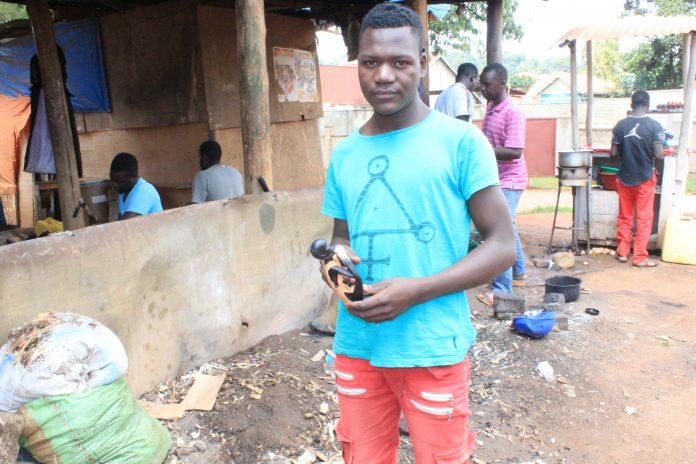
Malakai working on one of the pieces in the workshop

Due to their hard work, these six young men have managed to create jobs and employ more eleven young people who distribute and take on other tasks like filing, shaping, chiseling, painting among others. The group is constructing a workshop and a showroom on the main road in Lukuli. By next year, they believe, the workshop will be done.

“Based on the current situation in the country, we are able to earn a living and also employ other people,” says Abdul.

When asked about their goals, this inseparable team wants to have at least 100 employees by the end of next year and also start exporting their craft. They encourage their fellow Ugandans to follow their passion and find a way of earning from it.

*This is a guest post by MARVIN MUTYABA, a student at Makerere University Business School, currently pursuing a Business Administration in his second year. He is passionate about entrepreneurship, skills development, and fitness. 

Trekking the Rwenzori Mountains

0
Rwenzori Mountains

Travellers have been looking for Uganda’s Rwenzori Mountains for almost two thousand years. As early as AD 150 based on testimonials from traders who had ventured inland from the coast—created maps indicating the location of snow-capped mountains in what is now western Uganda.

Traders reported that locals referred to these mountains (now known as the Rwenzori Mountains) as the ‘Mountains of the Moon’ for their snow-capped peaks. For nearly two millennia explorers and geographers largely believed these Mountains of the Moon to be the source of the Nile, but failed to confirm their location. It wasn’t until 1889 that the famed explorer Henry Morton Stanley was finally able to identify the mountains marked on Ptolemy’s maps.

Though it was ultimately discovered that the Rwenzori contribute only a fraction of the volume of water to the Nile, the Mountains of the Moon have remained a key attraction for adventurers. In 1906 the Duke of Abruzzi was the first known trekker to summit Margarita Peak—Africa’s third tallest, behind Kilimanjaro and Mt. Kenya. Since then the mountain has become a destination for hikers eager to explore the range’s unique flora and fauna and more adventurous trekkers seeking physical challenge and unparalleled views.

Located at Uganda’s western border with the Democratic Republic of Congo, the terrain of the Rwenzori ranges from rainforest to bamboo forest to bog to glacier, hosting everything from giant lobelias and the Rwenzori Turaco to heather trees that drip with moss and black and white colobus monkeys.

Visitors can arrange treks through the Rwenzori, anywhere from five to ten days, and can attempt any of the range’s six main peaks: Margarita (5109m), Alexandra (5083m), Speke (4890m), Emin (4791m), Gessi (4715m) and Luigi di Savoia (4627m). Sample itineraries are provided below.

Rwenzori Mountain Trekking Itineraries

Main central circuit with Margarita Peak (10 days, 9 nights)

Day 1: Arrive at Entebbe international airport

Upon your arrival at the airport, you will be met by one of our drivers or guides who will welcome you to Uganda and give you highlights of your trip itinerary. Transfer to hotel in Kampala city or Entebbe town depending on the time of arrival.

Day 2: Kampala – Kasese town

After an early morning breakfast in Kampala, you will drive to Kasese via Fort Portal. The Kyonjojo plains will provide you views of rolling tea plantations before you arrive in Fort Portal town, where you will stop for lunch. From Fort Portal proceed to Kasese town under the shadow of the Renzori Mountains. Overnight in Kasese town (Sandton Hotel) or directly to the base camp town of Ibanda near the base of Nyakalengija.

Day 3: Kasese town – Nyakalengija – Nyabitaba camp (4-5 hrs)

After breakfast transfer to Nyakalengija, the start off point where you will meet your mountain guides and escorts. The walk begins through community homesteads and plots of land featuring coffee plants and banana trees and brings you to the gate of the Rwenzori Mountain National Park for registration. Once registered, you will set off and from the get-go you will be able to spot three horned, two horned and one horned chameleons, as well as various butterflies. If you are lucky you may even see a mountain elephant. After crossing the Mahoma River you will take your first break, re-energizing with a packed lunch before starting the steep ascent to Nyabitaba camp, located on a ridge at 2659m. Dinner and an overnight at Nyabitaba hut.

Day 4: Nyabitaba – John Maate camp (6-7 hrs)

An early rise at Nyabitaba will most likely treat you to a panoramic view of the Portal Peaks, providing you ample motivation for your second day’s trek to John Maate camp. After setting off just a few meters from the camp you arrive at the central circuit junction, choosing the descent through the Mubuku River valley to Kurt Sheferbridge—a beautiful attraction where the Mubuku and Bujuku rivers converge, forming the main stream of the Mubuku River which drains its waters into lake George. From there you follow the Bujuku River valley leaving the mountain forest zone behind and proceeding through the bamboo zone and the heather zone, where trees with white hanging moss referred to locally as “old man’s beards.” Parts of the trail involve beautifully constructed but difficult-to-navigate wooden ladders and foot bridges. Proceed carefully. Eventually you will pass the old huts at Nyamuleju and begin to spot the famous giant lobelia plants. Soon after you will reach John Maate hut, tucked into a mountainside at 3550m.

Day 5: John Maate camp – Bujuku camp (5-6 hrs)

This day’s hike takes you through stunning valleys with giant lobelias, groundsels, heather trees and everlasting flowers. Part of the valley is traversed on a wooden boardwalk. From there it is a steep walk through the Upper Bigo Bog—gum boots required. Ascend to Lake Bujuku, a glacial lake filled with snow melt from Mt. Speke, Mt Stanley and Mt Baker, on the edge of which is Bujuku camp at 4640m.

Day 6: Bujuku camp – Elena camp (2-3 hrs)

It’s by this day that hikers make a choice. Some may opt for the Escort – Eliot pass to Kitandara Lakes, where an alternative camp is situated between two lakes. The route to the camp passes between rock boulders with views of Mount Baker and Mount Albert. For those seeking a greater challenge and a chance to summit Africa’s third tallest peak, the hike to Elena Hut is 2.5km over slippery rocks. Hikers will find themselves happy to rest in a hut at 4640m just under the peak of Mount Stanley.

Day 7: Climbing Margarita Peak (5-6 hrs ascent)

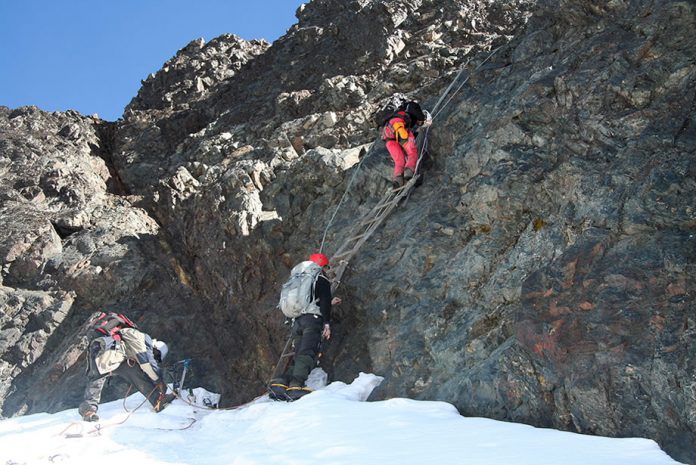
You will wake up early around 5:00am for breakfast. On a clear day with good weather, you are able to view Mt Speke, Mt Baker and Mt Albert. After an initial rock scramble you will reach the snow line, where you will don crampons and ropes to prepare for the traverse and ascent of the glacier. Once you have completed the challenging ascent of the glacier you’ll have a last stretch of rock scramble before reaching Africa’s third tallest point, Margharita Peak (5109m). On the summit you can enjoy snacks, a warm cup of tea and views of Uganda and the Democratic Republic of Congo. Descend to Elena camp for lunch and to Kitandara Camp at 4027 for an overnight rest after a long trip. The descent will take you 5 – 7hrs, depending on conditions and fatigue.

Day 8: Kitandara camp – Guy Yeoman camp (5-7 hrs)

On this day, clients who have opted to climb Mt Baker will wake up to hike the 2 kms to the peak. All hikers will eventually leave the Kitandara Lake valley and then descend through boggy areas with familiar but beautiful vegetation such as giant lobelias, everlasting flowers and heather trees with hanging moss hanging. You will find yourself in a valley tracing a stream to Guy Yeoman camp.

Day 9: Guy Yeoman camp – Nyabitaba camp or to Nyakalengija start point

Descend from Guy Yeoman through the heather zone and some bog to the Kamato and Kichuchu rock shelters. Enter the bamboo zone and pass to the Kichuchu Bridge, after which you re-enter bamboo forest before reaching Nyabitaba hut, the site of your first night’s stay. Depending on how you feel you may continue the descent to the trek’s starting point in Nyakalengija, where you may stay in Hotel Sandton or Ibanda base camp. Others may choose to split the final descent into two days, staying one final night in Nyabitaba hut.

Day 10: Kasese– Kampala

After a good night’s rest and a hot shower you will proceed to Kampala again via Fort Portal. Transfer to Entebbe International Airport is provided.

Being HIV Positive, Diagnosed with Cancer & Tuberculosis Has not stopped this Superwoman From Looking After 150 Kids in Slums

0

“A strong woman doesn’t give up even though her heart may feel heavy. She courageously takes one more step, then another and then another.” –Anonymous

Stella Airoldi first met Susan laker in 2009 when she first came to Uganda while doing research about post war victims and witnesses.

“I visited her house, where she was living with her 3 teenage kids. Back then I was 24 years old and Susan 26 years, so just two years older than me.  But her kids were already 9,10 and 13 years old.” Stella says.

Because Susan got pregnant for the first time when she was only 13, her kids didn’t go to school and neither did she. A soldier was responsible for her first pregnancy while she was living in a military barracks which by then, was the only safe place for her to go to escape the insurgency caused by the Lords Resistance Army in Northern Uganda.

“Getting pregnant when I was 13 years old was so traumatizing. I lost my childhood life. I wasn’t able to go to school which made me lost my hope for living a good future. I hated my parents for forcing me in to early marriage, my growth was totally destroyed and I segregated myself from people because I felt inferior.”- Susan notes.

Susan with some of the beneficiaries of 22STARS. (Photo credit: Stella Airoldi)

When Susan was 15 years old, she conceived again but got a miscarriage when she received a message notifying her that her uncles, nieces, a brother and sister had been mutilated and killed by the Lord’s Resistance Army rebels.

“I was shocked and lost the pregnancy. After a few months, I conceived again and gave birth to a second child at the age of 16 and when the baby was 6 months, the father died and since I had nowhere to get financial help from, I was forced to  remarry another soldier from the barracks to get protection and when I was 19 I gave birth to the third child.” Susan says

In 2007, her husband was deployed to Somalia on a peacekeeping and never returned, a thing that left Susan very frustrated. It was shortly after that, that she found out that she was HIV positive, had cancer and Tuberculosis (TB). It was not until an organization called Reach Out Mbuya came to her rescue that she was able to start cancer chemotherapy and TB drugs for six months and now am on ARVs treatment for life.

She then fled with all her children to Kampala which were (and still remain) her main reason and motivation to keep going in life. Her kids were tested negative and she wanted them to go to school. She started making jewellery, which initially her kids would sell in the streets.

Susan and some of her children (Photo credit: Stella Airoldi)

“It was then my pastor introduced me to Stella. I was making paper beads jewellery and Stella decided to buy me jewellery on a yearly basis. At the end of 2012 when she came back to Uganda to see how I was doing, she was surprised to learn that I was going back to school by myself and I had improved.” Susan notes.

Susan has been able to buy land and built a bigger house for her family. She completed high school and did a couple of short courses to improve her skills and knowledge for example a  certificate in Clearing, Forwarding and Shipping management, Certificate in Electronics, Certificate in Counseling People Living with HIV/AIDS.

“At first, all my friends and family thought I was completely crazy starting with women who cannot read and write and I cannot even communicate with. So true, things didn’t go that smooth the first 2 years. So end of 2014 I came back to Kampala and since 2015 I am here myself 2 to 3 times a year and things improved a lot.”- Stella says.

Stella (left) and Susan during one of the jewellery making sessions (Photo credit: Stella Airoldi)

Susan is now managing the whole team of at 22STARS jewellery that comprises of over 20 women and supporting 150 children in slums. Thanks to recurring monthly donations, she (Susan) has been cooking in Acholi Quarter every Sunday since October 2016 ( so more than 14 months!) with the help of other 22STARS group members. The group started back then to cook for 50 kids and that is now 150. They get a hot meal with either fish or meat.

22STARS is a team of artisans made up by strong women living in the slums of Kampala and Jinja in Uganda making jewellery for a living. The platform is giving women in slum areas like Susan to sell their jewellery on the international market and earn a living, and in addition war running small social programs on the ground.

“Our choice for environmentally friendly products is a very conscious one. By using 100% recycled paper, the jewellery you wear does not only look good, but it also feels good. Our beads are hand made from paper and varnished with natural products.  This makes each peace uniquely different, lightweight and waterproof.” Stella says.

Some of the 22STARS women that make jewellery (Photo credit: Stella Airoldi)

22STARS also uses education and entrepreneurship to empower children and their families to rise above poverty by creating long-term sponsorships for children in Uganda, and also run several community development initiatives including a nutrition program, basic needs program, small business training and micro loans program and our holistic educational program with extra-curricular activities.

“Without the help of Susan this all would not have been possible. As she knows how it feels like to sit in the stone quarry with your kids, crashing stones all day, not being able to send them to school, she is pushing very hard to help all the families over there to send their kids to school. She is so amazing how she is managing everything. Susan is a true superstar and really the strongest woman I ever met.” Stella concludes.

Stella and Susan at the 22STARS office. (Photo credit: Stella Airoldi)

Like this story or have something to share? Write to us: info@thisisuganda.org, or connect with us on Facebook and Twitter.

Go Hiking in the Mgahinga Volcanoes

0
Gahinga Volcanoes

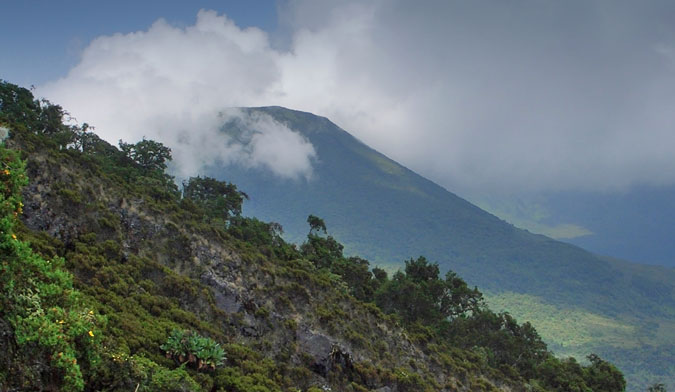
The Virunga Region is composed of a series of eight volcanoes. Uganda has three of these volcanoes and lie in the Mgahinga Gorilla National Park. On your visit to South Western Uganda, the Virunga Mountain (Volcano) chain looms large in your view as you wind your way down into the valley toward Kisoro.

Though most visitors are drawn to the region for gorilla safaris – trips to visit the gorillas in the Bwindi ‘Impenetrable’ or Mgahinga National Parks, hiking the Mgahinga Volcanoes is another interesting adventure that you should not miss. Though, Bwindi tends to be favoured as the family of gorillas in Mgahinga likes to split their time in neighbouring Rwanda and Democratic Republic of Congo (DRC), there are several trips that include hiking the MGahinga Volcanoes.

The Mgahinga National Park visitor’s centre is located about a 10 minute drive from Kisoro. Recently renovated, the centre features rock paths that meaner through the vegetation to the building. Beautiful rain chains conserve rainwater for gardening around the centre and under a high beamed log ceiling interactive displays and maps line the walls. Staffed by exceptionally knowledgeable Ugandan Wildlife Authority (UWA) guides you’ll first enter the main room and pay your fees and decide your trail. There are a number of different types of hikes that can be done based on your ability, desire and speed.

If you are just doing a day hike and are a moderately fit hiker you should try the Gahinga trail which will take you about six hours and climbs the base of Mount Gahinga. The border trail can also be done in a day and climbs the base of Mount Sabinyo and runs you right along the DRC border. There is also the cave trail where you learn a bit more about the Batwa peoples who lived there and you get to investigate some caves.

Two trails – Mount Sabyinyo and Mount Muhavura – require more than a day covering 14km and 12 km respectively. They are also much steeper than the day hikes as you climb to the tops of each of these volcanoes. The views, though, cannot be beat! On the Sabinyo hike you get to stand in Uganda, DRC and Rwanda at the same time.

After you’ve decided, you’ll enter a large amphitheatre for briefing on the Park and the hike you’ve selected. You’ll want to have sturdy hiking boots and tuck your trousers into your socks to avoid safari ants. A raincoat is advisable if travelling during the rainy seasons and a bottle of water is necessary. Bring a packed lunch no matter the day hike you choose – and remember to bring a snack or fruit for your guide. The guides will also get an idea of what interests you, or your group (birds, wildlife, insects and plant life abound!) so they can tailor the hike. A guide always accompanies the visitors and sometimes it would be impossible to find the trail without them!

The Gahinga trail starts in recently reclaimed farm land and winds up to the edge of virgin forest. The hike was steep in places but not uncomfortably so and while it didn’t rain it get damp as fog rolled in and out over the mountain. The scenery was both breathtaking and intriguing. Giant bamboo looms large over the trail, jungle elephant footprints cross the trail sunk deep in squiggy mud, earthworms as long as your forearm living above ground in the dark, wet environment and more birds that you could possibly catalogue.

If you like hiking in some of the most pristine forests Africa has to offer Mgahinga shouldn’t be missed!

10 Places to Visit on a Honeymoon Holiday in Uganda

0
Honeymoon in Uganda

No wonder it was recently voted one of best destinations to be visited in the world by Rough Guide, Uganda has a lot to offer for a perfect honeymoon trips from exotic islands, beaches, wildlife, primates and budget friendly options. Are you trying to figure out where to go on your honeymoon? Uganda has covered you with a wide list of its amazing tourist attractions. Here are some of the places you should include in your honeymoon safari in Uganda, the Pearl of Africa;

Beautiful Bunyonyi Island

Lake Bunyonyi Island continues to hold a banner of being the exotic destination for leisurely holidays in Africa. This island is one of the most scenic places in Africa and its great weather break the record of getting a new name as the “Switzerland of Africa”. The Island offers variety of leisure activities including swimming, sun bathing, boat ride, hiking, nature walks, fishing, birding without forgetting the exclusive eye catching views of the twenty nine islands. There are lots of places where you can stay during your holiday! From beautiful budget lodges to luxurious safari style lodges, you are assured of a great stay during your holiday.

Bwindi Impenetrable National Park

The Bwindi Impenetrable National Park is one of the best places to see the endangered mountain gorillas in Africa. Are you looking for natural scenic beauty in the middle of a wild jungle forest? Look no further! Start planning your trip to Bwindi Impenetrable National Park, a perfect location for tourists looking to gorilla trekking safaris in Africa. Couples looking for exclusive gorilla safari experience in Africa now have Uganda a home to half of the living population of the endangered mountain gorillas. Unveil the jungle rain forest natural beauty is heading out to see mountain gorillas in their forested home. The happy jungle life experience in Africa ever starts here and we highly recommend it to all visitors to Africa.

Kidepo Valley National Park

With an ever–expanding list of rare wildlife species and the unique cultural experience of the Karamojong people, Kidepo valley is a great place for Honeymoon safaris especially if you both love wildlife and culture. While here you can an unwind at the lodge balcony as you view more wildlife on the water hole on a hot day. The Kidepo Valley endless plain extends to the famous Masai Mara game reserve in Kenya another fantastic wildlife safari park in Africa. Be ready to carry home great moments of the Big 5 and other park wildlife.

Ssese Island

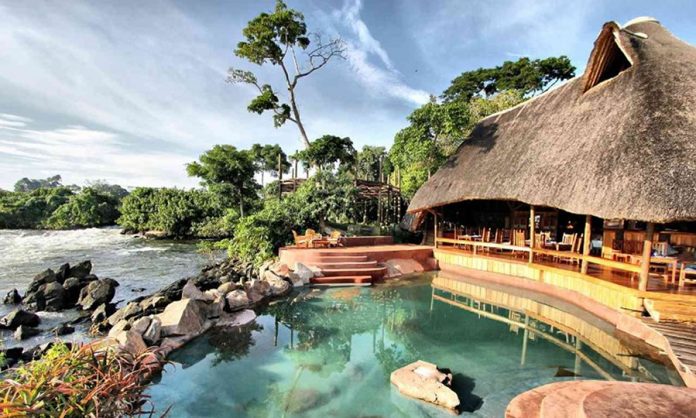
The Ssese Island is an archipelago of about 43 islands. Perhaps the travelers’ favorite vacation destination in Uganda with comfortable lake side hotels and lodges and a right Place for anyone seeking for complete leisure and relaxation. Ssese Island hotels and Resorts will reveal the right meaning of honeymoon vacations with the many special couple arrangements as well as the amazing lake island tour activities.

Queen Elizabeth National Park

The tree climbing lions of Ishasha, the highest population of hippos, crocodiles at the Kazinga channel, wildlife and the chimpanzee species in Kyambura gorge and Kalinzu forest reserve a great chimpanzee safari spot put the park on map as a premier safari destination in the world. Queen Elizabeth is an exclusive safari destination in Uganda.

“Our target is those children that society forgets” – Meet Uganda’s Beautiful Heart Esther Kalenzi

0

She is beautiful inside and out. Her Charisma is one to reckon, how she manages to get awesome young people to follow her cause is still a mystery to many. Meet  Esther Kalenzi the brain behind 40days over 40 smiles

Who is Esther Kalenzi?

Well, what you see is pretty much what you get with me. I am a believer who chases her dreams at all costs. I did a degree in Mass Communications at Uganda Christian University (UCU). I have done work in PR, Marketing and business development in the past. My hobbies include dancing, sipping tea at any time of the day and listening/telling stories. I am always happy to listen to people’s stories whether i am close to them or will never see them again. There is always something to learn or simply laugh/cry about.

What is and why 40 days Over 40 smiles?

It is a youth led charity organisation that supports orphans and vulnerable children. It started with a Facebook group I opened on February 27, 2012 with the aim of giving back to the less fortunate in society. The plan was to use the 40 days of lent to collect food stuffs, toys, clothes, beddings, books and other material that I would then give back to children and hopefully create more than 40 smiles. In 2013,we got registered. The name is a bit of a mouthful but it has a story so we decided to keep it.
What is this kind of charity that you and your awesome people do?
Hahaha, my awesome people are indeed awesome. The simplest way I can put it is that we make children smile. Our target is those children that society often forgets, whom life has dealt some pretty hard blows. If a playground will make them happy, we shall put up one. If they need a roof over their heads for those cold nights, that is where we come in. There are several issues affecting children in Uganda and more-so those ones who come from poor backgrounds or have no parent. We come in to ensure they have a childhood that is memorable despite their conditions.
At your age, most young people are concerned with personal happiness and dreaming about having big houses. Where did all this begin from?
I would also love a big house , maybe two? There are a few things I am passionate about that came together to create this lovely blend that is now 40-40 People- I connect with people and try to keep in touch to the best of my ability. I have friends and acquaintances whom I never knew would one day be part of this big dream Children- I have always loved children. They literally light up my days. Knowing that one or even several of them are suffering means that someone has to do something. I can be that someone, so can you Positive change: Our tagline “Be the change you want to see” was borrowed from Mahatma Ghandi. From the time I read it as a teen, it became my silent mantra. I am convinced that each of us has a purpose in this world. We may recognise it at 18 or 61. I am lucky that I saw mine by the age of 24. It was the conviction within myself to do more using available resources that gave birth to this dream, along with those factors I just mentioned that sort of fell in place.
Wow that is lovely. Are your parents happy and supportive now that you’re not a journalist but into charity?

They are. I was never really a rebellious child, neither was I a saint, but I always tried to listen to them. I actually failed to get work as a journalist after I graduated. I always thought I would be a features’ writer, bringing stories of change to the public or at least writing and producing a successful show. When I realised this was not happening, I looked for ‘any job’ that I could do. I worked for a business development firm when the 4040 idea came to mind. I made good friends while there and had an intelligent boss who challenged us on a daily. When I decided to quit, I did not tell my parents because I knew they would talk me out of it. Today, they are the ones who call me when an article about us has been featured in a newspaper or if we are on television. I think they have embraced it and I will keep doing my best to make them proud.
What are your biggest accomplishments ever since you started 40 Days over 40 Smiles?
Uhm, that we are still here three years later?! To tell you the truth, we have done some things I never thought we could pull off and have received recognition from some really credible authorities but I am most amazed that this little dream is still here amidst everything. In terms of ‘tangible’ outcomes, the dormitory we built in Luweero stands out and I think will do for a very long time to come. It isn’t that it is grand but the story behind it represents a true reflection of hope, faith, love and dreams coming true We were presented with a budget of 28 million Uganda Shillings for the dormitory and it was pretty much a ‘laugh out loud’ situation. “Are these people crazy, we can’t pull this off,” we said. We agreed to TRY and raise half with so much doubt. Along the way, something happened that I can only describe as a miracle. The support from our networks and strangers alike was overwhelming and this momentum pushed my team to do more. Our first fundraiser was okay, the second one better and then the #BuyABrick campaign just shoot through the roof. We raised 8 million Ugx in 10 days with just a hashtag. At this point, we were unstoppable. We would do whatever it took to get the balance. As I speak, a dormitory with capacity to house 210 children proudly stands at Happy Times Junior School Luweero and I tell you, it is the most beautiful thing you will ever see (heavily biased opinion)
We know this kind of charity deals with kids who are going through hell. Any story of these little kids that has touched you?
I would like to point out that most of the children we work with are happier than the average Ugandan youth. If they are not, at least we ensure they have what it takes to get them there. See, they don’t need much to be satisfied, a quality many of us can learn. Let me tell you about my special friend Ronald whom I met in 2012. He was an extremely shy boy with whom I had a special bond. He would see me coming and run excitedly then say nothing. I had to earn his trust. Before long, I found out he lived on the streets and each time he felt like, he left this particular orphanage to go back to the life he ‘knew.’ The caretaker said he was a ‘gone case.’ I asked him to promise me he would always be there when I came and he did. Last year he ran away (again) and although we lost touch, I thought about him and many of the other children and prayed for them. A month or so ago, I received a phone call. It was Ronald! He told me he had gone back to the street and been picked by a lady who had also visited him at the home around the same time as us. We talked about his new school and ‘new’ family and I was stiffling sobs the whole time.
Did it affect you personally? As in deep in your heart?
I generally like to do my best to give 100% and it can be a blessing and a curse. I grew attached to Ronald and so many of the children we worked with. He wrote me a letter thanking me for keeping him off the street 3 years ago and I still have it to date. I think I have an inexplicable attraction to seemingly lost causes and as such, I felt like it was my responsibility to help him believe in himself and realise that he has as great a chance as any other child to be whatever he chooses. I would love to see him and all the children we have worked with as adults, running businesses, singing, treating patients, raising their families- what a heartwarming sight that will be!
Do you still follow up these activities after a successful campaign?
We certainly do. I will give a few examples; We visited Luweero two months ago even if the dormitory was completed a while back. Other partners came in and bought beds for the children. A borehole has been constructed at the school yet the kids used to walk long distances to fetch water. The children who sat for PLE last year did well too. We are in touch on phone and visit when we can. We worked with Akiba last year and completed our project but are still in touch. The caretaker was at 5 aside last weekend and has invited us for their 5 year celebrations. It is only right that we stay in touch and continue to support each other in whichever way possible.
Well, it seems you are here to stay! Where do you see 40 Days over 40 smiles six years from now?
This question is one of the most difficult for me to answer because if you had asked me 6 years ago where I would be today, I would probably have given an extremely inaccurate response. I will tell you a few of the things we hope to accomplish though. We would love to work on issues from the grassroots i.e find out why mothers throw their children in the first place, what can be done to change this? These caretakers of orphanages who have given their life to children whom they are not related to, how can we empower them? We shall have an advocacy arm and sit with policy makers (better still have some of our members as policy makers) so that we can safeguard the future of Uganda’s children. I see us inspiring young people within Uganda and beyond to take their future into their own hands. Being ‘young’ can no longer be an excuse to act stupid or waste ones’ life but rather create an avenue to start laying foundations early and create a legacy that generations to come will emulate.
Charity takes great courage and commitment. What are some of the challenges you have faced so far?
This type of work can be emotionally draining in ways I can’t even explain. It gets insane from time to time but nothing worth having is ever easy. I am mostly amused by the people who tell me stories about 4040’s process that even I don’t know about. Each time we appear n the media, some people imagine we paid for it. They are not ashamed to make this allegations without even asking. If this was true, then we shouldn’t have wasted those millions in airtime and space. We would have built at least 10 dormitories by now. One even told me congratulations upon the line of hostels I had built. In my mind I was thinking, how about I first buy a bicycle? People actually believe these ridiculous stories because they are looking for a label, something, anything to explain why we do what we do. Others want to know what it takes to start an NGO because 4040 seems to be minting a lot of money. It is this kind of myopic thinking that keeps us underdeveloped and then we still look for someone to blame. It used to hurt but now it is mostly hilarious. The real challenges come in different forms,whether it is an angry volunteer, a sick child, an arrogant caretaker or a stubborn service provider. Sometimes all these forces are spewing negative energy at the same time and you fill like a minor heart attack isn’t entirely out of the question. Having several volunteers who must attend to their 8-5 jobs makes it difficult to achieve some goals in a timely manner. Schedule clashes occur often and the partners may not always understand this. Additionally, some organisations undermine 4040 simply because they are better established and that can be quite disheartening when you know your worth. Others have failed to master the art of saying no so instead they make promises that they will never keep. You make plans revolving around these pledges and end up realising they were a myth a bit too late. Nonetheless, each challenge comes with a lesson and I am positive the future is bright so sometimes you just say ‘C’est la vie’ and keep on keeping on.
Any worst moments or regrets?
I have lost some friends along this journey and I am bound to lose more. It is those moments that remind you what growing up is about, it won’t always be a walk in the park. I do believe that people are indeed in our lives for a reason, a season or a lifetime. This realisation gives me comfort, knowing that 4040 is bigger than me or my relationships. At the end of the day, I am positive the God who started this good work will carry it on to completion,
Are you planning to do charity for the rest of your life or time will come and say “Yeah i have played my part”?
I am at my best when I am doing what I do. This is my purpose and that isn’t something one gets tired of and says ‘Hey, please hand me another one, in purple please..’ Even when I hand over the mantle of team leader to someone else, I know I will be involved in charity work for as long as my strength allows.
Lets talk about the activities you do. From social media campaigns to fun activities(which are awesome by the way), what made you adopt this strategy?
Thank you. We have surely been blessed. Since I started by adding my friends to the facebook group, somehow, communication just continued on facebook. All it took was a few minutes and the message had reached hundreds of people (and the numbers continued to grow) We then extended to twitter and tried to use all the popular social media platforms. This mode of communication is affordable and has the power to reach may people at once. Our target group was the youth who spend a lot of time on social media. For the activities, we still thought of those that would engage young people. We settled on music and poetry plus sports. These fundraising events have been growing. Our first soccer match was between two teams and had 30 or so people, raising about 400,000. Last weekend we had over 1,000 people and we raised about 6 million Ugx. We have dedicated time, precision and a whole lot of hard work into this but it would all mean nothing without our supporters. They have pushed us to do more and given us reason to keep trying even the going gets tough. Would we really be holding these fundraisers if no one shared our posts or showed up? I think not.

Have you received any rewards or accolades ever since you begun?
We have and I must say almost all of them came unexpectedly. Let me try to put them in order – Vocational Service award, rotaract, Kampala city -Best Campaign, Social media awards (2013) -Heroine of the year award, Young Achievers -Best pitch -Tumaini award, first place, health category -Vocational service, Kyambogo rotaract club -Fearless award, Mavuno Kampala -Social Justice award (2015) -Our first internantional recognition came recently; Finalist, commonwealth Youth Development awards (There were 2 Ugandans chosen out of the 4 Africans, that is/was such an honour!) Eh, I feel like I have made up some but yes, that is the recognition 4040 has got and we take none of it for granted.
Am sure this started as a passion for social justice. But now that you’re getting recognition, does it still remain driven by passion?
Haha, what?? Of course! The awards and recognition are nice but take them all away and 40-40 will still be here for many years to come. I actually hate the attention that it comes with although I have to remind myself that it comes with the territory. The lives that are changing and encouraging people to do more for their society, that is what really matters at the end of the day.
Behind your inspirational leadership and the name of your foundation, there are other people who help you be who you are. Do you mind mentioning at least ten of them?
I may not mention them all but I have an amazing team that holds the fort and ensures that work is done. They have sacrificed a lot for 40-40. Some of them have been there from the very start, others joined recently and I can’t even remember a time when they were not there. They all have different backgrounds and personalities but they bleed 40-40 and are the reason we are where we are today. Is this where I send greetings? 🙂
Then outside 40-40, which partners have been helpful to you in your charity campaigns?
We have had several partners but I think I will mention the ones whom we have worked with on more than one project although we appreciate all of them. Cipher 256, D and J audio, Fit Clique Africa, Xfm, Sms media, The baby store Ug.
Let’s talk about personal inspiration. Which people inspire you in everything you do?
I am inspired by my mother. I am not quite sure how her big heart fits in her body. I do not know how she manages to take care of everyone, including people she does not really know. I am in awe of her strength, her faith and power to forgive. She inspires me to become a better version of myself. Did I add she is my biggest fan? Yes. It is mostly embarrassing, in a good way.
If you had a chance to meet Brandon Stanton (Humans of New York), what would you tell him?
Hahaha. You have also noticed I stalk him? The man came to Uganda and we didn’t meet? How shall I explain this to my children? Jokes aside… I even sent him an email, although he probably gets millions of those. I think I would do more listening than talking. I admire him, his courage and patience and can relate to his work to a small extent. Like us, he runs a facebook page that has allowed him to meet millions of people and change lives. All he wanted to do was take portraits of New Yorkers and he ended up travelling the world with the UN sharing some of the best, most heart-wrenching photographs I have ever seen. Of course the stories people share need special recognition. He is such a beautiful human being, doing a great job and I would let him know that countless times.
If you also had a chance to meet policy makers in the Ugandan government for example the president or parliament, what would you tell them?
I am pretty sure this space is not enough for the things I want to say. Several things in this country need an overhaul, including but not limited to our education and health sector. Many of these problems are ‘man made’ and therefore, it is in our power to turn them around. We need to do more for our children, quality education over quantity, incentives for teachers who essentially spend the most time with our children ,involvement of parents and the community in children’s education and well being, the list goes on. “The True Measure of Any Society can be found in how it treats its most vulnerable members” – Ghandi My focus would be on children (especially vulnerable ones) and the potential of youth. Bottom line is we can do more, they can do more, they should do more and so should we. When the policy makers slack, we should hold them accountable to the best of our ability and by this I mean, we should go beyond passive activism.
At the end of the day, they say judge a person by the works of his or her hands. How do you want to be remembered?
When you have a relationship with someone whether as a sibling, spouse, parent or friend, your actions will always speak louder than your words. It does not matter how often you tell them you love them if you can’t go out of your way to show it. I try to let my values speak for themselves. I would love for my life to be its own testimony. If a few people can be inspired or if I can change a life or two along the way, that will be enough for me.
This Is Uganda wants to tell the world that Uganda is not about Idi Amin or Kony but about beautiful people like you making a difference. Imagine if a white is reading this interview and they are touched, where can they contribute to your cause?
Hehe, but really, why white….? Anyone and everyone is welcome to be part of this movement. 🙂 our website is 40daysover40smiles.org Facebook Like 40 days over 40 smiles Foundation and follow us on Twitter @40days_40smiles They can find more information there.
What advice would you give to someone who wants to be like you?
Haha, no one should want to be like me. They should aspire to be themselves 🙂 I am convinced that when you want something bad enough, for the ‘right’ reasons, the universe will conspire to help you get it. Most of my success has been a result of trial and error so as long as one is willing to fail several times, eventually they will succeed.
Any remarks you want you make to appeal to the people?
You know that thing that keeps you up at night, the dream you are trying to stifle because you are not sure it will work? Start it now. The worst thing that can happen is it not working out but how will you know it won’t work if you can’t even try?
Lastly, do you mind sharing with us pictures telling your success story to our readers?
Here are some of them*
A collage of 40-40: Photo used with permission

How Kirabo is Empowering Youth To Turn Passion Into Professions

0

Meet Noeline Kirabo, a change agent and the founder of Kyusa, a non-profit organization that seeks to empower out of school youth to become employable by developing passion driven careers through starting their own business or leveraging available jobs.

Kyusa targets vulnerable youth in urban slum communities between 15 to 25 years of age to help them discover and harness their passions and make them employable in the fast growing entrepreneurial environment of Uganda. Kyusa seeks to eradicate the issue of youth unemployment by accelerating youth employability.

“Kyusa has been in existence since 2014 and has steadily grown from its pioneer class of 12 youth just like the disciples to a growing movement of over 600 program graduates at the moment whose lives have been greatly impacted and transformed by engagement with Kyusa.We started in kampala and we have grown our reach to as far Kisoro, kabale, Ibanda, Luwero, Mpigi and will soon be heading to the northern region ” Noeline says.

Kyusa offers research-based curriculums that develop key professional skills, leadership skill, computer skills, and financial literacy while also improving their self-awareness, self-confidence and self-management. The Kyusa training is an experiential learning program that seeks to equip youth to become job creators, successful entrepreneurs and peer leaders in their communities as well as career fields.Kyusa program activities include business startup training for potential entrepreneurs, business acceleration for small and micro entrepreneurs, employability/ job readiness training for youth seeking to enter formal employment.

Noeline conducting a session at Kyusa. (Photo credit Noeline Kirabo)

Unemployment has been one of the most highlighted challenges for young people in Uganda, a great percentage being uneducated, school dropouts or ‘unemployable’ graduates who lack the skills that many employers capitalize on while hiring.

Support programs are also offered to participants including mentor matching with business icons, exposure filled visits to gather hands-on skill, support to attend vocational training, apprenticeship training, apprenticeship placements, business branding and incubation.

“This rich syllabus has seen majority of the Kyusa alumni successfully running small and medium enterprises!” Noeline explains.

Kyusa graduates have started catering businesses, an Events Management Company, social enterprises, a football academy, Poultry farms, commercial farming, beauty shops, hair dressing, tailoring stalls, carpentry workshops, shoe making, craft making, crocheting businesses and electronic repair shops among other ventures. Others have secured formal employment as sales clerks, front desk personnel, teaching assistants, cashiers, administrators, data entrants and others have been informally employed on contract basis. You can follow Kyusa: https://www.facebook.com/Kyusa

‘Many of the impact stories are shared on the Facebook page where you can get to interact with more of the alumni businesses and also to support them so like and follow us.’ says Noeline.

It all started as a dream when Noeline herself was working a full time, well-paying job. She desired to do something that would leave a legacy. Having a background of not being in tertiary education herself, she wanted to offer the same hope to youth who withdrawn themselves from endless possibilities because they considered themselves unemployable because they had dropped out of school.

‘My passion derives from my experience as a former school dropout. I educated myself using online courses. When I got my first job, there was no turning back. At the height of my career, I was challenged to think about the legacy I wanted to build. The more I thought about it, the more I realized that my passion was in people developing more so empowering youth to live purposeful and fruitful lives.’ Noeline said.

Noeline is a 2017 YALI Regional Leadership Center Fellow. (Photo courtesy of Noeline Kirabo

Noeline’s desire to learn and grow has landed her many opportunities to sharpen her idea and increase her influence. These include: 2018 Acumen East Africa Fellow | 2018 MIT D Lab Eco system Builders Fellow | 2017 YALI Regional Leadership Center Fellow | 2016 Community Solutions Program fellow | 2015 Cherry Blaire Foundation Mentee | 2014 Hive San Francisco fellow | 2014 Dewey Winburne Community Service Award Honoree | 2013 Kanthari fellow.

The journey has not been all rose and no thorn for Kyusa. Noeline started out with very little funding from friends and family. She had to learn to get the job done with the few available resources which is a valuable lesson up to date. But like they say, ‘Where there is a will, there’s a way!’ Overtime many people have bought into the vision and partnered with Kyusa to get to this point.

Noeline looks up to her mother who made her believe she could be anything she set her heart to. She is inspired by Pastor Moses Mukisa of Worship Harvest ministries who has coached her a lot about vision, people development, leadership and resourcing for the vision.

‘I invite you to be part of this mission to restore hope and dignity to vulnerable youth through livelihood. You can give financially to sponsor a youth to attend the training, offer to mentor a youth, offer job and internship placements as well offer your expertise to facilitate trainings or offer motivational talks. You can reach us at: kyusa.uganda@gmail.com or 0777200109’ says Noeline

Kyusa aspires to empower 100,000 youth to become job creators by starting growing businesses in the next ten years as a means to accelerating youth employability first in Uganda then East Africa and Africa.Youth are the leaders of today and tomorrow hence investing in them is the sure way to sustainable development.

He is Riding a Bike From Gulu to Kampala for Rugby

0

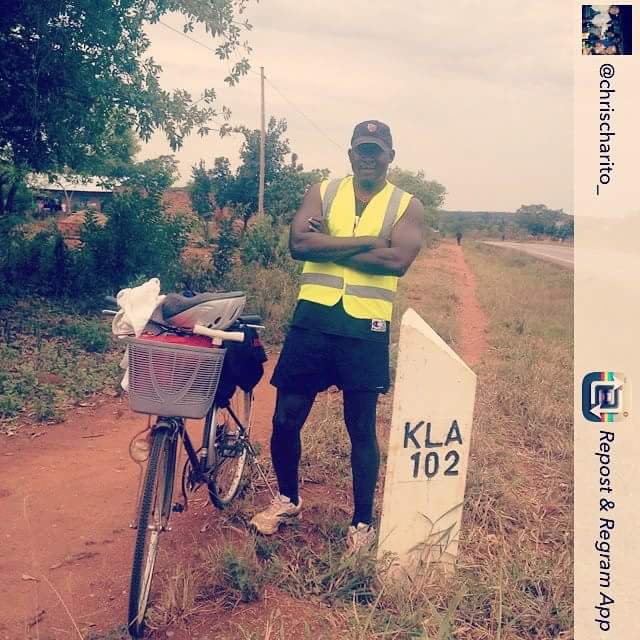
“As the rainy season sets in, a crazy man yesterday set off on a ride from Gulu to Kampala to raise awareness (and funds) for Gulu Elephants Rugby Club. On a bicycle that looks like it was nicked right off the set of Sound of Music, Ogwang Ocheng Humphrey, breaks a rugby leg, bursts a rugby sweat, tortures a rugby bum bum for a sport he absolutely loves. Last night found him in Bweyale, after over 100km.”- Herbert Drywood Opio wrote on his Facebook Timeline

And this immediately caught my eye. So I checked out the “crazy man’s” Facebook timeline to get a brief of how and when he set off. This is what I found;

used with permission

used with permission

“For the hope of rugby development in northern Uganda and the completion of our rugby club structure in Gulu, I dedicate this 400 km ride to this cause come Monday 23rd. Help” Ogwang Ocheng Humphrey wrote on his facebook Timeline “bike check, helmet check, training check, stressed family check, sperm bank check, pocket money check, weapon check, all ready a few hours before I hit Gulu Kampala road. thank you all for the support” Again He wrote “Setting off” at 6:04am

Ogwang Ocheng Humphrey is now one of those unsung heroes we have in our Country Uganda, instead of sitting back, he got on his bike and set out to make a difference, he didn’t call for a strike nor did he simply scream “Gavumenti etuyambe” He acted, and as he continues his journey to Kampala, This is Uganda wishes him a safe blessed journey. Meanwhile we all can go show him some love on his social media page.

Ogwang Ocheng H... Used with permission

Ogwang Ocheng H… Used with permission

10849993_10152663105101906_9005066689856575030_n

11067448_10152663105111906_4349096253237945016_n

Hero in the making

You can contribute to this great cause through any means that make you comfortable.

Account Name GULU RUGBY FOOTBALL CLUB
Account branch KCB GULU
Account Number 2201152608
Mobile money number
0785 403792
You are welcome to contact the above number to offer any other form of support
‪#‎rideforgulurugby‬

This organization is building Sustainable Infrastructure for schools in Uganda

0

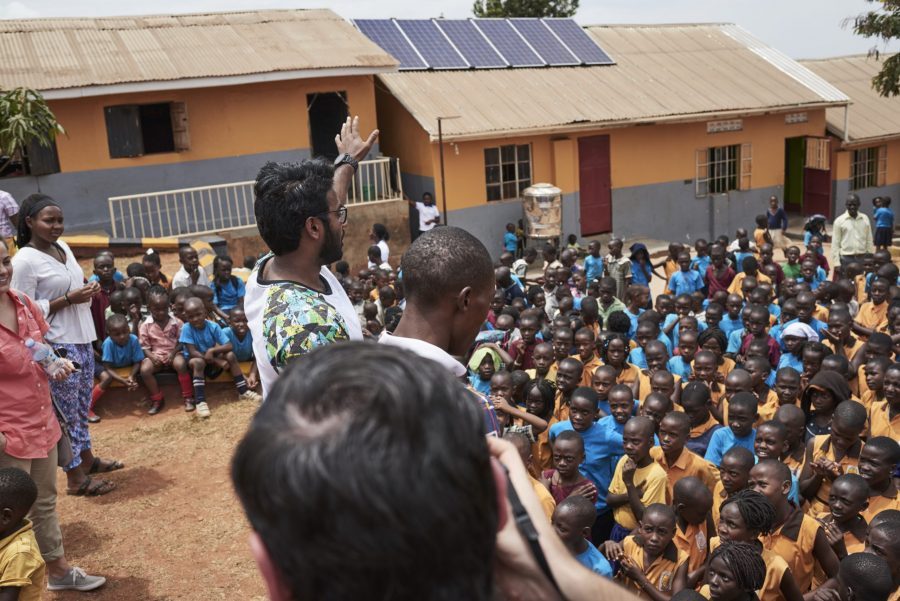
All We Are has a mission to solarize over 50 schools in Uganda over the next 10 years. According to the organization, this can save money and ensure more young people spend more time in schools. We caught up with Nathan Thomas, the Founder & CEO for a chat.

Let’s start with the name- “All We Are”, Why did you choose that?

I was lucky to, at a very young age, discover that the best version of yourself is the person you truly are. For many of us this journey of fulfilment is one that spans a lifetime. All We Are is the hope that by living a fulfilled life we can take our talents, passions, and all that we are to help others realize their true potential. We believe that “it starts with us.”

What inspired you to start All We Are?

The belief that if you get to a certain point of your life and decide that now is the time to start giving back, you took too much. I was a 16 year high school student living in Findlay, Ohio USA who wanted to do something to change the world. I luckily found several people who believed in me. Eight year later, I lead a platform of over twenty young professionals in America who volunteer their time to our mission, and an incredible team of employees on the ground in Uganda who implement our work.

Let’s now talk about your work. What are your focus areas?

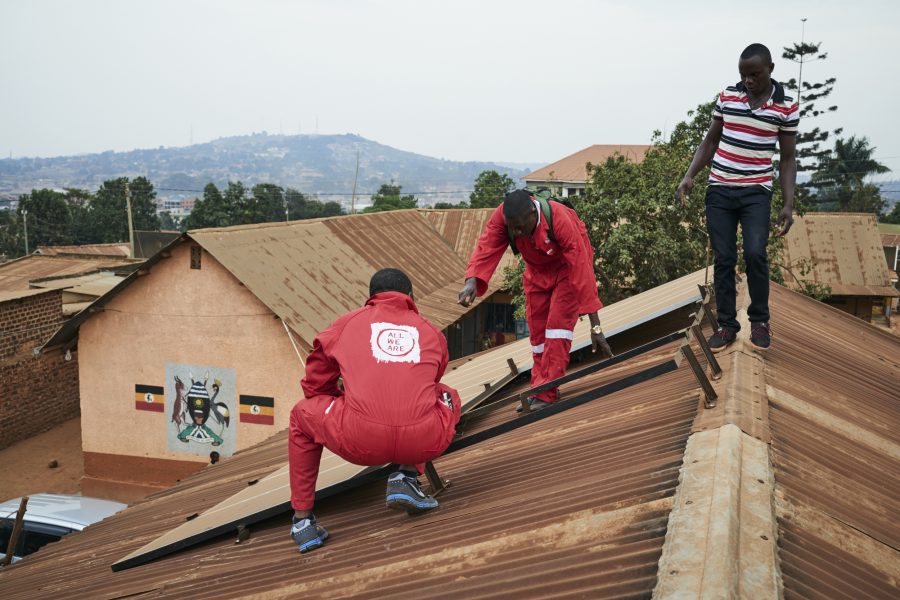
By the end of 2017 we equipped 20 schools in Uganda with electricity through the design and installation of solar power. We are scaling a women’s empowerment project to educate and provide female personal hygiene products that allows girls to remain in school. This year we have also launched a pilot water program to provide access to clean water to these partner schools.

As young change makers, All We Are’s focus is on responsibly building infrastructure for schools in Uganda. We focus on sustainability and putting money into the local economy with an emphasis on stewardship. Every member of our USA team is a volunteer and is personally investing in All We Are’s mission, which enables us to put 100% of public donations to use on the ground in Uganda. We believe that development is only successful when it is fueled locally by the communities. We work with the Rotary Club of Nateete-Kampala to conduct needs assessments for our projects. They are the face of our projects on the ground.

Nathan Thomas the Founder of All We Are during one of the outreaches in schools

And the communities, where do you work in Uganda?

We have worked in KLA and the surrounding area in the past eight years. This year we are pushing into more rural areas where there is no access to Umeme and the existing schools’ infrastructure is much weaker. We will be working in Rakai, Luuka, and Kakumiro to name a few Districts, and hope for further expansion in the near future.

At the end of the day, what are you trying to achieve?

A world in which we all have the right to dream. A world where every child receives an education because it is the young people who are the future of our countries.

What has been All We Are’s impact in Uganda so far?

We have spent the last eight years in Uganda helping build educational program in and around the Kampala area with the hope that we are having a positive impact on the schools we partner with. We have also been able to positively impact the lives of many members of the All We Are family on the ground in Kampala through job creation and by providing them with a means to support their families.

Installation of solar panels at one of the schools

Any particular impact story you can single out?

One of my favorite stories is a spotlight we did on Nambuli Rogers, Headmaster of Mackay Memorial Primary School in Kampala.  We electrified this school in 2016 and also partner with them on our women’s empowerment project. The school’s motto is, “Temudda Nnyuma” and we believe that perfectly describes the work we trying to accomplish.

With development work comes a lot of uncertainty and questioning whether the solutions we are providing are impactful. In February 2017 we were in Kampala and visited Mackay Memorial. I will never forget getting out of the bus and walking up to the HM’s office to be greeted by a big hug from HM Rogers. It is in moments like this that we remember why we do what we do.  Here is a link to the story: allweare.org/2017/06/spotlight-on-nambuli-rogers

Where do you see All We Are 5-7 years from now?

In 2015 we set an ambitious goal of electrifying 50 schools in Uganda by 2025. At the end of 2017, just two years later, we will already have 20 schools in the All We Are family. In five to seven years it is very possible that we will have realized our planned goal of 50 partner schools. As we scale our work, we will expand our women’s empowerment program and clean water initiative. We are committed to a problem not a solution. The problems we address surround  education. As we progress as an organization, and as new technologies and opportunities become a reality, we will continue to innovate and refuse to stop challenging ourselves.

Let’s talk about personal inspiration. Which people inspire you in everything you do?

It is easy to draw inspiration from people who live fearlessly. I draw inspiration from those who fear less. From my parents who moved from the comfort of friends, family, and what was normal in India to America before my brother, sister, and I were born. To members of the All We Are team who are so passionate, and so willing, to go far beyond what society deems “millennial engagement” to be.

If someone wants to get involved in All We Are, how do they get in touch with you?

We are always looking to engage with like-minded individuals who want to be a part of the global conversation on change. Take a look at our website at www.allweare.org and our social media platforms. If what we are doing interests you, send me an email at nathan@allweare.org. Remember that the best way to start is by simply getting started.

Any last words or piece of advice to someone doing a similar initiative like you?

Share stories of success with your networks and ensure that you do so with cultural sensitivity. At All We Are we gravitate towards empowerment versus charity. You will not find images that exploit the dignity of the communities we serve, or “voluntourism” opportunities. Instead you will find a group of young people dedicated to positive change that is tangible. The key to achieving this is patience. Take the time to develop a solid foundation for your work.

This organisation is sensitizing communities living around the chimpanzee corridors on how to coexist together

0

In 1990, four chimpanzees; Sunday, Masiko, Jim, and Megan were sent from Uganda to Moscow to become local zoo residents only to be hijacked and taken to Hungary. The Jane Goodall Institute-UK rescued them saw to their return to Uganda. Back home, they needed expert help in resettlement.

Through the establishment of the Jane Goodall Institute, the chimpanzees were habituated at Isinga Island Sanctuary. Over the years, this organization has worked with the government and other organizations to promote the conservation of forests and animals that therein stay with a keen interest in chimpanzees.

Today, the organization has offices in over 19 countries, 12 of them being in Africa. In Uganda, the organization has spread widely covering districts in the Albertine Rift. It is in these districts that the chimpanzee corridor lies.

The institute has awareness programs that empowers people in communities on how to coexist

JGI’s main concern has been to sensitize the communities living around the chimpanzee corridors on how to coexist together. The chimpanzee population had drastically fallen due to man’s activities that encroached on their habitat. The leading of all is deforestation. JGI came in and persuaded the locals to take on other economic activities other than relying on the forest for survival.

For example, instead of honey harvesting from the forest, the organization trains the farmers on how beekeeping within their communities for commercial purposes. One of such projects is in the Budongo community in a place called Kapeeka where 40 farmers have formed a cooperative through which they sell honey.

The chimpanzee population had drastically fallen due to man’s activities that encroached on their habitat until the Institute came to the rescue.

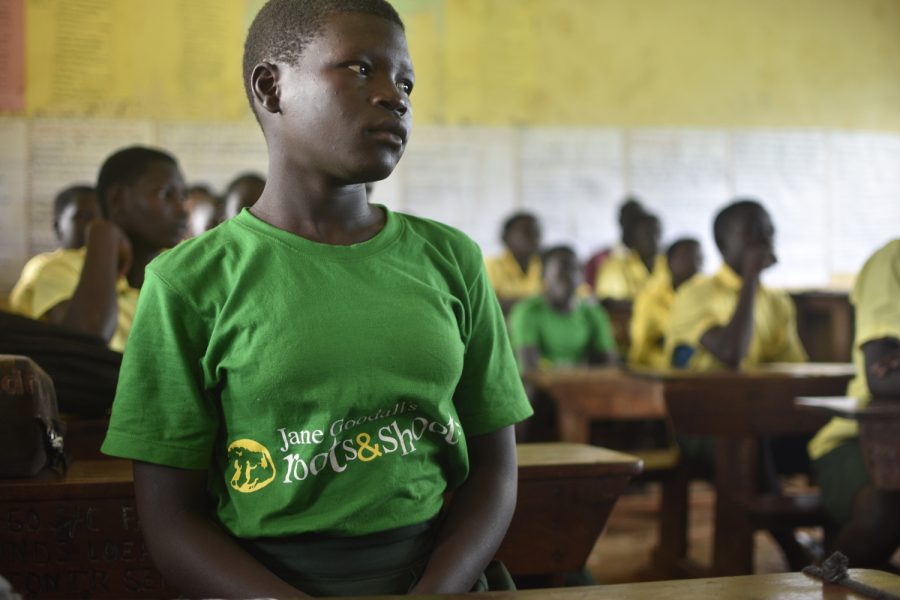
Through the Roots and Shoots program that is mainly run in schools, children are taught of the benefits of conservation. Girls are encouraged and equipped to stay in school. Women in communities are taught how to build energy-saving stoves other than having to rely on firewood from the forests.

Snare trap wires are used as designs on card covers which are sold off to tourists. A number of people have taken to running nursery beds. The trees are sold off to other farmers to plant their own forests.

27 years later, JGI has a story to tell. The story of conservation is no longer about Jane Goodall, it is about the residents of these communities. The story is about the restoration of chimpanzees that were once threatened with extinction. The story today is about men and women interested in planting their own forests on their land.

The children today and those yet to be born are in a better place. A place where their future which was once robbed of them having it returned. They too will get a chance to see chimpanzees. They too will get a chance to see and appreciate the power and beauty of having a forest.

Jane Goodall, the founder of the Institute

This year, Jane Goodall turns 84. She has not stopped going around the world talking about chimpanzee conservation. She will be in Uganda at a symposium speaking of the same on 8th June 2018.

Experiences

Top 5 Cultural Attractions in Uganda

0
Cultural tourism is the practice of traveling to experience and appreciate the unique cultural heritage, traditions, and lifestyles of a particular destination. This involves...
Mountain Biking in Uganda

Mountain Biking Around Uganda

0
Mountain biking. The sport has been embraced worldwide hitting the mainstream in the past 20 years when bike manufacturers realised the growing popularity of...
Kampala Tourist Guide

10 Geeky Things to Do in Kampala

0
Kampala is located in central Uganda on the shores of Lake Victoria and is the capital and business center of this countries.  Kampala is...
Mgahinga Volcanoes

Go Gorilla Trekking in Mgahinga National Park

0
Uganda the pearl of Africa is blessed with half of the total mountain gorillas living in the whole world and the mountain gorillas in...
Bwindi Mountain Gorilla

Visiting the Mountain Gorillas in Bwindi Forest

0
Mountain gorillas are subspecies of primate animals called gorillas. Gorillas are the largest great apes left in the world which live in the tropical...
Bwindi Impenetrable Forest

Experience Mountain Gorilla Trekking in Bwindi

0
Mountain gorillas are subspecies of primate animals called gorillas. Gorillas are the largest great apes left in the world which live in the tropical...

5 Amazing Things to Do in Budongo Forest

0
Budongo forest is one of the largest conserved forest areas in Uganda covering an area of 841 square kilometers. Located with Murchison falls national...
canopy in Nyungwe NP

Journey to Explore Rwanda’s National Parks

0
Rwanda is a small and landlocked country boarding east African countries. It is bordered by Tanzania in the east, Uganda in the north, Burundi...
East Africa Safari

Things to Do in East Africa

0
Ballooning Mountain Climbing – Rock Climbing & Mountain Biking. this is done in Mr. Rwenzori national park in Uganda, Mount Kilimanjaro national park...
Lake Bunyonyi

Holiday at Lake Bunyonyi in Uganda

0
Lake Bunyonyi is one of the most scenic places in Uganda famous to travelers who take a circuit to the attractions in the western...