Home Blog Page 17

Kalule is using visual art to link Ugandan youth with their role models

0

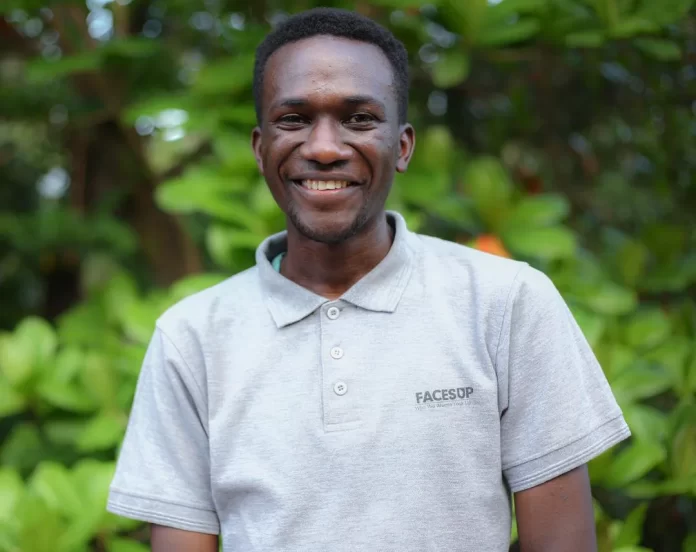
Meet Emmanuel Sekitto Kalule, one of the founders and Team Leader of Faces Up Uganda – a youth led organization that is linking young people with role models for inspiration and support.

Emmanuel who holds a bachelor’s degree in Industrial and Fine Art from Makerere University, practices art as an activist platform and most of his works act as a voice to the voiceless within various communities.

Speaking about his journey to This Is Uganda team, he says “I Initiated Faces Up Uganda in 2015, during my second year at the art school at Makerere university. The organization fully and publicly got started on January 27th 2016 as I launched our first project called Faces up art campaign.” Emmanuel remembers. “Having studied art at the university, I came to realize how powerful art is as a tool to transform other people’s lives because I learned what true art is and how it can be applied.” He says.

On coming up with the Faces Up Uganda idea

When we are growing up we look to our role models for inspiration and use this as a blueprint for how we should behave when we’re older. This is likely a survival function designed to help us to mimic the traits of those successful members of our society and thereby help us to be successful too. This is what Emanuel is doing.

“I started up Faces Up Uganda to create a proper platform for mentorship for the young people and also link them to proper role models.  Having grown up with a single mother after their separation when I was in primary two, I faced quite a lot of challenges especially lacked the parental guidance from my father and this was a challenge for me to find my true self as I grew up.Like most of young people be, I was a jack of all trades since I lacked a role model and a mentor who could guide me.” He remembers.

According to Emmanuel, majority of the multitalented young people in Uganda lack opportunities that recognize and support their talents and above all help support their development. This is evident that many multitalented young people here in uganda don’t reach to their full potentials due to lack of mentorship and Creating a platform to help identify and develop talents.

It’s such challenges encountered he encountered at an early age and in his quest to find proper individuals who could help guide him, he landed on a few good ones and a lot of wrong ones who drained his energies as a young person to satisfy their needs and also as a source of free labor.

Kalule and his team at Faces Up Uganda

On how he overcame some of those challenges

“Research and reading was one of the ways I dealt with the unique technical challenges. Being a fresh graduate from university, I had no resources and capacities to continue with the great cause I had started. Therefore I had to educate myself so that to be in a better position in this competitive world.” Emmanuel says.

Understanding the dynamics within the art market also helped him come up with relevant art. This has made Faces Up Uganda remain creative so as to be on top of the game.

“You always need to stand out in whatever you do and that has always been on back of our minds as an organization.” He emphasizes

But of of course team work comes first.

Team work, like the saying goes…”no man is an island” to be successful it is not a one man story. Faces Up Uganda has a team of multi-talented young people that are passionately committed to the mission and vision of the organization. This has helped the organization alot in overcoming various technical problems and also leverage opportunity.

The role models that have been featured by Faces Up Uganda

By the time of writing this article, 50 portrait art works of public figures whom the young people look up to as role models have been featured. These include Hon.Rt. Hon Rebecca kadaga, Owekitiibwa. Charles Peter Mayiga, Miya Farouk , Onyango Denis, Angella Katatumba , Sylvia Owori , Hon.Bobi wine , Nabimanya Humphrey, Robert Kabushenga , D.j Shiru , Jamal Salim , Isaiah Katumwa among others. These art works were executed by a collective of five artist I.e Saekitto kalule Emmanuel , Byaruhanga Raymond, Kamanyire Osca , Arion Bonaface ,and Kalyemenya Douglas bush and exhibited at the prestigious award Makerere art gallery.

Kalule believes art plays a very instrumental role in changing lives of young people

Sustaining the idea

As a fundraising strategy, Faces Up sells customized organization items such as jumpers, T-shirts, bags, caps, and artworks to fund the various activities toward realizing its mission.

The team constantly gets offers from people. These offers turn up depending on the economic situation. Fortunately, the public is rapidly appreciating Faces Up Uganda items such as jumpers, T-shirts, bags, and above all artworks and they are learning to buy them and we believe the numbers are going to increase in the near future.

His advice to emerging Ugandan artists

“Artists need to first appreciate and value their own works before they put them to the public. How will someone else learn to appreciate your work if you yourself handle it as trash?” Emmanuel says.

Feel like you need some art?

Get in touch with Faces Up Uganda team in Lugala , Luya parish along Sentema road as you head to Masanafu or contact them on +256705859110 / +256773367093. If you’re on social media, find them on Facebook, Twitter, and Instagram or visit their website www.facesup.org
How Not For Sale Uganda is Fighting the Scourge of Human Trafficking

0

Human trafficking is a problem that has been drawing the attention of media worldwide since the end of the Cold War Era. It is a criminal activity that is often described as modern-day slavery.

According to the Uganda 2014 Trafficking in Persons Report presented by the US Department of State, Uganda is a source, transit, and destination country for women, children and men subjected to trafficking in persons, specifically conditions of forced labor, child labor and sexual exploitation.

On record, there are about 837 reported cases of human trafficking according to the National Prevention of Trafficking in Persons Office under the Ministry of Internal Affairs.

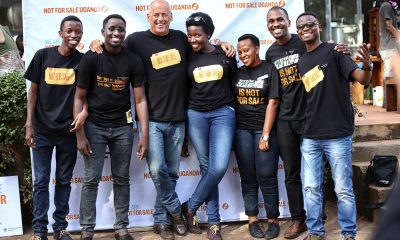
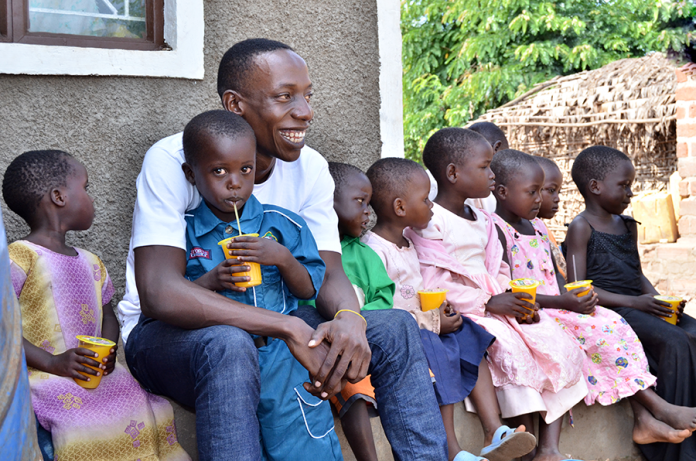
Raymond Kagumire and his team is trying to fight this status quo through Not For Sale, an organization that has set out to build a strong network of advocates to fight against modern-day slavery.

aymond (left) with his team during one of their awareness outreaches in slums

“My story begins when we were having dinner about 4 years ago at home and mentioned to my sister that one day I  would love to market a beer. She later introduced me to a Swedish technology executive, Ulf Stenerhag who had a desire to expand his beer brand “Not For Sale Ale” that donates 100% of the profit to Not For Sale organization to fight human trafficking.” Raymond states.

In July 2014, the team kicked off after the Founders David and Mark in San Francisco chose the name “Not for Sale” to start fighting modern day slavery most notably, Ugandans being trafficked to the Middle East.

“At Not For Sale, we understand that root causes of human trafficking or commonly termed as human trafficking is poverty and we build scalable, design driven social business solutions that can help us to inoculate communities susceptible to human trafficking as well human trafficking survivors,” Raymond says.

Not for Sale combines the best elements of social programming and business in its proven, 3-step process. The first step is social intervention where it partners with local experts, community leaders, and business people to understand the root causes of slavery in the region.

Not for Sale is dedicated to creating awareness for most vulnerable people in communities.

The group then provides food, shelter, education, and healthcare to people affected by modern slavery. This supports it when it goes to research and development to investigate the local economy asking key questions like, “why are people here susceptible to slavery? What could we do to create economy for them?”

“Our  third step is to partner with entrepreneurs who have a vision to build an economic engine for the project. These businesses feed revenue back into the project, so that we can give them jobs, stable income, and fund more social intervention.” He explains.

Todate, Not for Sale has built a team of dedicated ambassadors/volunteers working to eradicate school going children/students and communities. Given varying objectives and differing understandings of how to conduct more effective outreach, the group targets different populations in its anti-trafficking efforts.

“We have also been able to provide informative community based lessons about the crime of human trafficking and the advice available to the survivors of the crime and remain focused to task various organizations to fight this crime. It is not simply about finding and advising the survivors, it is about creating a self sustaining economy and a society which is more alert to the crime.” Raymond states.

Building a dedicated team of ambassadors committed to do good in their respective communities remains remarkable to Raymond, something he prides in.

Currently, Not for Sale conducts a school/community out reach program “The Not For Sale Campaign” to raise awareness against human trafficking in schools and communities.

“In January 2018, together with our mother organization, Not For Sale in partnership with Coburwas International Youth Organization to Transform Africa (CIYOTA) will launch a million dollar project to help refugee children to access quality education and amplify their entrepreneurial skills through seed funding opportunities for innovative solutions in Kyangwali refugee settlement on Uganda/Congo border.” Raymond says.

Seven (7) years from now, Raymond and his team wants to be able to answer the question; “What are the reasons that contribute to people being trafficked and communities being at risk of human trafficking in our country?”

“That’s the question that fuels the vision of Not For Sale Uganda and is the key factor in our next 7 years because while we provide answers, we understand that the lifestyle of the people in the 21st century is ever on a change and new methods will be designed by the traffickers.” Raymond explains.

It’s in this essence that to achieve their vision, Not For Sale has a dynamic road map and will remain committed grow self-sustaining social projects with purpose-driven business to end exploitation and forced labor.

“I would say, synergizing would even make stronger and find innovative solutions in our anti-trafficking efforts,” Raymond concludes.

We all agree that modern-day slavery is on the rise and all efforts can’t keep but Not For Sale understands and has proven scalable, innovative business concepts and desire to do good to change the world and we can inspire others to create a world where no one is for sale.

Like this story or have something to share? Email us on info@thisisuganda.org or connect with us on Facebook and Twitter.

Food, Education, Clothes & Shelter: Ddiba’s Way of Rehabilitating Street Children

0

oseph Ddiba 28, is the Founder and Team Leader at Ba Nga Afayo (Act like you care) Initiative Uganda, a youth-led charity organization providing critical assistance to former street children, orphans and families struggling in terrible poverty in Uganda.

Ba Nga Afayo literally means “Act as you Care”. This means that if it is too much to ask that someone becomes part of solving a problem, can they at least act as they care. This itself would require action.

“It is all about restoring lives and equipping less fortunate children with the knowledge and skillsets necessary to discover and live out their true vocations, thereby creating the opportunity for them to lead successful and fulfilling lives.” Ddiba says.

Over the past three years, the initiative has been providing shelter and basic care to homeless children and orphans as well as providing children from surrounding community with free care, counseling, school supplies and education scholarships. Many of these Children come from broken or poverty stricken families and the center is a haven for them, whenever they need it.

And it started with one story. “It all began with just one abandoned child. She was dumped and left to starve to death by her unknown parents. My mum being a nurse, she brought the little malnourished kid home, I believe the kid had like a week to live. So about two years later when I was out of University, this little kid had completely recovered and my mum said there were many cases where this one came from.” Ddiba remembers.

Her recovery inspired Ddiba to go save more himself. “ I remember I was hoping to help one or two children but unfortunately the number of cases was overwhelming and the root cause was poverty” Says Ddiba.

And that’s how he started a movement among his friends and family to “Act like they care” and donate something to help these children survive.

For the last two years, the initiative has been able to place 45 children into school who would otherwise be without a family or education. “I have not only witnessed the lives of children being transformed through sponsorship, but have furthermore become convinced that Uganda can be restored through education of these less fortunate children.” Ddiba says.

One of touching stories out of the initiative is a story of a beneficiary called Ezesa (in English Esther). Eseza was born out of incest, a relationship between a niece and her uncle. In their tribe she was an abomination. She was thrown away at birth and no one wanted to be near her.

“We met this girl when she was three years, never been breastfed, never been loved, and always fed on leftovers. She slept in the bush and she was hairy.” Ddiba says.

Eseza is now 6 years and she is going through recovery. “seeing her run around playing with other children makes me wonder where she would be if she was never found.” He says.

“Her story really touched me. I no longer have any choice but to acknowledge the heavy reality of it all: These children don’t just need our help–their very lives depend on it. It is mostly her story that keeps me going every time I think of giving up. I believe God brought her into our lives for a reason.” Ddiba says,

This however does not come off easily. His biggest challenge is that there is a lot of need and yet very limited resources. One incident he cites is a story of “Sula” one of the beneficiaries who got a sponsor and after just a few months, lost touch with his sponsor. “That right there is my worst moment. Until now, we have never told this child the bad news we don’t want to see that glow fade away.” Ddiba says.

One way how he is however fighting these challenges, is through partnerships. The initiative is currently working with Individuals, private companies, and churches in Canada, USA, UK, Romania and Argentina even though he is still working on creating a few local partnerships.

Some of the volunteers at work during one of the Back To School Charity drive.

He also does not do this alone. He commends his team for being part of his journey. “Maria our manager, Sylvia our manager for child sponsorship, Deborah our community coordinator, Hope our manager for child relations and all house mothers who act as mother figures to the homeless children.” He lists them.

Six years from now, Ddiba sees BaNgaAfayo growing as one of the major players eradicating Poverty in Uganda with more branches all over the country bringing real and lasting change to families and children living in poverty.

Ddiba wants to be remembered as someone who set an example and left a footprint in humanity. He hopes that the work he does at BaNgaAfayo Initiative will live past him and continue to touch a life here, a life there.

“Keep this verse in mind, Hebrews 10:24. And let us consider how we may spur one another on in love and good deeds.” He concludes.
Like this story or have something to share? Email us on info@thisisuganda.org or connect with us on Facebook and Twitter.

How Lucia Bakulumpagi- Wamala is transforming access to renewable energy one community at a time

0

Seven years ago, while visiting her family in the town of Gayaza, in central Uganda, Lucia Bakulumpagi-Wamala couldn’t help but notice the garbage on the streets. Having grown up in Canada, this was an unfamiliar sight for her. She began to wonder if the trash could be used for something productive.

Who is Lucia Wamala?

I’m a dreamer, a do-er and a believer. I see endless possibilities and love to see people live out their dreams. It’s actually what motivates me. People very close to me call me a “stage mom” because I love to push people to amaze themselves. You can normally find me with my 7-year mini-me, sometimes she even sits in on meetings. She has a wonderful aesthetic and advises me on some marketing pieces. I pay her in toys!

Let’s talk about Bakulu Power. What does it do?

We invest in the renewable energy sector. We design, implement, own and operate energy infrastructure. We are a young team with bold visionary ideas. Our engineers and researchers are some the brightest in the country. Uganda is a young country; about 77% of its population is under 30. By providing access to and hands-on involvement in the emerging renewable energy industry, we help power our tomorrow.

What Inspired you to start Bakulu Power?

I was staying with one of my cousins and her family in Gayaza when the idea first came to me. As we drove to and from town I would look at the garbage on the street and wonder how to get rid of it. I grew up in Canada so seeing garbage on the streets wasn’t normal to me. What I found interesting was that the waste was primarily agricultural. I thought about making fertilizer then quickly scrapped that idea. I started to read everything I could about waste management, informal workers, deforestation and waste to energy. I joined associations around those themes and talked to a lot of people. I gained a theoretical understanding of how to convert waste to energy and wanted to support women. Everything else has really been a series of miracles.

Why renewable energy?

Energy is the precursor to development. In order to industrialize, solve unemployment and move to a middle income nation we need more electricity. My initial spark was waste to energy which falls under biomass. Our equatorial placement makes solar a no-brainer. Agriculture is our biggest industry so we know potential for biogas is huge. The renewable resources are there and there are some great policies to support its development. Africa has contributed the least of any continent to climate change, but unfortunately we will face the greatest risks. I think investing in renewable energy is the responsible thing to do.

What communities does Bakulu Power engage with?

Our office is in Kampala but our team spends most of their time out in the field. You can often find us crossing Lake Victoria to beautiful Buvuma district. We also have projects in Kamwenge, Butambala and Gulu to name a few. It’s amazing to travel around country and meet different communities while enjoying the natural environment. One of my favorite communities at the moment is in Mpigi district – Kamengo. We’ve had the pleasure of working with the Agnes Zabali Boys and Girls Club (please use hyperlink: www.azboysandgirlsclub.ca) a wonderful organization addressing health, education and social needs for 100+ youth in Kamengo. We wired and installed solar at the guest on top of a hill. The view is incredible! Remember, I’ve dealt with winter for nearly my entire life so sometimes I got lost in the greenery of communities that are new to me.

Bakulu Power’s core purpose is to power local communities by providing residential and commercial clients with clean, affordable renewable energy systems tailored to their specific needs. For example what needs?

We do a lot of outreach in agricultural communities to educate on the benefits of solar water pumps. We feel strongly about supporting agribusinesses. In other situations clean cooking fuel is the need so we step away from electrification and design biomass systems. Some larger industry clients are looking to reduce their diesel consumption so we design solar systems with larger battery components. We take all of our clients seriously no matter how big or small. We range from a solar water heater for a family home to mini-grids that electrify hundreds of homes.

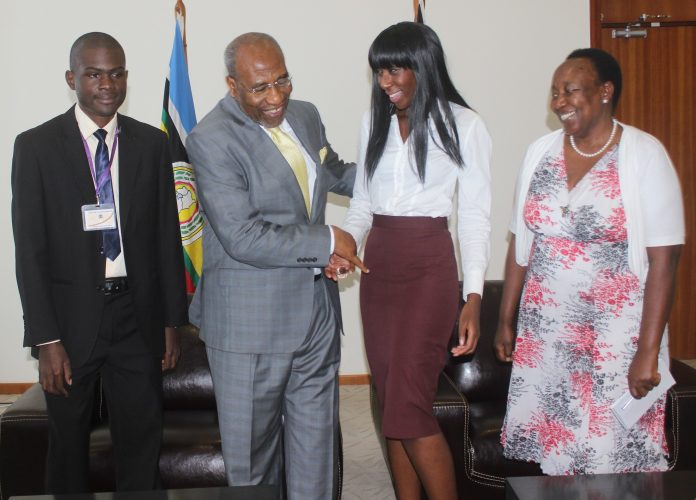
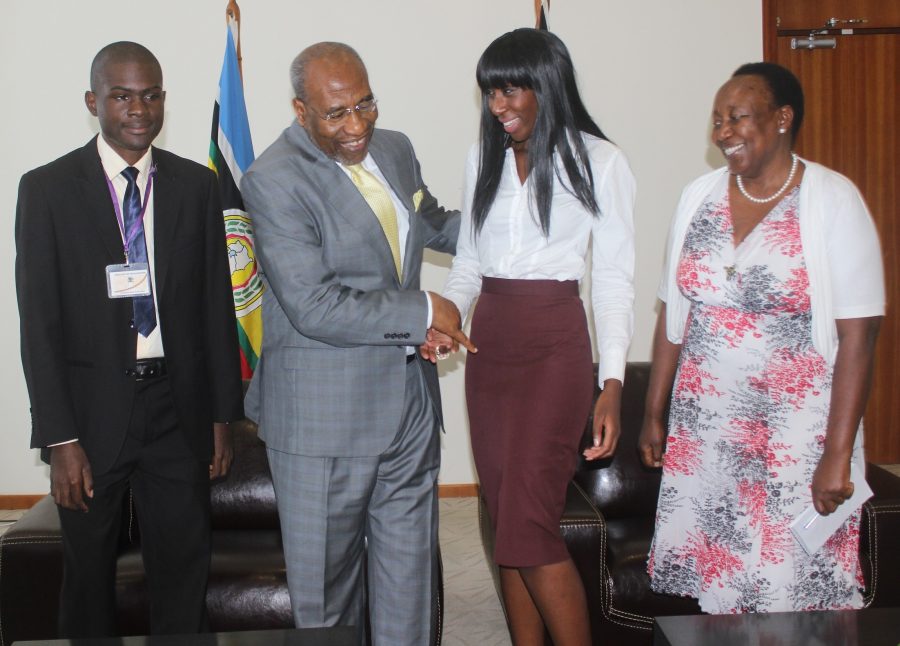
With the Right Honourable Ruhukana Rugunda, my Co-Founder and Chief Technology Officer (CTO) Richard Sseruwagi and Evace Kabahukya (OPM staff).

Bakulu Power’s goal is to design and build integrated, highly efficient systems that increase electrification for our end users and reduce utility costs. How exactly do you do this?

We do it one community at a time. One client at a time. We work hard to earn the trust of our project stakeholders. We celebrate our successes, learn from our lessons and continually improve. We’ve been blessed to work with amazing partners. It’s really about people. It takes a lot of people to develop energy infrastructure.

In March this year, Forbes Magazine named you one of the 30 most promising entrepreneurs on the continent, how did you feel?

I felt really emotional. I knew it was a rare sliding door moment that would change my life. I immediately called one of my dearest friends in New York and we literally screamed for 30 minutes. Meanwhile my daughter kept repeating, “let’s go and buy it!” I taught her about Forbes last year and we taped a picture of ourselves on the cover of The Forbes 400. She was a little confused because the article isn’t in print and more so because her picture isn’t online! Though slightly disappointed, she printed the article and took it to her teacher. As a mother it’s great to see that your child is proud of you.

Where do you see Bakulu Power 6-10 years from now?

I see offices across the continent. I see a huge research and development department. I see university endowments to support even greater research on the continent. I see empowered communities, improved health services, thriving industry. My goal is simple, to create jobs – internally and externally.

Lucia Bakulumpagi- Wamala is transforming communities through access to renewable energy.
Let’s talk about personal inspiration. Which people inspire you in everything you do?

My parents and my siblings are at the top of the list. I’m lucky to be part of an intelligent, educated and ambitious family. As the youngest of the bunch I’ve had the pleasure of watching my sisters and brother attain their own successes. Because of them, I have the nerve to create. I’m inspired by people who create. It isn’t easy (or comfortable) to turn an idea into something tangible. I’m very inspired by Kanye West. I often joke that we should include his discography in the new hire package. I make so many references to his work that if you don’t know it I won’t make much sense.

What advice would you give to someone who wants to be like you?

Be willing to learn. To learn you have to be willing to be wrong, to be vulnerable and to be embarrassed. You have to continually learn and DO. Thing is, you have to do while you’re learning. It’s absolutely terrifying. And most of the work is not fun or glamourous. But once you start the process (oh ya, you have to learn to love the process because there is no final destination) you will amaze yourself. I would also say to be kind, curious and open. Business is really just a series of relationships and you know never know who you are talking to.

This Dutch-Ugandan is Positively Changing the Image of Karamoja

0
Theo Vos of Karatunga

2016 was not the first time that Theo vos had traveled to Karamoja. It was the first time that he felt brave enough to travel around and sleep with the warriors in the bush and explore the mountains freely by using my feet, motor bikes and cars without security.

“Ever since I started exploring the region and getting to know the natural beauty as well as the cultural wealth of my people, it has become an addiction to learn and document what I find.” Theo says.

After nine months, Theo flew back to The Netherlands and it was after he entered the plane, that he came to the realisation what kind of journey he had embarked on. Thousands of photos, hours of video and hundreds of stories to tell. He felt that he had started to build a relationship with Karamoja, something that – without realising – he had been longing for.

“Not only emotionally had I found myself a true home, but also in a professional way, I was able to start a new venture that combines my profession, my social entrepreneurial ambitions and learning about my culture.”
Theo (in blue) during one of his earlier visits to ancestral roots)

In March 2016, Kara-Tunga Arts & Tours was born and started the first tour operator that specialised in the combination of outdoor adventures and community tourism throughout the Karamoja region.

Soon after it started, Theo bumped into the the fact that various influential foreign countries didn’t allow it’s citizens to travel through the Karamoja region due to insecurities that occurred in the past like The Commonwealth Countries, United States of America, Canada, Australia and New Zealand.

“I started lobbying with Ugandan ambassadors and Tourism Associations, but their feedback was not pleasing. They have ever been putting efforts in positively impacting the image of the country and it’s a process that takes time they shared. So as the top-down solution was not as effective as I hoped, I decided to change the strategy and start from the grassroots.” He said.

Theo realized that travellers had an incredibly large reach and traveling in its essence is a popular topic on social media. Soon after their guests spread their travel stories, Theo and his team saw an instant positive impact on the image. From simple reactions to exciting inquiries.
Through Kara-Tunga Travel, Theo is showcasing the Karamoja the media never shows you.

“This was the spark that ignited the Discover Karamoja project to positively impact the image of Karamoja through photography on social media (with hashtag #DiscoverKaramoja) and offline (with the Discover Karamoja book).

Kara-Tunga Tours says Karamoja is Uganda’s best kept secret. How exactly is it?1 response
Theo believes Karamoja is Uganda’s best kept secret because its secrets are intangible like the preserved cultural heritage with unique dressing, craftsmanship as iron melting, genius governing system, food preservation methods, pastoral culture and ancestral knowledge of herbal medicines and cultural ceremonies. On the other hand, Karamoja also has tangible secrets as wildlife and bird species that are endemic to Karamoja, lush mountain ranges, minerals (gold, limestone, marble) and oil.

“Only recently, Karamoja has been able to reveal its secrets. From colonial times up to only five years ago, Karamoja has been isolated. Under colonial rule, the region was a closed district and mobility restricted making it only accessible with a permit. During Amin’s reign the Karimojong people were suppressed and humiliated. In the eighties the Karimojong obtained guns that caused a tribal war for thirty years.” Theo explains.
For the last 12 months since Kara- Tunga Tours existed, its first focus has been developing community tourism and empowering the community to start village saving and loan groups and making arts and crafts. As a result, this community has been able to take all their children to school. Extra donations from tourists have been spend on buying school materials.

The initiative has established partnerships through Cross Cultural Foundation Uganda (CCFU) where it voluntarily have initiated Cultural Heritage Clubs at 7 Secondary Schools aimed at Preserving Cultural Heritage through Education and competition among each other, started a partnership with the Uganda Red Cross Society, aimed at equipping our staff with the skills to provide more safety during its activities.

It has also embarked on the Karamoja Tourism project aimed at developing and marketing the Karamoja region as an attractive tourist destination and Tour of Karamoja a new project In partnership with Bicycles for Humanity Karamoja, empowerment founding father Pat Montani and English former professional racing cyclist and present day Tour de France commentary Paul Sherwen which in October this year we will test-drive the route with the organising team and announce the dates for the first Tour of Karamoja taking place next year.
Discover Karamoja Book

Discover Karamoja book is a crowd sourced photobook aimed at positively impacting the image or Karamoja and raise funds to preserve one of East Africa’s last living Indigenous cultures.

“We are gathering the stories and photographs of exceptional friends of Karamoja that are going to make a difference by telling the true story; whether you’ve traveled through Karamoja and made stunning photos or have lived among the Karimojong people and have an experience you want to share with the world.” Theo explains.

He further says that by contributing to the Discover Karamoja Print Project, you will positively impact the image of the region and development as tourist destination to improve the livelihoods of the community.
The Discover Karamoja project is in two folds. One is the online project: #DiscoverKaramoja whereby photos and stories are collected with hashtag #DiscoverKaramoja and presented on the Discover Karamoja website and social media channels.

The second fold is the offline project- Discover Karamoja Photo Book which besides the production of the coffee-table book, the print project also has a continuous element in the form of limited printed postcards. Content creators are able to donate a photograph that if selected will be printed and sold as postcards.
Theo’s biggest challenge from the start was none of his team members had any experience in the business of tour operating so they have been doing everything with from our gut feeling.

The biggest impact Theo believes he has made so far, is that he has been able to create jobs, employ the youth and motivate our youth staff to study in tourism as we believe it will be a job for the future of the region.

Furthermore, the communities they have been involved in tourism activities have been able to save money and thereby build resilience through tourism and crafts.

“We have been able several globetrotters, international and local journalists that wrote feature stories about the region and our culture. And we have been able to enter travel guides where Karamoja has not been featured ever before.” Theo explains.

In 5 years time, Theo hopes that the Discover Karamoja project will not be necessary anymore in it’s present form. “I sincerely hope that in 5 years time, Karamoja will be known as a safe region with friendly people and rich in culture and and natural resources.” Theo says.

Like this story or have something to share? Email us on info@thisisuganda.org or connect with us on Facebook and Twitter.

This woman is Fostering the Restoration of Uganda’s Pride Through Educating People on the Benefits of Environmental Conservation

0

Right from childhood, Linah has been interested in environmental conservation and ecology. She co-founded Pearl of Africa Environmental Organization to restore Uganda’s pride as the “Peal of Africa”. We had an interview with her to talk about her idea.
What is and why Pearl of Africa’s environmental organization?
Pearl of Africa Environmental Organisation, or as we prefer to call it, ‘PAE’ is a non-governmental green organization. The name actually holds a profusion of historical value and sentiment. Uganda was named the ‘Pearl of Africa,’ by Welsh- American, HM Stanley in 1892 (Fortnightly Review, Volume 52), who was taken aback by its beauty. She, however got her international identification as the ‘Pearl of Africa,’ when British Parliamentary Under-Secretary of State for the Colonies/writer and eventual two-term Prime Minister, Sir. Winston Churchill aggrandised her aesthetic in his book, My African Journey, which were published in 1908, saying, “Uganda is a fairy-tale. You climb up…and at the end there is a wonderful new world. The scenery is different, the vegetation is different, the climate is different…from anything elsewhere to be seen in the whole range of Africa…I can say: Concentrate on Uganda: For magnificence, for variety of form and color, for profusion of brilliant life— for a vast scale–Uganda is truly ‘the Pearl of Africa.’ ” These powerful words that were made by such a powerful man are still remembered to this day, however, this is where the underlying concern ‘stems’ from (no pun intended). Our once attractive, alluring and appealing country is facing an age of atrophy, which is what induced my co-founder and I to start this NGO in order to put an end to this appalling degradation of our environment.

How did this start?
Many answer this question with the date their organisation was up and running. We, rather prefer to paint a picture of how the idea was born and how it eventually came to life, from the perspective of both founders of PAE. I, co-founder, Linah Kizito Nanziri was around 8 years of age when I got interest in not only environmental conservation, but ecology as a whole. My primary school, Greenhill Academy, Kampala held a writing competition on the notion of preserving the environment. I was quite agitated since I was one of the youngest competitors but this did not stop me. I do not vividly remember what was written, but I do remember how passionate I was about what I wrote about. Unfortunately, I did not win the competition but I won the love and the drive to move forward with this newly acquired passion, which subsequently led to the birth of PAE when I was at the age of 13 years. HOW EXACTLY DID IT START? Co-founder, Mr. Seruwu Isaac, who happened to be my father’s good friend (or as we traditionally refer to them ‘uncle.’) was always a keen environmental enthusiast. Mr. Seruwu believes that the misuse of the environment leads to substantial damages, loss of lives and could cease the development within a country socially, economically and even politically. Once he found out about my love for the environment, he acquired interest in working with me since he believed that he who has influence on the youth, has influence on the future. He subsequently registered PAE as a non-governmental organisation in Uganda during the close of 2010.

What is this kind of charity and work that you do?
First of all, thank you for calling us as ‘awesome,’ we believe it takes one to know one. Secondly, this is not exactly just a ‘charity’ since according to Oxford Living Dictionaries, a charity is an organisation set up to provide help and raise money for those in need. We are much more than just a charity, since we do not only have the intent to provide help and raise money for those in need. That would imply that we have to do so for the entire world including ourselves, since we are all in need of an impeccable environment, to live in a world free from global warming and pollution because it is an aspect that affects all of mankind. However, our organisation ensures to preserve pastures, trees & water bodies, promote the sufficient utilisation of natural resources (which happen to be available in abundance), propel education on the benefits of environmental conservation to the civil society, ensure the refining of environmental policies, foster the restoration of the once known, ‘Pearl of Africa,’ to improve on the tourism industry in order to boost our economy and guarantee food & water security for our generation and those to come.

What are your biggest accomplishments ever since you started Pearl of Africa Environmental Organization?
Tough question, considering the fact that we have been in existence for close to 10 years. We are very humbled to have had the privilege of working with the army of Uganda, conventionally known as the Uganda People’s Defence Forces (UPDF) on improving sanitation and recycling of items. We were also fortunate enough to be supported by National Environment Management Authority (NEMA), The Ministry of Water and Environment, Sewage and Water Corporation Company (SWCC), which have are essential institutions since they affect they greatly influence the environmental situation in Uganda, whilst working with us on our common cause. We have also had the privilege of introducing effective programs in 20 schools based in Kampala, some of which include recycling of items, education on sanitation, personal hygiene, agriculture and leadership. This has definitely helped us feel somewhat accomplished since it practically incentives the youth to realise how crucial the environmental conservation is in the world, which is a main point we have been and still are trying to get across. I, Linah Nanziri am a part of the British Ecological Society (BES) and have had the privilege to be accorded to the nomination for the Mash Award for Ecologists in Africa.

What are some of the programs that you do at Pearl of Africa Environmental Organisation?
Well, education is a vital aspect in PAE. We educate people on the benefits of environmental conservation… I just realised I mentioned this earlier, so I will not indulge myself in repetition. However, there are some recent programs that we have been involved in, one major one being renewable energy, which entails utilising the energy from the sun/ kasana that we have in abundance, by using solar panels instead of Hydro Electric Power (HEP), which negatively affects fish and dissolves oxygen levels in the water. Axis, a start up company in Uganda, run by my brother, Augustine Kizito Kitonsa has endorsed our cause and has been supporting us far beyond our expectations. They install automated solar panelled lights in people’s homes/ company environments at extremely affordable prices. Axis also collects spoilt laptop batteries and they are able to recycle them into power banks. Yes, power banks! Some have been sold earlier this year, 2018 to finance some of PAE’s activities. I better stop here before this turns into a commercial. Nevertheless, we are truly thankful to them.

Where do you see Pearl of Africa environmental Organisation six years from now?
Nice question, I see us changing history six years from now, or even prior to that. I see us being the reason for changes in/ the introduction of new environmentally favourable policies. I see free education institutions on acquisition of environmental knowledge with our ‘amazing’ PAE team doing what they do best. I see recycling of paper, leading to decreased murder of trees. I see typhoid becoming a thing of the past. I see our water bodies turning back to the attractive and prepossessing blue, instead of green or whatever colour they are now. I see tourists flooding the ‘Pearl of Africa.’ I see an improved economy. But most of all, I see a world that has been improved by PAE and other organisations that support our cause. Even if this takes over six years, it has always been my obsessive fixation. It is my purpose and it is what I have dedicated my life to revolve around.

Charity takes great courage and commitment. What are some of the challenges you have faced so far?
Mr. Seruwu and I have faced issues in acquiring funds. Most, if not all of PAE’s activities are currently self-funded. By that, I mean that the money that sustains our organisation comes from our personal banks. This is the biggest challenge we are currently faced with. This was not the case some years ago. Just like you said, we do have an amazing team, however, we have had to deal with untrustworthy and incompetent people, which made it eminently difficult to run different programs in the organisation. One of the main challenges faced is the time consumed to run our NGO whilst balancing studies for myself and work for Mr. Seruwu. The challenges are too many to list out individually. However, I run by this rule, “no hurdles no achievements, know hurdles know achievements.” This is what I realised throughout my time running this NGO. The number of unforeseen challenges are too great a number that it is likely for one to give up a few years in. What has kept my co-founder and me going through all these years is our passion and obsession with ‘making Uganda great again.’

Any worst moments or regrets?
One of my worst moments was when I was a young teenager, I believe. Mr. Seruwu would get into esoteric ecological discussions with the PAE team that I lacked knowledge on. I disliked this because it made me feel irrelevant in the team. I do not have any regrets because every mistake that was made was a lesson upon us and it has enabled us to become stronger than ever.

Then outside Pearl of Africa environmental Organisation, which partners have been helpful to you in your charity campaigns?
Uganda Rotary Clubs have been involved in our campaigns, Kampala Capital City Authority (KCCA), Uganda People’s Defence Forces (UPDF), Uganda Broadcasting Corporation (UBC), National Environment Management Authority (NEMA), The Ministry of Water and Environment, Sewage and Water Corporation Company (SWCC), recently closed Television station, Wavammuno Broadcasting Station (WBS), Axis, among many other partnership collaborations.

Any remarks you want you to make to appeal to the people?
Oh, I believe there are so many interwoven remarks within this interview, nevertheless, I will conclude by saying, refraining from action is much more ‘comfortable’ than reaction, however, history is not made by those who didn’t take action, so let’s take action now and SAVE GLOBAL NATURE! Postscript: Comfortable is in quotation marks because I cannot begin to imagine how ‘comfortable’ one maybe while watching the earth they call home die right in front of them.

How The Medical Concierge Group is using social media to transform access to healthcare in Uganda

0

A problem further beyond Uganda’s low doctor-to-patient ratio, is the distribution of those doctors. Most, particularly specialists, congregate in Kampala while some decide to go seek greener pastures abroad in the hope for making a breakthrough in their medical career growth.

In Uganda, the Doctor to Patient ratio stands at 1 Doctor for every 24,725 people in 2013 and 1 nurse for every 11,000 people. The recommended ratio by the Ministry of Health is at 0.117  physicians per 1,000 people.

To add to this are Uganda’s rising costs of healthcare and the limited engagement of patients on their health outside the confines of the hospital.

One doctor and his team are however trying to change this status quo.

Dr. Davis Musinguzi, having qualified as a medical doctor from Makerere University, sought to address the issue of Uganda’s appalling the doctor to patient ratio.

“We were seeking to address the challenges with accessibility, affordability and quality of health care service delivery in Uganda not forgetting the poor accessibility to health professionals particularly in rural areas to access basic medical consultation.” says Dr. Davis Musinguzi.

He founded The Medical Concierge Group (TMCG), and immediately started an entrepreneurial journey to provide much-needed solutions to the challenges at hand.

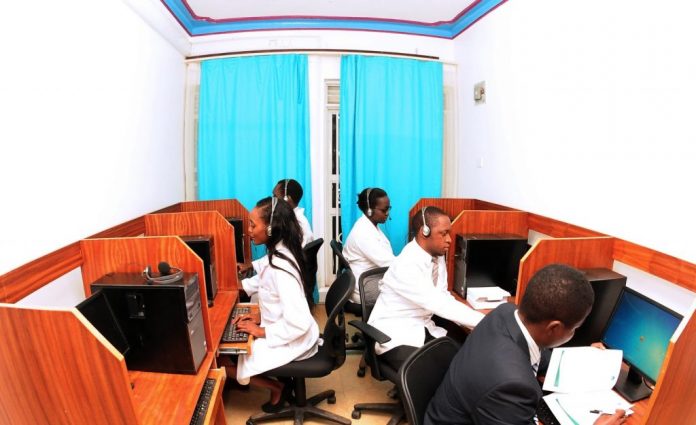
The Medical Concierge Group is an innovative healthcare service delivery and communication channel. It leverages a freemium model, a 24/7 call centre reachable at routine tariffs, a Doctors-on-Call service through voice calls, SMS, social media and WhatsApp to improve accessibility to affordable and quality health care in Uganda, Kenya and Nigeria.

“We are trying to address the rising cost of private health care considering up to 80% of health care expenditure is out-of-pocket in the region. More so, many suburban health care primary healthcare facilities are of low quality and run by low skill personnel.” Dr. Davis says

TMCG is also trying to address the low patient engagement and information gaps about their ailments, prescription medicines, disease prevention and wellness. The issue of social stigma attached to cases has caused people not to access medical services because of insufficient privacy.

Why TMCG decided to use the internet/technology is simple. According to the United Nations Department of Economic and Social Affairs, there are approximately 13,023,114 Internet users in Uganda translating into 31.3% of the population as of March 2017. Using the internet makes TMCG a pioneer in the delivery of mobile health services in Uganda.

The group has dedicated WhatsApp, Facebook, and Twitter accounts. At the everyday phone tariffs, mobile phone users by voice/SMS/email/IM/social media from anywhere 24/7 can access a Doctor’s consultation. The users only have to listen to or read a health-related advert/infomercial embedded in the call/text/Email/IM/Social Media.

TMCG as of today, records an average of 50,000 online interactions, which is proof of how valued the platform has become to its users.

Through partnerships, TMCG is able to meet the set up and running costs as well as scale geographically to reach beneficiaries both in Uganda and beyond.

The group is now looking to complement the tele-consultation with its Doctors with cloud-based remote diagnostic monitoring, mobile money payments for recommended health services and post-care follow-up. This will especially be valuable to chronic patients such as hypertensives and diabetics.

The group also looks further than Uganda. With other African countries like Kenya and Nigeria facing similar health care challenges, TMCG has already scaled up the innovative and impactful services in these markets.

The vision is to cost-effectively impact the health outcomes of Africans through innovative and patient-centered digital health services.

How Ensibuuko is building ICT-Mobile solutions for the underserved rural Poor

0

Almost four years ago when youth unemployment was at its peak and everyone was clamoring for a steady job, Gerald Otim decided to walk into the world of self employment. Having had a humble beginning, he was no stranger to starting small and therefore he ventured into the building a solution that would improve financial service delivery in rural communities.

In 2014, Gerald A Fin-Tech Entrepreneur and a graduate of Development Economics at Makerere University Co-Founded Ensibuuko, a Ugandan ICT startup that is modernizing the way financial cooperatives (popularly known as SACCOS – Savings and Credit Cooperatives) manage data and deliver financial services.

“We are providing modern electronic banking infrastructure to financial services entities unique to the developing world. Our main service is a cloud-based banking software platform for microfinances and SACCOS. The platform automates business processes, customer and transactional dataand provides standard accounting and reporting functionality for Ensibuuko’s customers.” Gerald explains.

Ensibuuko’s software is a cloud-based MOBIS Micro-Finance Software first designed at the Kampala based ICT hub, Outbox and is creating a solution that allows for web services even in rural areas with poor telecom infrastructure thereby contributing significantly to the efforts for financial inclusion in Uganda and across Africa.

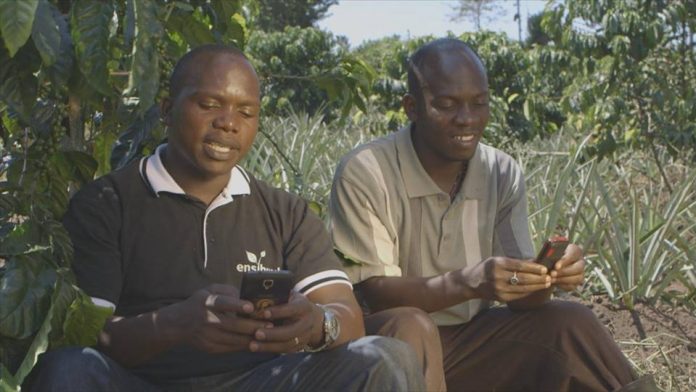
The Start Up’s software is also integrated to the mobile phone network allowing users to access their account via mobile phone — they can check the balance, make deposits and withdraw. This improves access and quality of service delivery.

“Our solution is integrated with Mobile Money thus people in hard-to-reach places can be part of the easy access of the service. We are now using partnerships with mobile Network Operators to deliver a dedicated internet bundle that enables institutions access the solution on cloud even on weak networks for just 30,000 shillings a month ($8).” Gerald notes.

The platform therefore exists to equalize financial services in Uganda as is the case in many other African countries where banks are urban based. People in rural communities will be served mainly by a cooperative institution.

According to Ensibuuko, there are major issues in the financial services sector in the developing world: Banks are concentrated in major towns, Services are expensive and loans have interest rates of not less than 24%. It is part of the general problem of poor and expensive financial services infrastructure in all of the developing world. Instead of working with banks, most people will prefer a non-bank financial institution mostly in the nature of a Cooperative financial institution such as a Savings and Credit Cooperative (SACCOS) or Credit Union.

“These institutions usually have no access to modern infrastructure and they rely a lot on human resources for their operations as they continue rudimentary means to manage financial information and make decisions,” Gerald notes.

To date, Ensibuuko’s business volume is 151 SACCOS reached in 2 years. Of these, 14 are newly signed, 35 are active on the Mobis platform and 102 are on their current pipeline in Uganda. There are over 14 other institutions in 3 other African markets that are currently in business with Ensibuuko through its recently established franchises in Zambia and Tanzania. Ensibuuko has raised 1 Million USD in funding (500,000 of which came through a recent Equity investment deal) and maybe the first ever ICT startup with Ugandan-only founders to raise this much funding within its first two years of existence.

Inefficiency, human error, fraudulent tendencies have become typical of these institutions and is undermining their role in delivering financial services to the under-served. In Uganda, there are over 6000 registered SACCOS serving 18 million people. It is estimated that there are over 300,000 of such institutions in Africa. By using technology to strengthen financial institutions, Ensibuuko has the potential to significantly disrupt the rural financial services sector not just in Uganda but across Africa.

Like this story or have something to share? Email us at info@thisisuganda.org or connect with us on Facebook and Twitter.

The inspiring story of Ricky Rapa Thompson

0

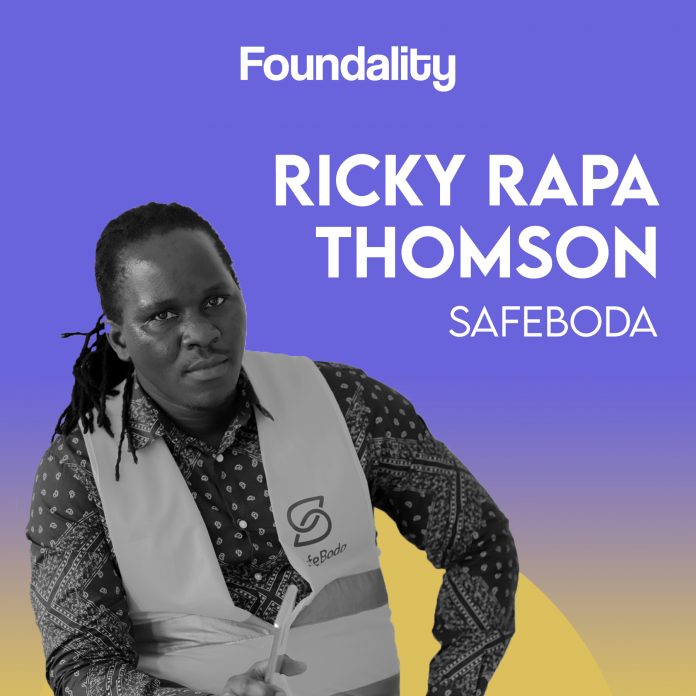
Ricky Papa Thompson is one of those Ugandans dedicated to solving problems with passion and entrepreneurship as the main building blocks. Originally a Boda Boda rider with a huge desire to learn and grow, Ricky dropped out of school because of a highly young unfortunate life.

As a person dedicated to growing despite all the odds being stacked against him, he decided to focus on the Boda Boda business. And this soon became his passion. And this was going fairly well until 2013 when a close friend of his lost their life in an accident. This was the wake up call for Ricky who then dedicated his life to road safety for boda boda riders and users.

Having witnessed quite a number of fatal accidents on the roads, Ricky decided he had had enough and would be the first to do something about it. He decided to buy a second helmet for his passengers and would also request them to wear it before he would take them. Because of this, he got raving reviews along with countless referrals and recommendations.

Uganda and it’s complicated boda boda story

 In Kampala or in any corner of this country, you do not need a map. You need a boda-boda. Name your destination rest assured to reach your destination as fast as you can. You don’t have to be afraid of the dark; all you need is a trusted one that will take you safely home.

Boda-bodas are the backbone of public transport in Uganda and without doubt, the fastest way to get around the capital city, Kampala. The boda boda motorbike taxi is a staple used by all sectors of society.

Traditionally, the usual way of catching a ride was to venture into any street corner packed with tens of boda bodas or simply waiting for one to pass by.

Ricky has built one of the most successful businesses in Uganda

Getting one, is one thing but reaching your destination safely is another. Safety has long been a concern for those riding boda bodas as the bikes are a leading cause of death and head injury in Kampala. A study conducted at Mulago National Referral Hospital in Kampala, by researchers at Makerere University, identified approximately 40% of trauma cases at the hospital to be due to boda-boda accidents.

But now, a new local startup SafeBoda is bringing this classic mode of transport into the technological age by providing the ability to hail a boda boda at the click of a smartphone all thanks to Ricky Rapa Thompson and his team.

How SafeBoda started

When Ricky met Max and Alastair in 2014, the three got together and formed Safe Boda – a company dedicated to creating entrepreneurial opportunities, curve out safe and professional standards in the transportation industry and also encourage a network of Riders who are responsible, foresighted, entrepreneurial and well clued on customer care.

Ricky’s idea was to train the riders, provide them with safety equipment and then connect them to passengers through a hotline. Max then suggested the idea of an App and in 2014 the Safeboda App was born.

Since then, Ricky and his team mates have developed a network of Safe Boda Riders who together have increased safety on the roads, improved the livelihoods of many boda boda riders through aspects of microcredit and micro insurance and also made transport around the city easier, comfortable and more reliable.

How Kakooza is changing perceptions about mental health in Uganda

0

Liz Kakooza has struggled with depression herself.  She has had it ever since she was a child. She never knew depression was a very big issue until 2015 when she was diagnosed and had to through therapy.

However, when she recovered, she realized that there were no organizations doing work to address the mental health issue in Uganda at a time when many cases of depression were on the rise.

“I was diagnosed with Major Depressive Disorder and having experienced stigma first hand and the lack of access to health care in Uganda, I made it my life’s purpose to raise awareness around mental health which in turn will address the issue of stigma.” Liz notes.

The mental health situation in Uganda

In 2006, The Principal Medical Officer in charge of Mental Health at the Health Ministry, Dr. Sheila Ndyanabangi, had predicted that there was going to be a significant increase in mental health illnesses over the next years. In 2016, The IOGT International reported that there had been 500% increase in mental disorders in Uganda.

Globally according to the World Health Organization, One in four people in the world will be affected by mental or neurological disorders at some point in their lives. Around 450 million people currently suffer from such conditions, placing mental disorders among the leading causes of ill-health and disability worldwide.

Stigma associated with mental illness also is a significant barrier to care. People with mental health problems are amongst the least likely of any group with a long-term health condition or disability to find work, be in a steady, long-term relationship, live in decent housing, and be socially included in mainstream society.

Kakooza is saving many people by encouraging them to open up on mental health

Founding Tumaini Foundation

“I started the Tumaini Foundation after identifying a need in the Mental Health space in Uganda and the continent as a whole.” Says Liz Kakooza, the Founder and Executive Director of Tumaini Foundation.

Tumaini Foundation’s approach is threefold aimed at raising awareness and address the stigma around mental health, improve access to health care for people living with mental health issues and influence and implement policy and legislation around mental health.

“In my journey of recovery, I have learnt that true recovery comes from helping others going through the same challenges which is why I started Tumaini Foundation.” Liz states as she recalls her story.

Tumaini Foundation’s focus is also on addressing stigma. Liz through her foundation believes that stigma comes from a place of ignorance and by educating people about mental health, we are able to address the stigma around mental health which will have a ripple effect and open doors for our initiatives.

The journey to launching the foundation and starting her work has also not been easy. Liz has not yet been able to identify many stakeholders in the mental health space in Uganda as the topic remains not talked about

Uganda on the other hand, has only one psychiatric hospital to handle all mental cases from across the country which becomes a very big challenge for individuals like Liz.

As Daily Monitor reported, Butabika National Referral Mental Hospital (commonly known as Butabika hospital or Butabika) is Uganda’s second largest hospital and the centre for mental health treatment and education in the country. The hospital may house anywhere from 700 to 800 patients at any one time, although it was built for a capacity of 550 patients.

“I have used crowd funding techniques and have engaged partners in my networks to get the ball rolling to change the conversation around mental health in Uganda. The message has spread further than anticipated to even different parts of the continent.”- Liz notes.

Currently, the foundation has a number of projects it intends to roll out in its long-term plan. Recently, the foundation was able to start work on its first treatment center Africa Retreat Center (ARC). ARC is an intensive outpatient facility and rehab center. It offers different treatment and rehabilitation programs for people living with mental health disorders and addiction issues.

Other programs by the foundation include; Tumaini Combat which aims to work with the army, Tumaini Woman which aims to address mental health issues prevalent among women, Tumaini Ingane which will address the onset of mental health challenges among children and Tumaini Lifeline; Which is a suicide & crisis counseling hot-line. With this we will also launch an app to enable peer-to-peer support.

“We plan to roll-out an Employee Assistance Program (EAP) where we will work with employers (corporations & private businesses) to address mental health challenges in the workplace and to develop mental health policies.

At The Tumaini Foundation, Liz believes that it is through sharing of personal stories that the foundation will be able to change the conversation around mental health. In this spirit, the foundation is slowly rolling out several communications initiatives e.g. a blog that will be live soon to share stories about mental health that are within the African context.

Experiences

Top 5 Cultural Attractions in Uganda

0
Cultural tourism is the practice of traveling to experience and appreciate the unique cultural heritage, traditions, and lifestyles of a particular destination. This involves...
Mountain Biking in Uganda

Mountain Biking Around Uganda

0
Mountain biking. The sport has been embraced worldwide hitting the mainstream in the past 20 years when bike manufacturers realised the growing popularity of...
Kampala Tourist Guide

10 Geeky Things to Do in Kampala

0
Kampala is located in central Uganda on the shores of Lake Victoria and is the capital and business center of this countries.  Kampala is...
Mgahinga Volcanoes

Go Gorilla Trekking in Mgahinga National Park

0
Uganda the pearl of Africa is blessed with half of the total mountain gorillas living in the whole world and the mountain gorillas in...
Bwindi Mountain Gorilla

Visiting the Mountain Gorillas in Bwindi Forest

0
Mountain gorillas are subspecies of primate animals called gorillas. Gorillas are the largest great apes left in the world which live in the tropical...
Bwindi Impenetrable Forest

Experience Mountain Gorilla Trekking in Bwindi

0
Mountain gorillas are subspecies of primate animals called gorillas. Gorillas are the largest great apes left in the world which live in the tropical...

5 Amazing Things to Do in Budongo Forest

0
Budongo forest is one of the largest conserved forest areas in Uganda covering an area of 841 square kilometers. Located with Murchison falls national...
canopy in Nyungwe NP

Journey to Explore Rwanda’s National Parks

0
Rwanda is a small and landlocked country boarding east African countries. It is bordered by Tanzania in the east, Uganda in the north, Burundi...
East Africa Safari

Things to Do in East Africa

0
Ballooning Mountain Climbing – Rock Climbing & Mountain Biking. this is done in Mr. Rwenzori national park in Uganda, Mount Kilimanjaro national park...
Lake Bunyonyi

Holiday at Lake Bunyonyi in Uganda

0
Lake Bunyonyi is one of the most scenic places in Uganda famous to travelers who take a circuit to the attractions in the western...