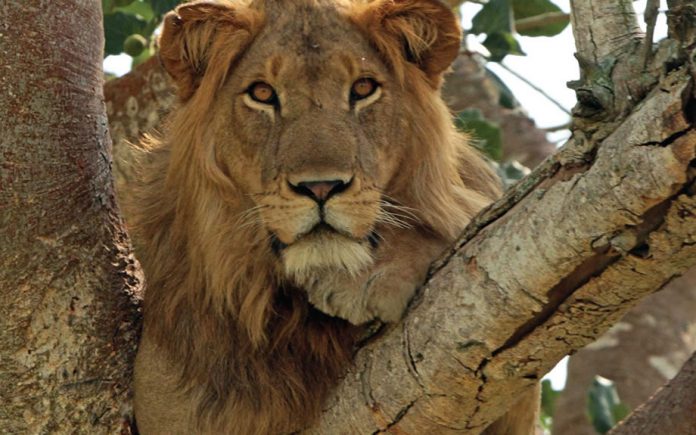
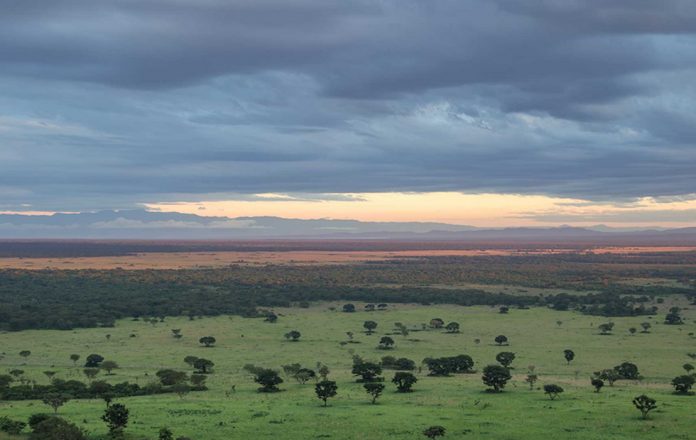
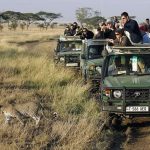
Uganda the pearl of Africa offers yet another interesting and off-beaten track experience for wildlife enthusiasts. You might have encountered lions in the wild, but have you encountered the tree climbing lions anywhere? If you haven’t, then make a trip to this Park and see the King of the jungle hanging and relaxing lazily on the fig tree branches. The Ishasha sector is a remote region situated on the Southern edge of Queen Elizabeth National Park. This region is mainly composed of Open Savannah plains, Riverine, and then acacia and fig trees where the lions are often sighted. There are always numerous Uganda Kobs (a prey to the tree-climbing lions) seen grazing in the Plains of the Ishasha sector. Game viewing within this sector is even more interesting because of the undulating landscapes that offer a magnificent view of the wildlife and the whole National Park.
The Ishasha Sector is the most liked and visited part of the park and the main reason why tourists visit this park and is an internationally recognized habitat for tree-climbing lions. Rarely will you encounter lions climbing trees, there are only two places in the entire world where these tree climbing lions can be sighted and they include the spectacular Ishasha sector and Lake Manyara in Tanzania. The male lions are more exceptional and can be recognized by their Black manes.
Besides the renowned tree-climbing lions of the Ishasha sector, other wildlife species can be sighted and they include numerous elephants, Black and White Colobus Monkeys, warthogs, buffaloes, antelopes including Uganda Kobs, Topis, waterbucks, Elands and bushbucks that keep crossing the paths and many hippos among others. Ishasha being a remote sector means few tourists visit hence those that visit enjoy the wildlife views in a quiet and authentic environment, and makes you feel you have the entire park to yourself. There is also a common sighting of some bird species and they include Black coucal, Herons, and Compact Weaver among others.
Best Time to Visit
The Ishasha sector can be visited any time of the year but the preferred time by tourists is the dry season from December to February and June to September because conditions are favorable, for example, paths are less muddy and slippery. During this time, the grasses are also shorter hence it becomes easier to spot the animals as they are grazing and as the predators are hunting. Please note that most travelers take Uganda safaris during the June-October and December to March! Therefore the prior booking is always needed so that you avoid disappointments.
Where to Stay within and out of Ishasha Sector
Not only will you enjoy the breathtaking view of the tree-climbing lions and other wildlife species, but you will also be accommodated in some of the most classic and exquisite accommodation facilities that include; Ishasha Ntugwe Camp, Savanna Resort Hotel, and Ishasha Wilderness Camp within the Ishasha sector. Other accommodation facilities include Mweya Safari lodge (luxury), Kasenyi Safari Camp, Ihamba Lakeside Safari Lodge, and Marafiki Safari Lodge.
How to Reach the Ishasha Sector
Tourists have to first connect to Queen Elizabeth National Park when accessing this Park. Drive through Kampala – Masaka – Mbarara – Bushenyi – Kasese then to Queen Elizabeth National Park (Mweya Visitor center). It is about 2 hours drive from Mweya Peninsular to this sector. Tourists who wish to combine gorilla trekking safaris (in Bwindi National Park) and wildlife viewing from the Ishasha sector can connect from Buhoma/Northern side of Bwindi (through Kihihi). It is approximately a 64kilometers/2-3 hours drive from Buhoma. A 4WD vehicle is recommended because the roads leading to Queen Elizabeth National Park are rough and become muddy and impassable during rainy seasons.
In conclusion, the Ishasha sector is one of the most visited sectors in Queen Elizabeth National park because of the magnificent tree climbing lions that are only found here. This is the only place in Uganda where tourists can visit to have this extraordinary and breathtaking experience.
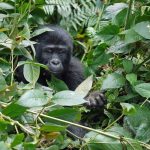
Why travel to Uganda? Well, let’s begin with the safaris, they are amazing and adrenaline-kicking! Travel to southwestern Uganda and adventure into the misty Jungles of Bwindi forest in search of the last surviving Mountain gorillas.
Are you interested in wildlife safaris? Uganda national parks boast an extensive list of wildlife species including the popular Big Five (Leopard, Hippo, Elephant, Lion & Buffalo ) with a record of up to 1050 bird species will make any ardent birder marvel. And that’s not all, adventure junkies will surely enjoy white water rafting on the grade 5 Nile river rapids, Kayaking, Bungee jumping plus a hike to the legendary Rwenzori mountains, a famous World Heritage site whose highest peak Margherita is ranked 4th in Africa.
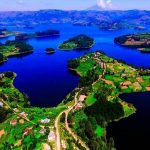
Are you a cultural enthusiast, then get ready to be blown away by the diverse heterogeneous tribes with unique ways of living, marriage, cultural backgrounds, beliefs and so much more, and if that’s not enough Uganda declared the “Pearl Of Africa” has beautiful and breathtaking landscapes, rivers (Nile), lakes (Victoria & Bunyonyi), falls (Murchison & Sipi) all significant and unique in their own way. Add all that to the friendly people and safe political climate and you will definitely have to safari to Uganda.
8 WAYS TO ENJOY YOUR SAFARI
Choose an Activity or Adventure you like
When you think of Uganda, what activity first crosses your mind? Is it white water rafting on Africa’s longest river, Gorilla trekking in the jungles of Bwindi, Wildlife game drives in the savannah plains, hopping on a plane and flying to the remote Kidepo valley national park, bungee jumping, Launch cruise on Kazinga channel, Hiking mountain Rwenzori or Elgon or a cultural trip around Kampala city? It’s always advisable to first make a decision about what you want even before contacting a travel agent.
Sample Ugandan Life
There’s no better way to do this than by having a one-day tour around Kampala city. Here you will get a chance to meet and greet locals, go shopping in malls and markets, visit top cultural sites like the Kasubi tombs, cultural village, King’s palace plus so many more places and by the time you are done with this tour, you will get used to people, weather and conditions.
Visit a Traditional Ceremony
Uganda is blessed with over 15 tribes, each with unique traditional cultures, norms, and ways of living hence different traditional ceremonies. It could be a circumcision, wedding, baptism or Kings annual anniversary; There is always a party going on almost every week in Uganda and so you will have to alert your tour guide about this, You will be amused by the colorful African decorations, dressing and items and more so by the local music selection and artful way of dancing of energetic performers.
Take early morning Safari Drives
Early morning game drives present perfect opportunities to watch early risers like lions and leopards and also get a chance to see nocturnal species searching for a quiet place to hibernate plus it’s much cooler in the morning and so animals are very active, don’t be surprised if you watch a morning fight for dominance.
Good Quality Cameras & Binoculars
Bring along good quality cameras and binoculars, Chances of spotting a predator stalking and attacking its prey or fighting each other are always high and so it’s advisable to be ready with your binoculars, cameras with backup batteries, and film so as not to miss this once in a lifetime opportunity. Company guides and UWA guides normally carry around a pair in case you don’t have binoculars.
Choose the Dry season-
The dry seasons from June – September, and December to February are considered the best time to travel to Uganda for those interested in game viewing. It normally rains in Bwindi and so those who want to track gorillas should always be prepared for a little rain while in the Jungles
Wear Insect Repellents & Long Clothes at Night
Always remember to wear insect repellent at night, Put on long-sleeved shirts or coats and long trousers to avoid mosquito bites and also keep yourself warm from the ever blowing camp cool wind. It’s also advisable to carry along some of your own medication in case of an emergency, You will definitely enjoy your safari better without any interruption from an illness.
Be Patient
Watching rare and common wildlife species requires your patience and attention, Don’t get anxious and excited, relax and be on the lookout with your binoculars and camera ready. Enjoy your safari conveniently without many expectations but with just patience.
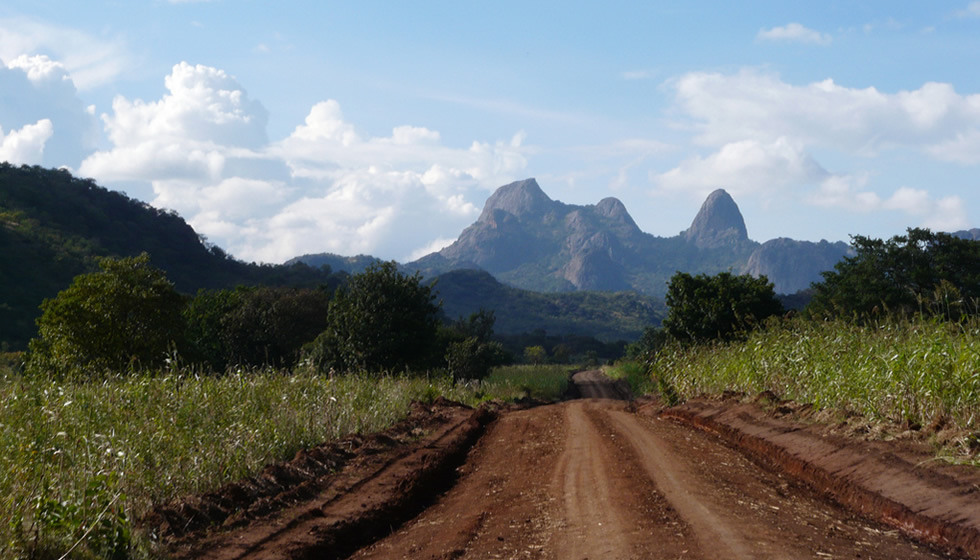
Mountain climbing is an attractive activity that has unfortunately not been fully explored by Ugandans and yet Uganda is blessed to have a series of spectacular mountains like Moroto, Kadam, Morungole, Zulia, Lower Imatong and Langia which are located in the Karamoja, Moroto, Kaabong and Nakapiripirit regions of the North Eastern part of Uganda and can be hiked within a day or two. Local guides and porters can be hired at a small fee to lead hikers through the trails and assist in carrying heavy luggage. This acts as a positive gesture of giving back to the community.
Mount Moroto has a beginning elevation of 1,724m and a summit point of 3,082m at Sokodek Peak. Hikers can also decide to hike and stop at the third highest peak on this mountain known as the Imagit Peak that stands at a height of 2,930m. The total ascent and descent of the mountain is about 1,950m a distance of approximately 26 kilometers. Mount Moroto can be hiked in a day for roughly 10 hours, 8.5 hours spent hiking and 1.5 hours resting. The number of hours spent climbing is usually determined by the pace set up by the hikers. It is greatly advisable to camp for a night below the Imagit Peak which is quite pleasant as there is a possibility of fetching water from surrounding sources at most times of the year. It’s also a good stop that provides ample rest to hikers enabling them to preserve their energy for their descent the next day.
Mount Napak has a starting elevation of 1,268m from Pilas Primary School and a summit elevation of 2,530m. One section of the trail at Mount Napak is extremely steep with a scramble section that can be climbed with the aid of a 15 meter rope. This steep section demands rock climbing moves and it would be a great advantage for the hikers if they possessed some of these skills. Mount Napak trek is a distance of about 18.9km and it would require about 10 hours to ascend and descend this mountain with about 8 hours spent hiking and 2 hours taking breaks in between the hike; depending on the pace of the hikers. This mountain can be hiked within a day or two, again depending on the preference and capability of the hikers.
Mount Kadam stands at a height of 3063 meters tall with a summit peak known as Libo. Kadam was previously named Debasien and Tabasiat during the colonial period and is the second highest mountain in the Karamoja region. Kadam has a number of trails that can be used by hikers, with hiking for 2 days and camping on the mountain for 1 night highly recommended.
Mount Morongule is also known as Ikland because the smallest, yet one of the most unique tribes in Uganda known as the Ik, reside at the base of this mountain. Mount Morongole also pronounced Moroungole or Morungole is 2,749 meters high, has a smooth terrain but is quite a long hike. Depending on one’s pace it would take anything between 8-13 hours of climbing and resting to ascend and descend the mountain.
Mount Zulia which is 2,149m can be hiked in a day as well as the Lower Imatong Mountains. Mount Langia which stands at a height of 3,029m can be hiked in a day or two. The months running from September up to February are considered to be the most favorable months to venture into hiking within this region. It is however not recommendable for beginners, as both rock & mountain climbing experiences are required.
The following is essential for the hike:
Quality hiking boots
A Quality back pack
A hand watch
Sun-glasses
A long pair of thick socks
Long sleeved pants and shirts (to act as protection from thorn pricks from the bushes along the hiking trails).
Sunscreen for skin protection (the heat in this region tends to be extreme especially between December-February).
A hat or cap to offer protection from the hot sun.
Plenty of drinking water at least 2 liters (one can also fetch water along some streams on the way, however they need to be purified with purification tablets).
Oranges for vitamin c, chocolate bars and salty snacks are also handy to replace the nutrients lost during the hike.
Altitude sickness tablets like Diamox and Acetazolamide come in handy for hikers who suffer from Altitude sickness. Medication is best when taken a day before the hike or at the start of the hike.
A sleeping bag, a tent, and all the necessary beddings required. (if hiker’s choose to spend a night at the mountain)
A head torch comes in handy especially in the night.
A camera/phone camera to capture the breath taking views encountered during the hike.
A fully charged power bank to re-charge one’s phone comes in very handy.
Toilet paper/wet wipes/hand sanitizer/face towel/Tooth paste & brush- Hikers should not expect to have a bath/shower at the mountain.
A small cooking stove, utensils and easy to prepare meals for dinner and breakfast- This is for the hikers who prefer to spend a night at the mountain.
A trash bag that will be used to collect litter. It’s important for hikers to conserve the environment and leave it clean.
Hikers can carry small quantities of salt, soap and biscuits to give to the communities residing at the bases of the mountains. This is usually a kind gesture towards the locals that is always highly appreciated. However, this is not compulsory!
Mount Sabinyo, Mgahinga and Muhavura/Muhabura are part of the chain of the Virunga ’’volcanic’’ mountains that are spread across the borders of Rwanda and Congo. These three are situated within the Mgahinga National park in the Kisoro region of the South western part of Uganda and are best hiked in January, June-September and December as these months are drier, making hikes along the trails much easier. However the weather in this area can be very unpredictable with heavy rains pouring regardless of the season.
Mount Sabinyo derives its name from a local Kinyarwanda word “iryinyo” which means tooth. The mountain has 3 peaks with the highest summit standing at a height of 3,645m (11,959 ft) a unique point where the three borders of Uganda, Rwanda and Congo meet .The ascent gets steeper as one approaches the highest peak and should be avoided during the rainy season as the trails get muddy and slippery making it harder to maneuver along the trails. Hikers require between 8-12 hours to ascend and descend the mountain, this greatly depends on their pace. Mount Sabinyo is best hiked by individuals with some form of climbing experience as some parts are quite steep with several ladders to climb up and down.
Mount Gahinga’’pile of stones’’ as the name translates from the local Kinyarwanda/Rufumbira local dialect lies between Mount Muhabura/Muhavura and Mount Sabinyo at a height of 3,474m(11,464 ft) ranking it the smallest of the three mountains and easiest to summit. An ascent and descent on Mount Gahinga would take between 6-10 hours depending on one’s pace; it’s a comfortable hike one highly recommendable for first timers and individuals who suffer from altitude sickness or vertigo. A beautiful swampy caldera that is believed to be about 180 meters wide lies at the top, a great spot to pull out one’s camera and capture memorable shots.
Mount Muhavura also pronounced Muhabura means ‘’the guide’’ in the local dialect is an extinct volcano that stands at a height of 4,127m (13,450 ft) and can be hiked from either Uganda or Rwanda. Mount Muhavura is the steepest and most strenuous of all the 8 volcanic mountains in Uganda, Rwanda and Congo. As much as it can be hiked in one day, hikers are expected to be physically fit as hiking this particular mountain is not a joke, hence should not be treated lightly. Hikers are rewarded with the stunning beauty of a crater lake at the summit coupled with jaw-dropping views of the Ruhondo and Burera twin lakes and other distant volcanic mountains.
The following is essential for the hike:
Water proof quality boots or long gumboots.
Light weight back pack-Hikers should ensure to pack as lightly as possible especially if they prefer to carry their own bags during the hike. The weight of a heavy back pack is troublesome and plays a great role in slowing one down.
A head cap for sun/rain protection.
A hand watch
Sun-glasses
Light rain jackets/ponchos preferably with a hood and water proof pants
A camera/phone camera
Walking sticks/bamboo sticks are always provided from the office at no fee.
Long sleeved shirts and pants.
At least 2 liters of drinking water.
Light snacks like Oranges, apples, juices, chocolate bars, crisps, sandwiches, and cakes etc –Hikers should avoid eating heavy meals during the hike. Sugar and salts help in replacing the nutrients lost from the body during the hike.
Altitude sickness tablets like Diamox or Acetazolamide that help curb the negative effects of altitude sickness should be swallowed a day or morning before the hike.
Sunscreen for skin protection
Toilet paper/wet wipes/hand sanitizer
Trash bags for litter collection.
Armed UWA (Uganda Wildlife Authority) guides always lead the hikers along the trails and also chase away elephants, buffaloes and any other wild animals that may be encountered during the hike, it’s important to remember it’s a National park hence should not be littered.
Mount Elgon located on the Uganda-Kenya border stands at a height of 4,321m (14,176 ft) and is believed to be the largest and oldest solitary volcanic mountain in East Africa and one of the largest volcanic bases in the world. The mountain consists of 5 major peaks Wagagai at 4,321m, Sudek at 4,302m Koitobos at 4,222m, Mubiyi at 4,211m and Masaba at 4,161m.
Mount Elgon can be hiked from either the Ugandan or Kenyan side over a period of 3-5 days to the highest peak of Wagagai depending on the hikers’ pace and route chosen for the hike. Hikers have an option of hiring porters who are locals of the surrounding communities to help carry their luggage and prepare their meals at a small fee. Armed Guides are also provided to lead and protect the hikers from any dangers that may be encountered during the trek .The Mountain offers a unique opportunity of walking along trails that boast spectacular view points, wildlife, caves, waterfalls and hot springs.
The following is essential for the hike:
Quality hiking boots –It is highly recommendable for hikers to carry at least 02 pairs of boots as this is a long hike.
A Quality back pack
A hand watch
Sun-glasses
Long pairs of thick socks
Long sleeved pants and shirts (to act as protection from thorn pricks from the bushes along the hiking trails) and enough clothing to last the days spent hiking at the mountain.
Sunscreen for skin protection (the heat in this region tends to be extreme especially between December-February).
A hat or cap to offer protection from the hot sun.
Plenty of drinking water (one can also fetch water along some streams on the way, however they need to be purified with purification tablets).
Oranges for vitamin c, chocolate bars and salty snacks are also handy to replace the nutrients lost during the hike.
Altitude sickness tablets like Diamox and Acetazolamide come in handy for hikers who suffer from Altitude sickness. Medication is best when taken a day before the hike or at the start of the hike.
A sleeping bag, a tent, and all the necessary beddings required.
A head torch comes in handy especially in the night.
A camera/phone camera to capture the breath taking views encountered during the hike.
A fully charged power bank to re-charge one’s phone comes in very handy.
Toilet paper/wet wipes/soap/hand sanitizer/face towel/Tooth paste & brush- There might be a possibility of having a bath if the guides are in position to locate a nearby water source. They will provide hikers with basins and jerry cans to bathe.
A small cooking stove, utensils and easy to prepare meals for dinner and breakfast- This is for the hikers who prefer to spend a night at the mountain.
A trash bag that will be used to collect litter. It’s important for hikers to conserve the environment and leave it clean.
Tents and sleeping bags can be rented at a small fee; hikers should consult the Mount Elgon officials to organize this for them. However, it’s largely advisable for hikers to have their own personal beddings with them.
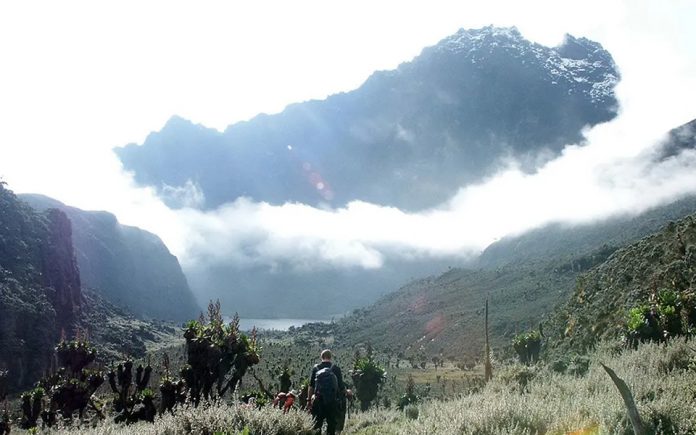
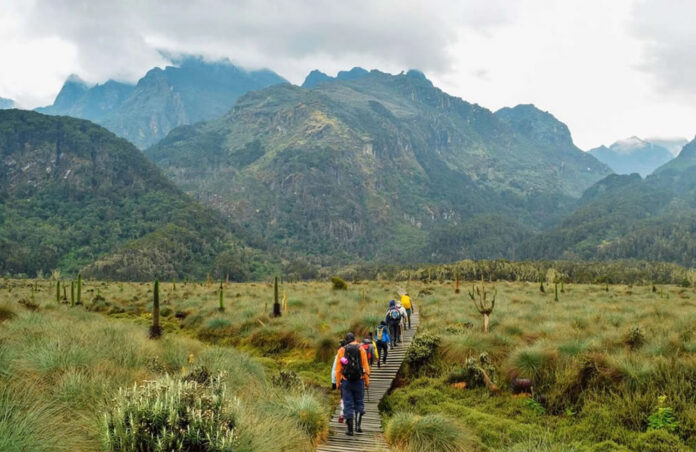
The Rwenzori mountain is a world heritage site that lies on the Uganda-Congo border and is ranked as Africa’s third highest mountain with its highest peak(Margherita peak) on Mount Stanley reaching an elevation of 5,109m, along with Mount Speke (4,890 M) Mount Baker (4,844m) Mount Gessi (4,715m), Portal Peaks (4,391m) and the Great Tooth at (4,603m). The park is home to a wide variety of mammal, bird, reptile and amphibian species coupled with pristine and spectacular landscapes that comprise of waterfalls, hot springs and snowcapped peaks. Hiking on Mount Rwenzori can take anything between 1-10 days depending on how much the hikers would want to hike, the routes chosen for the ascent and the respective peak(s).
The following is essential for the hike:
Quality hiking boots –It is highly recommendable for hikers to carry at least 01 pair of hiking boots and 01 pair of long gumboots for the marshy/ muddy trails.
A quality back pack.
A pair of quality hiking sticks
2-3 pairs of woolen hand gloves.
First aid kit with cotton wool, disinfectant, bandages, deep heat ointment/spray- These are usually provided by the trekking companies but always wise for hikers to carry their own kits.
A hand watch
Sun-glasses
Several pairs of long thick socks- The Rwenzori Mountains are very cold, it’s important to keep warm and avoid hypothermia.
Long sleeved pants and shirts (to act as protection from thorn pricks from the bushes along the hiking trails) and enough warm clothing to last through the days spent hiking at the mountain.
Sunscreen for skin protection
A hat or cap to offer protection from the hot sun or rains.
Plenty of drinking water -one can also fetch water along some streams on the way, the streams at Rwenzori have clean water that is safe for drinking.
Oranges for vitamin c, chocolate bars and salty snacks are also handy to replace the nutrients lost during the hike.
Altitude sickness tablets like Diamox and Acetazolamide come in handy for hikers who suffer from Altitude sickness. Medication is best when taken a day before the hike or at the start of the hike.
A head torch comes in handy especially in the night.
A camera/phone camera to capture the breath taking views encountered during the hike.
A fully charged power bank and batteries to re-charge one’s phone/camera comes in very handy.
Music player and headphones as this is a lengthy and strenuous hike, a bit of music to soothe the soul is always a good idea.
Toilet paper/wet wipes/soap/hand sanitizer/face towel/Tooth paste & brush- There might be a possibility of having a bath if the guides are in position to locate a nearby water source. They will provide hikers with basins and jerry cans to bathe.
A trash bag that will be used to collect litter. It’s important for hikers to conserve the environment and leave it clean.
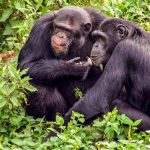
Known as “The Pearl of Africa”, Uganda is a place to find all kinds of wonderful attractions in the world. The mountain gorillas are one of the most popular tourist attractions of the country along with chimpanzees, wildlife, lakes, mountains, Birds, Rivers, and warm friendly people. However, some of Uganda’s best secrets are in natural conserved locations regardless of the many attractions in the country.
Ngamba Island Chimpanzee Sanctuary
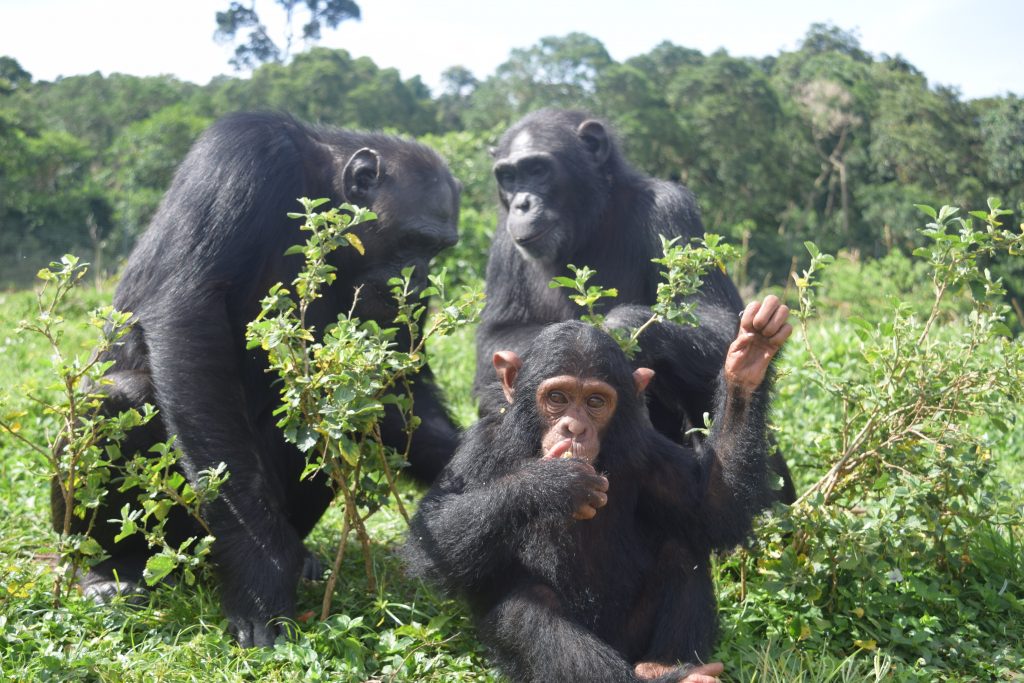
The most famous chimpanzee viewing and feeding spots on the Lake Victoria islands. Ngamba Island Sanctuary is home to orphanage chimpanzees and is a charming location for primate lovers especially those who want to view chimpanzees as well as participate in process chimpanzee monitoring and feeding. The island can be accessed by boat that sets off every day from Entebbe in the morning and returns back to the very point in the evening to drop off day visitors.
Source of the Nile
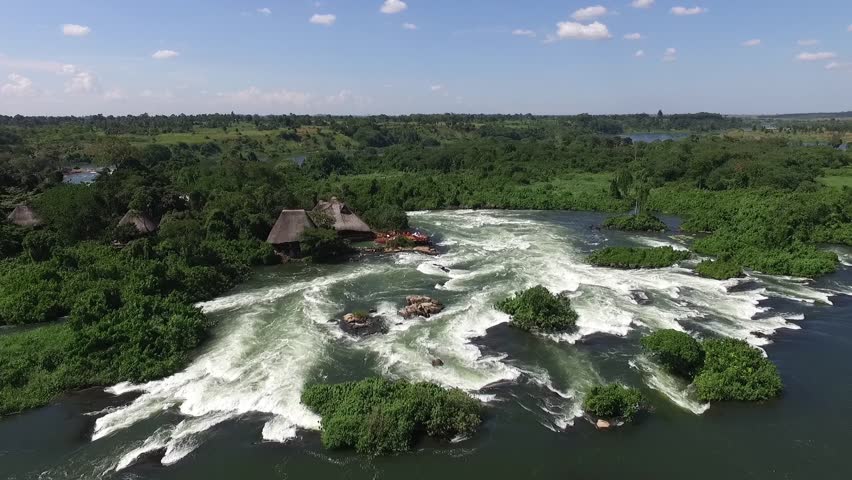
Find this natural unique attraction in Jinja a famous adventure capital of Uganda and a home to not only the longest river in the world but also various waterfalls –Itanda falls, Kalagala falls, Kyabirwa falls and Bujagali falls. Given the wide range of lakes and rivers, it’s very difficult to leave Jinja without enjoying the great water sports –white water rafting, boat cruise, bungee jumping, kayaking. The length of the Nile and the rare water nature at its source is something that amazes every traveler to Uganda.
Stunning Murchison Falls
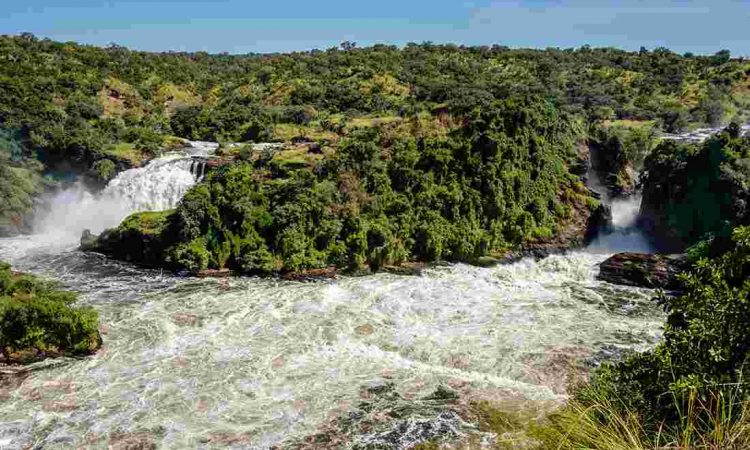
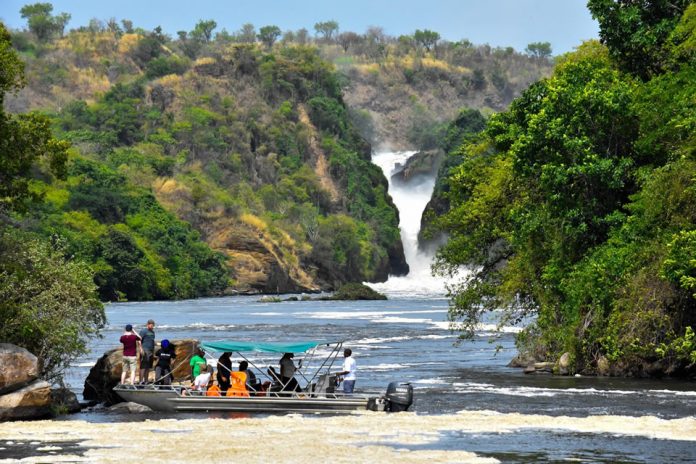
The top-ranked mighty fall of the Nile produces a relaxing roaring sound all day, fighting waters, and the most scenic amazing views of the Nile and its amazing habitats. Murchison falls consist variety of wildlife, birds, primates and it’s one of the great wildlife safari parks in Africa. Other attractions of the park include the Ziwa Rhino sanctuary, top of the falls, chimpanzees, nature walks, and well-built safari lodges that cater to all budgets.
Untamed Bwindi Forest
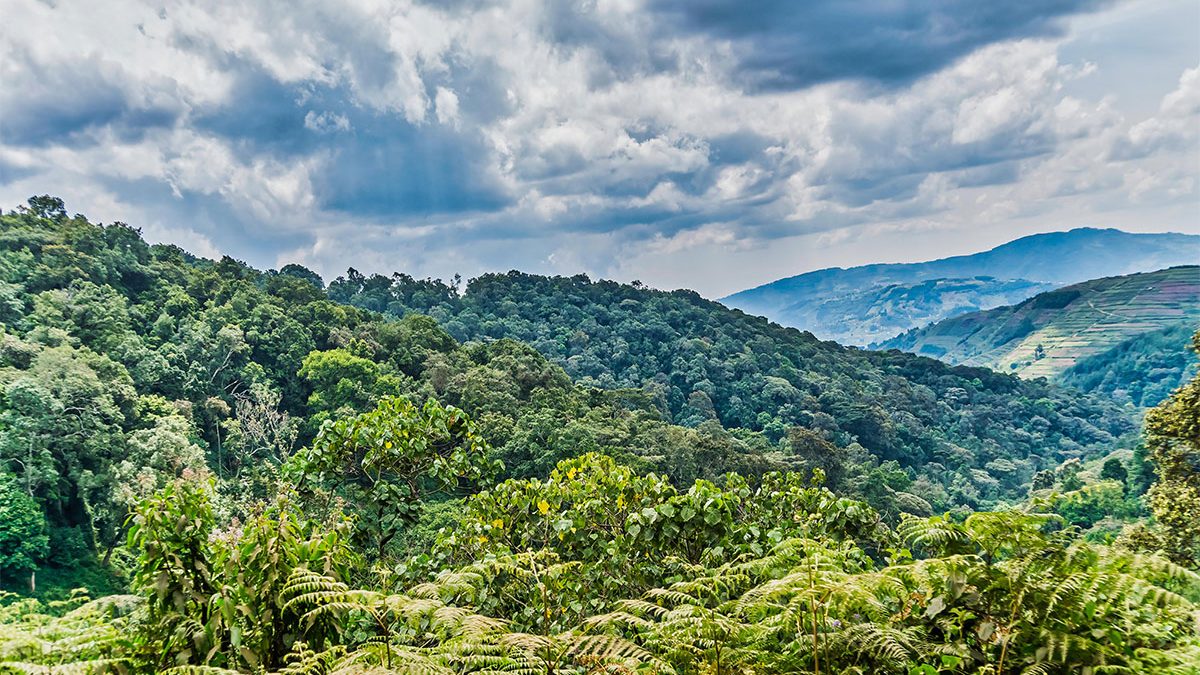
Located in southwestern Uganda, Bwindi Forest National Park is a known gorilla safari park due to its wonderful gorilla trekking experience. The Park is most famous for its highest number of mountain gorillas. Once a major hunting ground for the forest peoples also known as the Batwa, it is now a well-conserved home for the endangered species. There is a lot to do enjoy in the Bwindi forest including gorilla trekking, bird watching, nature walks, cycling, riding a bicycle for women, hiking, waterfall walks, community excursions, forest trail walks among others. However, if your interest is to track mountain gorillas and golden monkeys or hike volcanoes, Mghainga National Park is another gorilla trekking park in Uganda.
Kidepo Valley National Park
The less visited Kidepo Valley National Park was chosen one of the top wildlife game reserves in Africa. It’s also known as Uganda’s most loved wildlife safari attraction and the land where ancient traditions still reign. The Big five, other wildlife plus the Karamojong culture is something that visitors enjoy in this park. Every morning visitors keep themselves busy viewing early risers and game viewing is the main tourist activity in the park.
Would you like to enjoy a game viewing safari through the game parks of Uganda? Here we go with what probably the majority of you out there have known Uganda for! Enjoy the classic game drives and see great wildlife in the wonderful national game parks in Uganda.
Why go on a safari in Uganda game parks?
The game parks in Uganda are set in such a beautiful natural environment with a glorious lot to offer – the flora, the fauna!
… You will be amazed to know that; Uganda has more bird species than any other country in the world. 10.6% (1,061) of the world’s 10,000 bird species are found in Uganda – that is more than entire Europe (1,000). Uganda has 46.1% of bird species in Africa (2,300) … and in the world?
Kidepo Valley National Park
Tucked away in the northeastern corner of Uganda, this unique nature park will take you by surprise. Certainly, nothing you will have seen before. It is quite different from the other parks and its collection of games is unique.
Murchison Falls National Park
… Just one word; AMAZING! You will be thrilled. Some of the unforgettable scenes of the mighty River Nile are found here. It’s perhaps the largest of all – so rich in fauna; the hippos, bucks, buffaloes, and the monster crocs of the Nile, the vegetation is the savannah, purely untouched river line forest and woodland.
Queen Elizabeth Game Park
This place possesses one of the highest biodiversity ratings of any game reserve in the world. Sure! read my lips … not just for the ‘headlines’, you will surely have a good collection of wildlife in Uganda to see.
This open savannah that stretches out to the rainforests, dotted with dense papyrus swamps and crater lakes is home to an astonishing collection of game; the hippos, the buffalo herds, elephants, and the African lion are some of what you will find here. It’s also got a good collection of primate species.
Lake Mburo Game Park
Missed the zebras? You found them! The eland antelope is common here, the impala, the buffaloes, klipspringers, and more. For the bird lovers out there, this is the place to be.
It has such a wide range; Crested Francolin, Emerald-spotted Wood Dove, Brown Parrot, Barefaced Go-away bird, Rednecked Spur, Black-billed Barbet, Greenwood Hoopoe, Blue-napped Mousebird, Lilac-breasted Roller, African-grey Hornbill, Nubian Woodpecker, Trilling Cisticola, bee-eaters, and the cheeky bronze-tailed starling, this list is long.
Semuliki National Park
Located at the base of the mighty Rwenzori Mountain, this vast grassland is home to a wide range of games… perhaps the bird lovers will find this place irresistible. It’s home to about 400 species of birds and about 300 species of butterflies – this reminds me of a friend who is in love with these creatures (the butterflies). He is doing a collection of pictures – Oh! they are so gorgeous!
Situated in the Eastern region of Africa, Uganda is a true delight for tourists of different interests. Whether you are after wildlife, culture, rich history or adventure pursuits like water sports, mountain climbing you are all covered. With all that, it is not hard to understand why it was dubbed the pearl of Africa by Sir Winston Churchill. Thousands of travelers around the globe come in per year to explore part of what Uganda has to offer.
If you are someone who would like to add on adventures beyond traditional wildlife safaris, below are other interesting things that can make your days in case you would wish to experience more of Uganda.
Kampala City Tour
Located just in the central Part, Kampala is globally known as the capital of Uganda. It is simply described as a hub of beautiful skyscrapers, business outlets, cool atmosphere and vibrant nightlife.
Besides that Kampala consists of multiple of tourist spots that dot its suburbs. These draws include historical sites, local markets, religious sites and art galleries. If you wish to check out all these amazing sites, there is no better way to arrive to this than a city tour.
This tour takes a full day visiting the city’s attractions like the Uganda Museum, Bahai temple, Kasubi tombs, Royal Palace of the Buganda kingdom, Namirembe cathedral, Rubaga cathedral and the Gadhafi mosque
Boat Cruise
Floating on the waters in a boat and take in the sweeping views of the river or lake side scenery, picturesque landscapes is another interesting activity that excite tourists from different parts of the World.
Boat cruises in Uganda are offered on the waters of Lake Victoria, Kazinga channel in Queen Elizabeth National Park, Murchison Falls NP, Lake Bunyonyi and Lake Mburo National Park.
Zip lining
This is a dream activity for lovers of adventure. There is nothing more appealing than taking scenic views of stretching forests, different species like birds and other picture perfect landscapes from the ropes hanged at a height above sea level.
Since it includes tree climbing, physical fitness is a major requirement. While in Uganda, you can only have this experience in Mabira forest.
Cultural Encounters
Uganda consists of many tribes that live in different regions of the country. Its diverse culture makes it a perfect destination for those who are enthusiastic about cultural norms. Whether you choose to stay in for days or weeks, you will have a lot to appreciate.
Some of the prominent tribes with inviting traditional behaviors are the Batwa people in the Western part of Uganda, the Matheniko in northern Uganda, Bagishu in Eastern region, Baganda in central region and more. Cultural tours in Uganda enchant tourists with unique traditional dances, dressing attires and more,
Try Local Cuisine
Do you love food? Uganda is an ideal destination for you. This country consists of different local dishes that are worth to taste for those who are after culinary adventures.
Uganda’s delicious cuisine is served in most restaurants around the country and food stalls that line streets in most local markets.
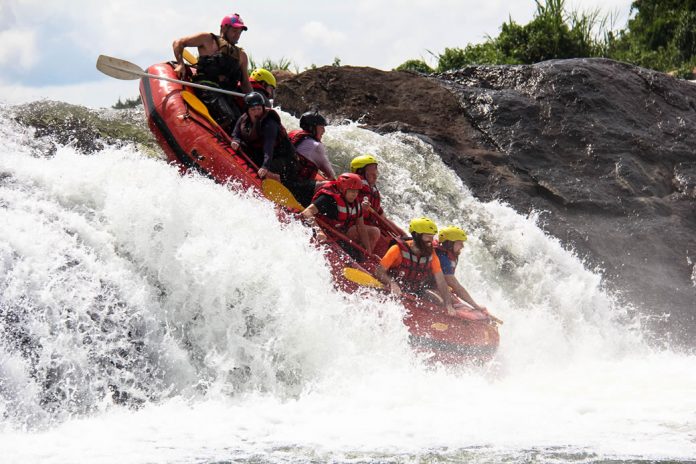
White Water Rafting
Other than from a boat you can as well take in the awe inspiring views of riverside scenery from floating rafts. This adventure is fun, rewarding and hard to omit for those who are fans of water sports.
For Uganda, you can have this experience in Jinja and a half day rafting adventure is offered along the waters of River Nile.
Mountain Biking
This is another body building activity to try. It is good for your health and as well offers sweeping views of rolling hills, towering volcanoes, valleys and other stretching landscapes.
Moreover, Mountain biking is a great way to reach off the beaten path spots. It is mostly offered in mountainous areas, therefore don’t forget to start your ride with a bottle of water for rehydration.
Quad Biking
Quad biking is great if you are travelling with kids. It is fun and more entertaining both for kids and adults.
Enjoy its Vibrant Nightlife
If spending night time buzzing is your thing, don’t miss Uganda’s lively nightlife. You can experience it in different towns around the country, but it is exceptional in Kampala, the country’s capital. It is dotted by many bars and night clubs that invite both locals and foreigners to ease up their stresses.
Visit Local markets
For those who are after local life encounters, try to visit local markets. These localities are occupied by many local traders who vend local products and fresh agricultural products at affordable prices. Apart from that, local markets are great places to grab hand made goods as souvenirs and as well try to taste some luscious dishes.
Mountain Climbing
Many mountains dot Uganda’s different regions. Some of these are Mountain Elgon, Rwenzori, Mount Gahinga, Muhabura and Sabyinyo in Mgahinga Gorilla National Park.
With all these physical features, you have reason to ignore mountain climbing on your bucket list of things to do in Uganda. Some climbing adventures like Ruwenzori mountain climbing last for about a week up to the peak and back. It is strenuous, but worth it once you make to the top.
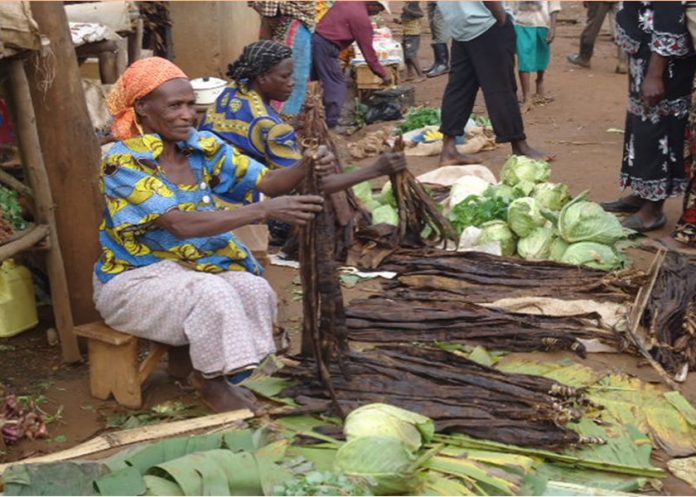
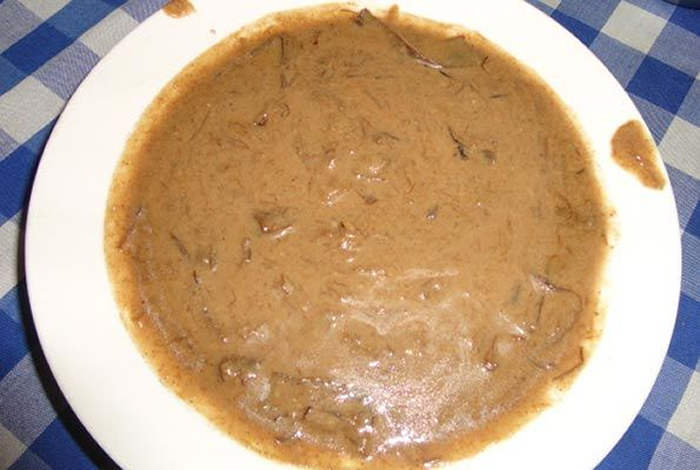
I lived in the Bamasaba land and ‘Malewa'(bamboo shoots) is truly Ugandan in all sense. Its preparation is done with precision.
Common with the Bagisu people in the eastern region, Malewa is one dish you will not miss finding on the menu if you visited Mbale district. It is a traditional dish that is prepared and talked about with pride.
You dare not leave Mbale without trying this stuff!
It is smoked bamboo shoots that you can easily pick up from one of the local markets.
It is a good sauce of proteins, amino acids, fat (which is comparatively low; 0.26%-0.94%), sugar, and inorganic salt.
Preparation: 2 hours (which you can do in phases)
Serves: About 5
Ingredients:
A small to medium smoked bamboo shoot (look at the sizes in the market).
¼ tsp of baking soda.
Plenty of water (you need a good amount for the boiling)
Method:
Place the bamboo shoot in a pot, cover with water and bring to boil for about 30 mins.
Pour off that water and repeat step 1 – boiling for another 30 mins.
Cut off the joints – where the bamboo is hard and keep the soft parts.
Cut the soft parts into smaller pieces, rinse with cold water, add ¼ tsp of baking soda, cover with water and bring to boil again for ½ an hour.
Your bamboo is ready – rinse with cold water, then; you can choose to add the bamboo to groundnut sauce (peanut sauce), which you can serve with rice or matooke (kind of plantain). You can also choose to add it to any vegetables.
That is how most Ugandans would prepare it.
But let’s build this further, with experience and adventure in global cooking; you could choose to do whatever you want with the Malewa.
Try this;
What you need;
The ready-cooked small pieces of ‘Malewa'(bamboo shoots).
A small cup of almost ready fresh peas
2 slices of bacon – cut into small pieces
4 bulbs of spring onions.
Red onion – cut into rings.
1 tsp of vegetable oil
1 tsp of soy sauce
½ tsp of salt
Pepper
A few drops of chili oil
Method:
Heat up the oil in a frying pan; add the bacon cuts fry to just about crisp. Add the onions (both spring and red), stir fry for about 2 mins, add the peas and stir fry until crisp-tender. Add bamboo shoots, soy sauce, salt, and pepper – fry for about 2 mins. Add a few drops of chili oil, fry for about a minute. Take it off the heat, fluff, and stand for about 5 mins then serve.
Lovely!
Fun fact:
Did you know that?
Modern research has found that bamboo shoots have a number of medicinal benefits. They are good particularly for cancer prevention and weight loss and are a good remedy for improving one’s appetite and digestion.
They also have low sugar content and consequently can be used to treat hypertension, hyperlipemia, and hyperglycemia
Picture this: You and your loved one cruising down the majestic Nile River, sipping on an ice-cold cocktail, gazing and enjoying the staggering natural beauty all around you. An impossible dream? Not if you spend your holiday at the enchanting Murchison Falls National Park, North-Western Uganda. An experience you’ll never forget.
Fall in love all over again in Murchison falls. As far as romantic backdrops go, they don’t come any more spectacular than this. Everything about this huge natural national park seems to provide a thrilling accompaniment to a romantic holiday.
This is the largest park in Uganda, covering over 4000 sq. km, and is one of the most spectacular parks in all of Africa. Renowned for its scenic beauty and the spectacular falls from which it gets its name, Murchison Falls NP supports an abundance of flora and fauna to delight the visitor. From rolling savannah and tall grasslands to thick bush and woodlands, the diversity of this park never ceases to amaze visitors and residents alike. The magnificent Murchison Falls thunders from a height of 43 meters, catching and refracting the sunlight in a never-ending kaleidoscope of prismatic patterns.
The wildlife variety is amazing and can be enjoyed by taking game drives and enjoying a leisurely 3hour cruise on the Nile, viewing the animals on the banks as they come to quench their thirst. For your cultural experience, you will have the delight of visiting the local community groups like the Boomu Women’s group, Asera Azola Women’s group, and the Kafalo Association. Marvel at the beautiful crafts they make and you can have a chance of purchasing souvenirs for your friends and family back home.
To the avid birdwatcher, the thrill of seeking out some of the 424 species identified in the park is unmatched. Try out your fishing skills by waiting patiently above and below the falls, for 20-100 kg Nile Perch. Other game fish found in the Nile include Barbel, Electric Catfish, and Tigerfish. While on the delightful game drives, Cape buffalo, Rothschild’s giraffe, Uganda kob, hartebeest, and waterbuck are commonly seen. You may also spot oribi, bushbuck, Bohor reedbuck, the shy sitatunga, bush duiker, warthog, and bushpig. Large carnivores found in the park include lions, leopards, and spotted hyenas. Chimpanzees and olive baboons head the list of six species of primates found in the park. Crocodiles and hippo will be seen along the banks of the Nile. Some of the more common birds that can be seen include Goliath heron, Egyptian geese, pelican, bee-eaters, kingfishers, hornbill, cormorant, saddle-bill stork, and the rare Shoebill stork. A boat cruise to the delta is a highlight for the avid birdwatcher.
The accommodation is as lavish as the park. Two luxury safari lodges are perched atop a gorge, towering above the mighty Nile River, an economy/budget lodge is also available. There are numerous places where you can pitch your own tent and enjoy the mystery and excitement of spending a night in wild Africa. Also, a budget campsite is available. One of the things you’ll definitely enjoy is relaxing on the verandah, sipping cocktails while drinking in the panoramic sights and the atmospheric sounds of authentic Africa.
Savor the exquisitely prepared lunches and candle-lit dinners over a cool glass of wine, or leap at a chance to taste the flavors of a bush dinner. Poolside BBQs and buffets complete the menu of mouth-watering ways to eat and be merry at Murchison falls NP, before retiring to bed, anticipating the beauty the morning brings.
lthough Uganda is still boasting with no confirmed case of the Coronavirus (COVID19), this doesn’t mean that we should become lax, but rather cautious in a bid to save lives.
COVID19 pandemic has left the world scared, and in panick. All our neighbors have at least two confirmed cases of the Virus, and we must pray not only for ourselves, but even for humanity.
Today, we choose humanity. We choose love. We choose to stand by each other.
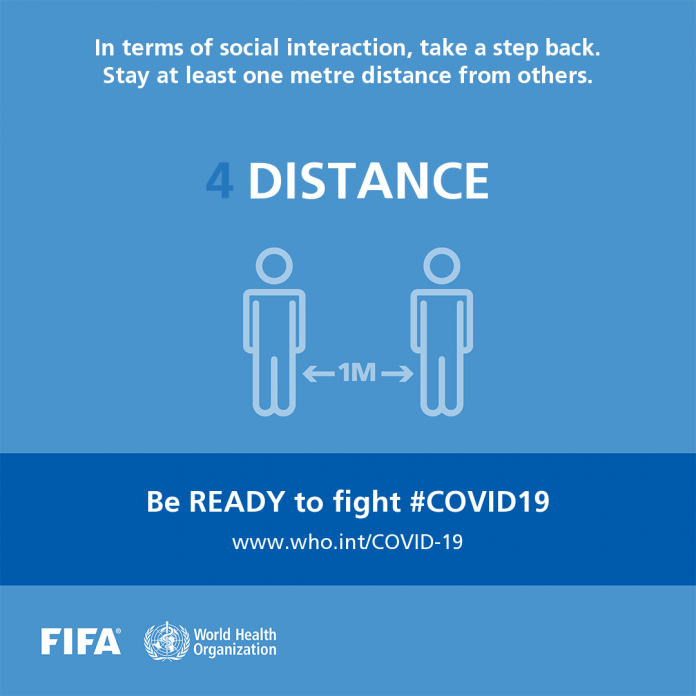
As we follow the guidelines set by the President, we further urge fellow Ugandans to wash their hands, avoid handshakes, and also practice self distancing.
In all this, let us put our hands together and pray for the safety of family, friends, and humanity.
Currently, COVID19 has affected over 183 countries, and one National Conveyance leaving over 254,697 cases, 10,447 Deaths, and only 89,071 recovered.
It has always been very difficult for people in Uganda to shop and ship items from popular stores in the USA, UK, and Canada, but that gap has been bridged by the 2Gule platform.
This has been the case especially when it comes to shopping from stores like Amazon, Fashionova, eBay, and Walmart among others. These stores don’t ship to Uganda, and that had become a very big problem to perpetual shoppers of authentic goods.
The 2GULE platform is here to help you buy what you want, when you want, at the best price & have it delivered straight to you in Uganda. There is no need to give up & settle for counterfeit products on the market because you can’t get what you want from the USA, UK or Canada so get around shipping restrictions once and for all.
How 2Gule works
Go online & look for the products you want to buy, and then visit the 2Gule website www.2gule.com where you can send them a link to your product or just a simple description of the items you want to buy from stores in the USA, UK & Canada.
Afterward, they will send you a quotation with the total cost including; Cost of the product, shipping costs, and taxes on arrival. After which, you can then pay 60% of the total price for which they buy, ship & pay taxes on arrival, all in under 14-21 days upon receiving the goods at their 2GULE warehouse in the US.
You can then pay 40% after receiving your product from #2GULE. You receive an email as soon as your purchased goods have arrived at their offices in the US and you can then either choose to let them know whether you want them delivered to you when they get to Uganda, or to pick them up from their offices at Kirabo Complex, Level 2, room 222.
In the event that you already bought your goods OR have items still stuck in the USA/UK or Canada, they can still help you ship them into Uganda, pay the customs fees and deliver them safely to you. Their fees range from $8 to $9 per pound of weight (includes shipping fees & tax on arrival), the cheapest on market at the moment.
Pricing for goods to be shipped
Assuming you want to purchase an item at $110 from Amazon. On checking out, Amazon will charge you a $15 USA tax making the total price of the good $125. 2Gule uses a dollar rate of 3850-3900 per Ugx. This makes a $125 product cost about Shs487,500.
Airliners often charge about $8 per pound. Assuming your item weighs 12 pounds, it would bring the price to Shs861,900 however, this is before the URA taxes that vary from item to item, music equipment attracts about 30% tax at Customs. Remember, you will have your item in Uganda within 14-21 days from the date of purchase.
Although owned by youthful Ugandan citizens that still prefer to remain anonymous, 2Gule has come a long way to support Uganda thrill spenders and high-class shoppers to be able to access the items/goods that they want, when they want, and at an affordable price.
Cultural tourism is the practice of traveling to experience and appreciate the unique cultural heritage, traditions, and lifestyles of a particular destination. This involves...
Mountain biking. The sport has been embraced worldwide hitting the mainstream in the past 20 years when bike manufacturers realised the growing popularity of...
Mountain gorillas are subspecies of primate animals called gorillas. Gorillas are the largest great apes left in the world which live in the tropical...
Mountain gorillas are subspecies of primate animals called gorillas. Gorillas are the largest great apes left in the world which live in the tropical...
Budongo forest is one of the largest conserved forest areas in Uganda covering an area of 841 square kilometers. Located with Murchison falls national...
Ballooning
Mountain Climbing – Rock Climbing & Mountain Biking. this is done in Mr. Rwenzori national park in Uganda, Mount Kilimanjaro national park...