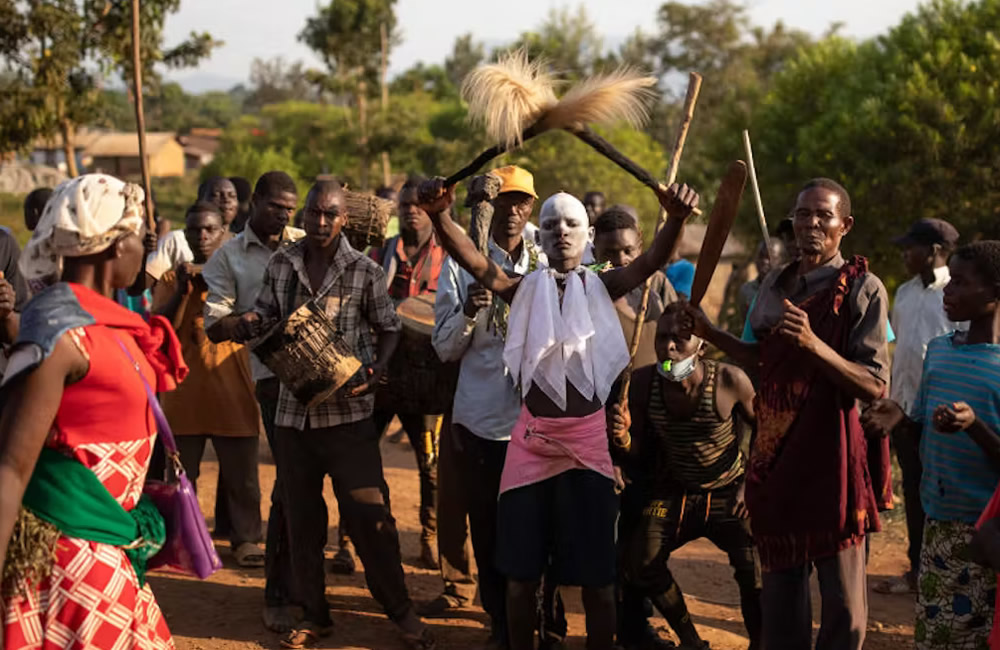
Imbalu, the traditional male circumcision practice done among the Bamasaba people, is one of the amazing traditional practice in East Africa. The “Imbalu” is a profound cultural heritage that stands as one of the world’s richest traditions.
Bamasaba are local people dwelling in the Mt. Elgon region Eastern Uganda occupying districts of Mbale, Manafwa and Budduda, and others on the Kenyan side. These people are highly recognized for the traditional circumcision practice called the Imbalu.
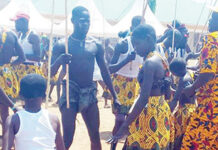
The Imbalu exercise is done every even year, and prior to the circumcision of any male child, there is a traditional dancing walk which can take about a week. The dancing walk is done with traditional drumming in a group of cheering people holding sticks and smeared with local beer.
The Imbalu circumcision practice among the Bamasaba is done on boy child of 15 years and above, and is aimed at approving their manhood.
Every even year, the rite is done and starts with a lunch which is attended by many iconic people right from the traditional leaders of the Bamasaba, to the central government representatives, and invited guests from across the world, and many people who come to witness the exercise at Bumutot cultural center.
Central to this event is a mobile, open-air theater where traditional circumcisers perform the rite without anesthesia.
The boys at the 15 and above have to endure the procedure with bravery, symbolizing his transition to manhood. This rite is steeped in deep cultural significance, complete with dances, songs, circumcision knives, artifacts, myths, and regalia. Bamasaba is located in Eastern Uganda and western Kenya.
The Imbalu circumcision ceremony showcases the exceptional skill of traditional circumcisers. Magid Mudebo, a veteran in the practice, performs the procedure in just three seconds, reflecting the precise and expert technique developed over generations.
This swift execution highlights the deep cultural knowledge and training embedded in the tradition, making the ‘imbalu’ ceremony a profound demonstration of cultural mastery and heritage.
The motivation behind the painful price of manhood and the extensive rituals surrounding the Imbalu circumcision is deeply rooted in cultural significance and tradition and cannot be exhausted in a single tale. The ceremony is not merely a test of physical endurance but also a profound expression of identity, bravery, and community values.
Performance of the Imbalu ritual
The Imbalu ritual practice contains a chain of rituals, which come before and after the circumcision which are integral to the cultural fabric of the Bamasaba people.
Among the ceremonial practices include; dances, songs, and the symbolic presentation of regalia, all of which contribute to the rich tapestry of the tradition. Witnessing these rituals provides valuable insight into the cultural heritage and communal spirit of the Bamasaba, highlighting their profound respect and reverence for their customs.
Some of the successful candidate termed the practice: “You feel the pain from the top of your head, and in the abdomen, it feels like they’re extracting your intestines.” Another explained, “The final, most painful cut at the bottom feels like a saw, with each cut producing its distinct sound.”
The bravery demonstrated by candidates undergoing the Imbalu circumcision rite is truly extraordinary and arguably deserving of recognition in the Guinness Book of Records.
This intense and unique cultural practice, which involves a significant physical challenge, is unparalleled in its demonstration of bravery. The Gishu circumcising community stands out as a world champion in showcasing such unparalleled courage and cultural significance.
Despite its intrinsic value and potential as a major economic catalyst, the Imbalu event has fallen short of its expected benefits due to poor organization and ineffective promotion.
Bumutoto Cultural Ground
Every even year, the Imbalu circumcision starts here with a grand opening where over 100 male children are available for circumcision.
Bumutoto Cultural Ground, historically significant as the site where the first Umumasaba was circumcised over 200 years ago, serves as a central gathering point for the Bamutoto clan and all 25 clans including the Bukusu and Luyah of western Kenya to mark the beginning of the circumcision calendar.
This ground it lacks a clear infrastructure though its rich cultural heritage and the large crowds, it attracts, in a sort form, there is no clear indicators of its historical and cultural significance. This neglect has led to missed opportunities for cultural preservation and associated economic benefits.
The lack of necessary infrastructure further complicates efforts to maintain order and ensure guest safety. In 2022, unruly processions overran the VIP tent dispersing guests. This year, the situation deteriorated further when Minister of State for Foreign Affairs, John Mulimba was whisked off the podium as the rowdy processions invaded the guest’s area.
Despite annual fundraising efforts for the inauguration, there is a sense that once the event concludes, no lasting benefits are left for the community.
Saleh Naminya a tourism analyst believes that with better planning and execution Imbalu could rival international events like the Brazilian Carnival, boosting cultural pride, and unlocking its economic potential and social prosperity.